Question
What are the problems in areas of high population densities?

Answer

The ratio of the population of a country to its area is population density. While discussing population distribution, density of population is also considered. The density is calculated, as per the formula given below.
Density of population = Population of a region/Area of a region.

The problems in areas of high population densities are as follows:
1. Pollution – Pollution is one of the major reasons which people face due to high population density. Due to an increase in land degradation by making houses and flats, land pollution will be caused, water will be contaminated by a huge number of people, resulting in water pollution and huge number of vehicles will cause air pollution.

2. Overcrowded – The areas with high population density become overcrowded, which bring chaos and lack of peace in the society.
3. Lack of open space – High population density makes it difficult to get a free open space.

Need a full question paper?

Generate a complete, print-ready paper with questions like this in minutes — across 16+ boards, with answer keys.
Start Generating Free

Similar questions

The interior of the earth
Magnetic pole and equator
What are the aspects considered in the structure of population?
Important information technology centres are called IT hubs. Find out with the help of the internet in which cities such hubs have developed and mark them on an outline map of India.

Image

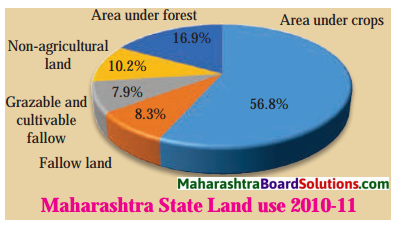
(1) What is the percentage of land suitable for cultivation?
(2) What is the percentage of barren land?
(3) What is the percentage of land under forest in Maharashtra?
(4) What is the percentage of non- agricultural land in Maharashtra?

Image
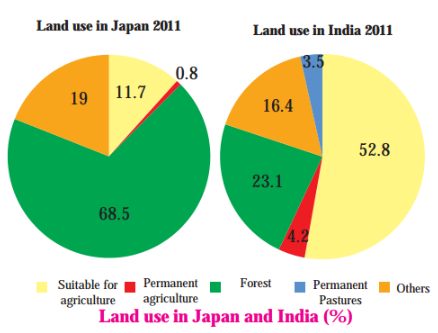
(1) In which country is the land under forests more?
(2) In which country is the land under agriculture more?
(3) Considering the two questions above, how will you relate the physiography and climate of India and Japan with their respective land uses?
Prepare a questionnaire for a visit to a NGO working for cleanliness of marine beaches.
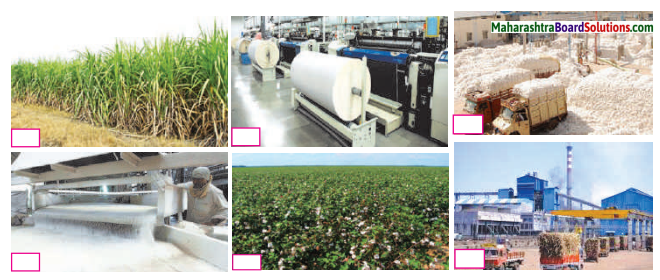
In Figure, the sequence of two industrial processes has been given. Arrange the pictures in proper sequence and write the sequential number in the boxes given below and answer the following questions:
Image
(1) Name the two industries.
(2) Name the raw material and the finished product of both these industries.
(3) How is the raw material converted into the finished product?
(4) Why is it necessary to convert the raw material into finished goods?
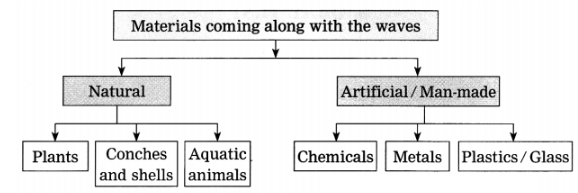
Do this activity when you go to the seashore with your parents or teachers. Observe the materials which have come with the waves. Classify them as per the flowchart given below:

Image

(1) Which of these are perishable items?
(2) Which are non-perishable?
(3) What will happen because of perishable items?
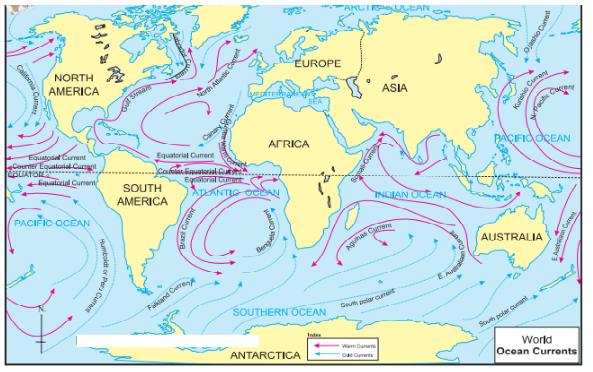

Image
(1) What are the major types of ocean currents?
(2) What do you call the currents flowing from the equator to the poles?
(3) What do you call the currents flowing from the poles to the equator?
(4) When the currents are moving in a circular manner, what difference is visible in their direction in Northern and Southern Hemisphere respectively?
(5) What might happen at the places where these two currents meet?
(6) When two different types of currents meet along the coast then what type of human settlements and occupations are seen?