Question
What are the rules of posting in the Ledger?

Answer

Posting is the process of transferring entries from Journal or Subsidiary Books to the Ledger. The following rules should be observed while posting entries in the Ledger:
  1. All transactions relating to an account should be entered at one place. In other words, two separate accounts should not be opened for posting transactions relating to the same account. If there are two customers with similar names, their accounts should be distinguished by writing their address against their names, say the Account of Anil (of Karol Bagh) and the Account of Anil (of Chandni Chowk).
  2. The word 'To’is used before the accounts which appear on the debit side of an account. Similarly, the word ‘By' is used before the accounts which appear on the credit side of an account.
  3. If an account has been debited in the Journal entry, the posting in the Ledger should also be made on the debit side of such account. In the Particulars column, the name of the other account which has been credited in the Journal entry should be written for reference.
  4. If an account has been credited in the Journal entry, the posting in the Ledger should also be made on the credit side of such account. In the particulars column, the name of the other account which has been debited in the Journal entry should be written for reference.
  5. Similar amount which has been posted on the debit side of an account should also be posted on the credit side of another account.
  6. It is not necessary to write the word ‘Alc' after the personal accounts.

Need a full question paper?

Generate a complete, print-ready paper with questions like this in minutes — across 16+ boards, with answer keys.
Start Generating Free

Similar questions

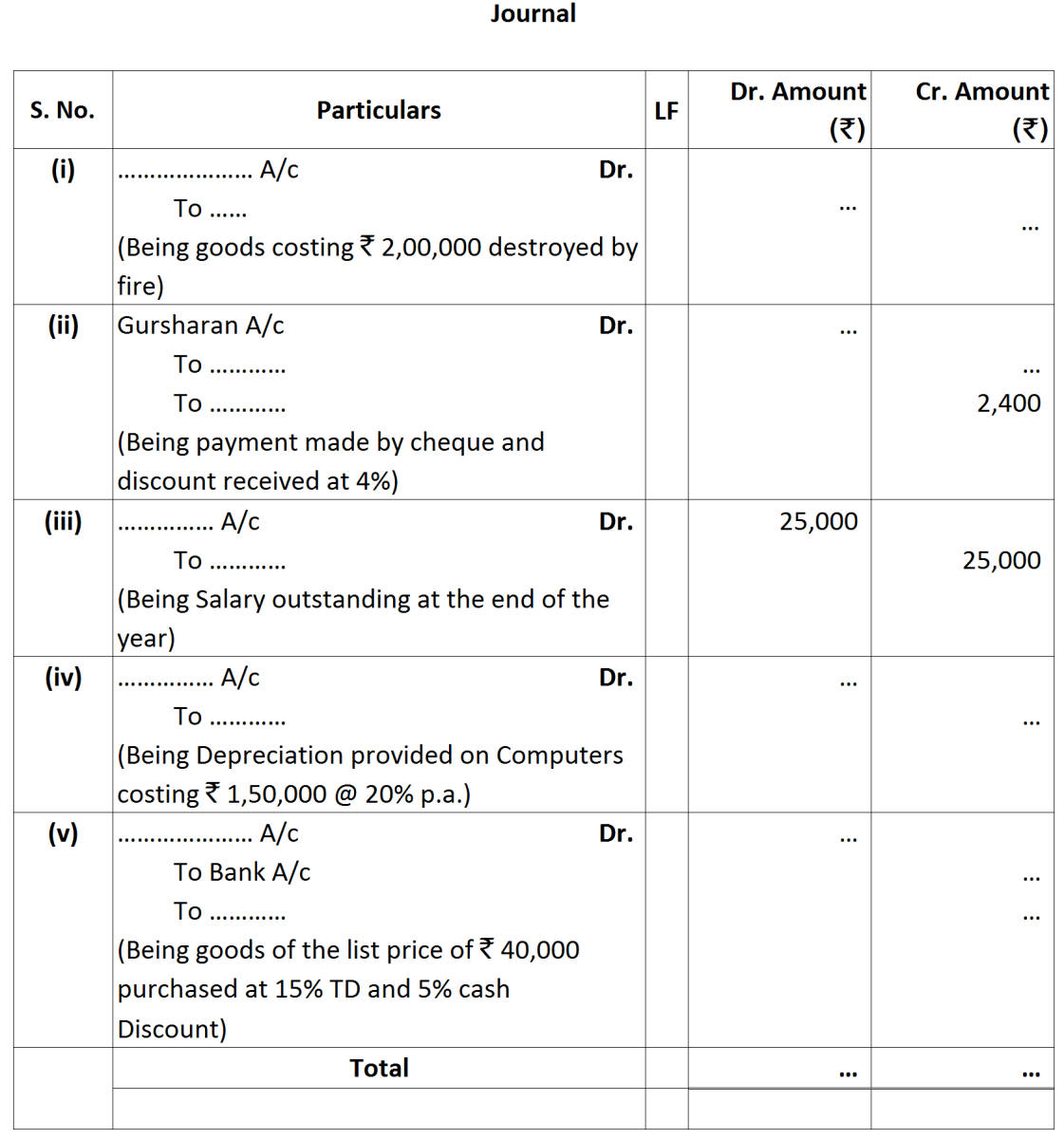
Fill in the missing information in the following journal entries:
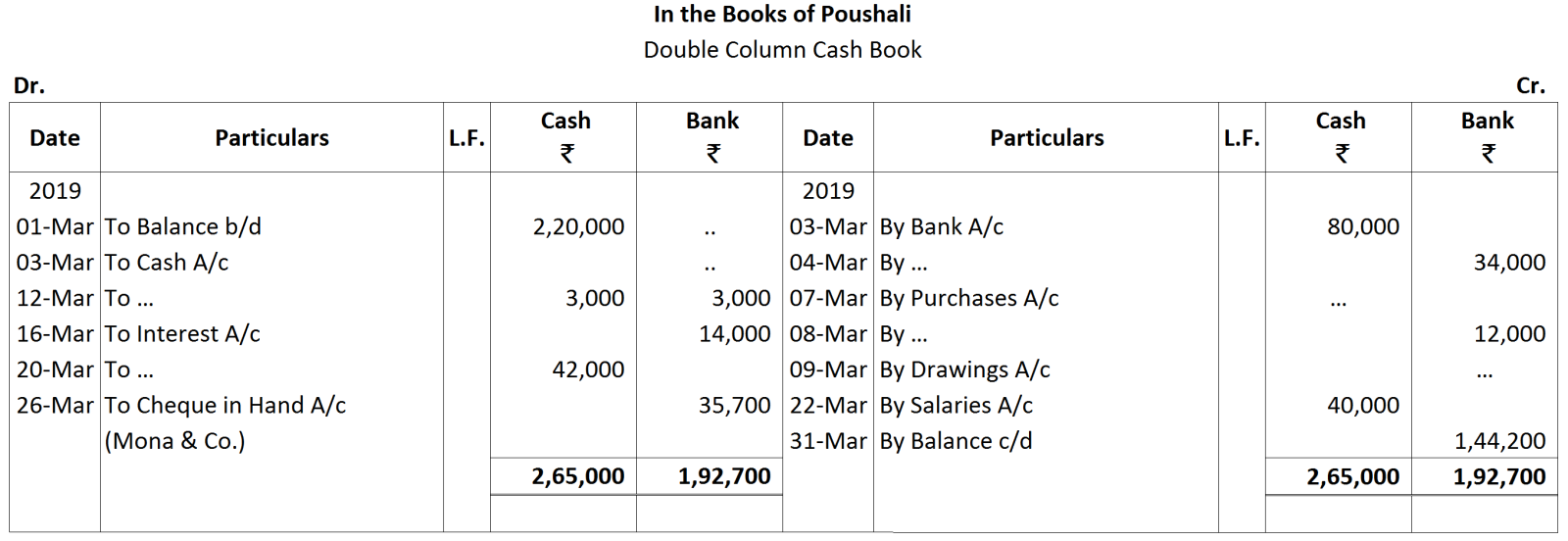
Determine the missing values of the Cash Book with Bank Column of Poushali on the basis of following transactions:
2019
 
March $1$
Cash in Hand
$2,20,000$
  Cash at Bank $60,000$
March $3$ Deposited in Bank $80,000$
March $4$ Goods purchased and issued a cheque for the same $34,000$
March $7$ Cash Purchases $16,000$
March $8$ Paid Commission by cheque $12,000$
March $9$
Withdrew from bank for personal use
$2,500$
March $12$
Received from Ved in full settlement of his account of $₹\ 6,000,$ half of the amount was deposited into bank on the same day
 
March $16$
Interest collected by Bank
$14,000$
March $20$
Cash Sales
$42,000$
March $22$
Salaries paid
$40,000$
March $22$ Goods sold to Mona & Co. $36,000$
March $23$ Received cheque from Mona & Co. after discount of $₹\ 300$ $35,000$
March $26$ Deposited the cheque received from Mona & Co. into Bank  
Mr. Yadav, the petty cashier of M/s Triputi Traders received ₹ 10,000 on April 1, 2016 from the Head Cashier. Following were the petty expenses:
2016
 
(₹)
April 2
Taxi fare
750
April 3
Refreshments
450
April 5
Registered postal charges
200
April 5
Wages
700
April 8
Auto fare
200
April 9
Courier charges
150
April 12
Postal Stamps
600
April 14
Eraser/ Sharpeners/ Pencils
400
April 17
Speed Post charges
200
April 20
Cartage
600
April 20
Computer Stationery
500
April 22
Wages
300
April 24
Bus fare
600
April 25
Office Sanitation
800
April 26
Refreshments
750
April 28
Loading Charges
300
April 30
Photostatting Charges
200
April 30
Wages
800
You are required to prepare a Petty Cash Book.
On April 01,2010 , Bajrang Marbles purchased a Machine for ₹1,80,000 and spent ₹ 10,000 on its carriage and ₹10,000 on its installation. It is estimated that its working life is 10 years and after 10 years its scrap value will be ₹ 20,000 .
i. Prepare Machine account and Depreciation account for the first four years by providing depreciation on the straight-line method. Accounts are closed on March 31st every year.
ii. Prepare Machine account, Depreciation account, and Provision for depreciation account (or accumulated depreciation account) for the first four years by providing depreciation using straight-line method accounts are closed on March 31 every year.
On 1st April 2008, a Company purchased 6 machines for ₹ 50,000 each. Depreciation at the rate of 10% p.a. is charged on Straight Line Method. The accounting year of the Company ends on 31st March and the depreciation is credited to a separate 'Provision for Depreciation Account'.
On 1st October, 2010, one machine was sold for ₹ 30,000 and on 1st April, 2011 a second machine was sold for ₹ 24,000.
You are required to prepare Machinery Account and Provision for Depreciation Account for four years ending 31st March, 2012.
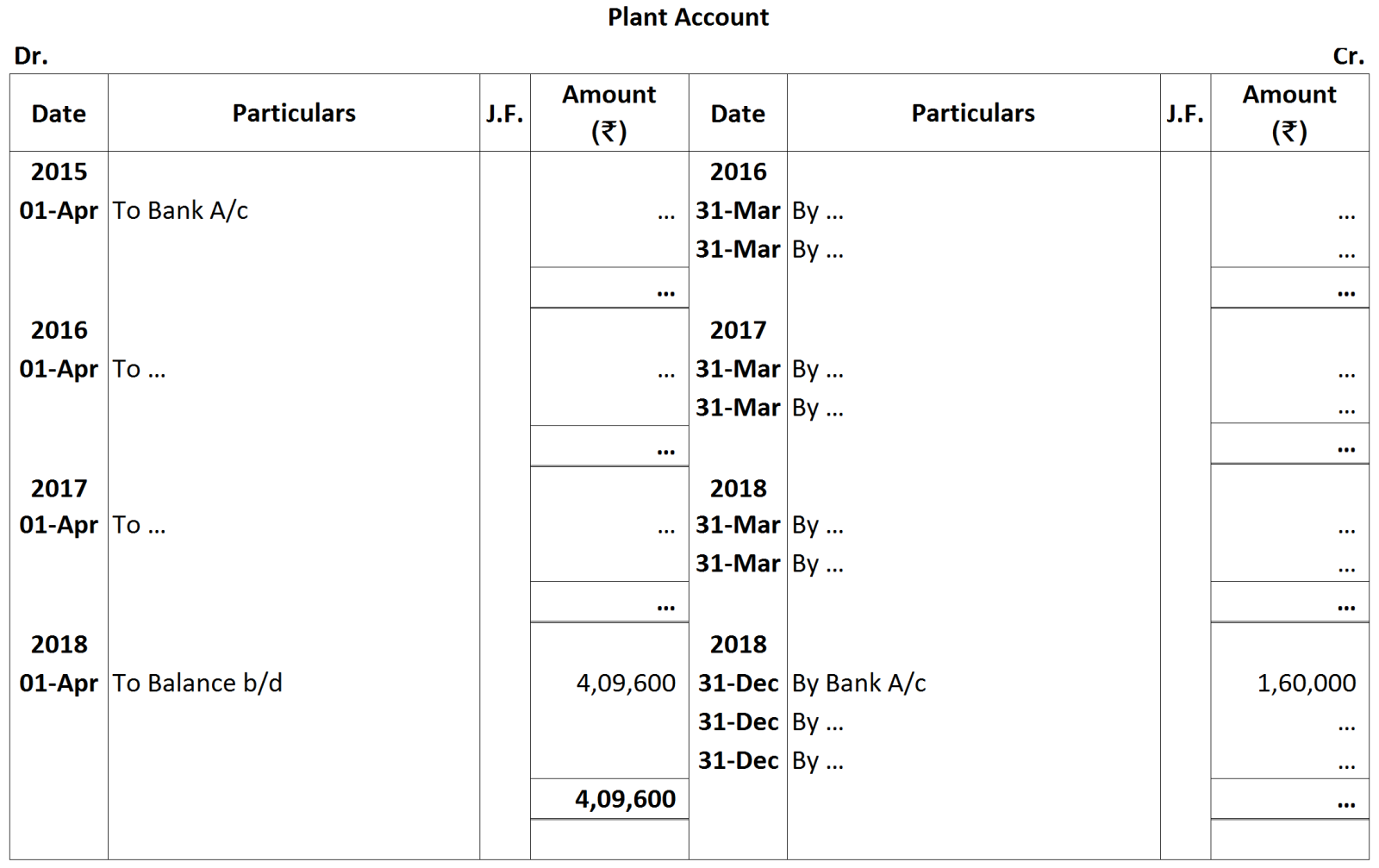
Fill up the missing information in the plant Account given below, Depreciation was profided at 20% p.a. on the written down value method on this palnt.
Following balances appear in the books of Priyank Brothers:
 
 
1st April, 2017
Machinery A/c
20,00,000
 
Provision for Depreciation A/c
8,00,000
On 1st April, 2017, they decide to sell a machine for ₹ 5,00,000. This machine was purchased for ₹ 7,50,000 on 1st April, 2014. Prepare the Machinery Account and Provision for Depreciation Account for the year ended 31st March, 2018 assuming that the firm has been charging Depreciation @ 10% p.a. on the Straight Line Method.
What do you mean by Financial Accounting? Explain the four main limitations of Financial Accounting.
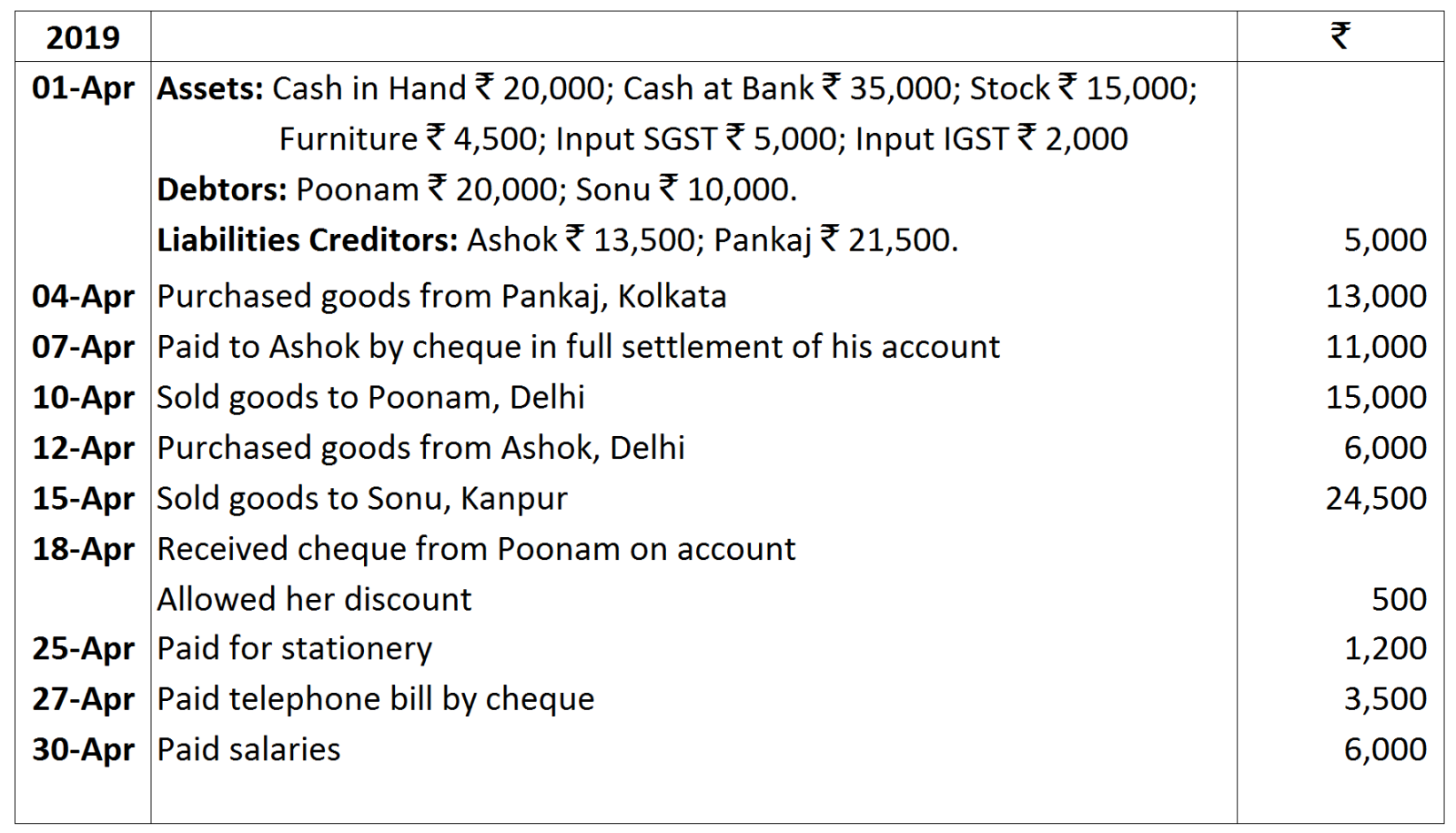
Enter the following transactions in the Journal of M/s. Karim Bros., Prop. Shri Karim Khan, Kolkata, post to the Ledger:
Inter-state transactions are subject to levy of IGST @ 12% and Intra-state transactions are subject to levy of CGST and SGST @ 6% each. GST is not levied on transactions marked with (*).
What are the rules of posting in the Ledger?