Question
What are various functions of proteins?

Answer

Functions of proteins are:
  1. Proteins are the building materials of our body.
  2. Proteins are the constituents of enzymes.
  3. Proteins make our muscles, skin, hair and nails.
  4. Proteins form a red pigment in blood which acts as an oxygen carrier.
  5. Proteins like fibrin help in clotting of blood.
  6. Proteins help in repairing damaged cells, replacing wornout or dead cells and tissues.
  7. Proteins help to develop resistance of the body against various infections.

Need a full question paper?

Generate a complete, print-ready paper with questions like this in minutes — across 16+ boards, with answer keys.
Start Generating Free

Similar questions

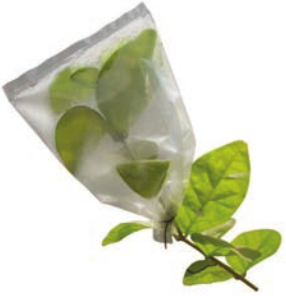
Observe the picture of an activity given as Fig carried out with leaves of plants and polythene bag.

Now answer the following:
  1. Which process is demonstrated in the activity?
  2. When will this activity show better results–on a bright sunny day or a cloudy day?
  3. What will you observe in the polythene bag after a few hours of setting up the activity?
  4. Mention any one precaution you must take while performing this activity.
Match the mixtures in Column $I$ with their method of separation in Column $II$.
 
$COLUMN\ I$
 
$COLUMN\ II$
$a$
Oil mixed in water
$i$
Sieving
$b$
Iron powder mixed with flour
$ii$
Hand picking
$c$
Salt mixed with water
$iii$
Decantation
$d$
Lady's finger mixed with french beans
$iii$
Magnet
$e$
Rice flour mixed with kidney beans
$iv$
Evaporation
Ishika was asked by her teacher to measure the length of the line drawn on the blackboard. She immediately took out her scale to measure the line. But she noticed that the end of her scale is broken. She felt very sad and said to the teacher that she would not be able to measure the length of the line. Teacher consoled her and taught her a new method of measuring line using the same scale.
$(a)$ What is a scale?
$(b)$ Name devices that can be used to measure length.
$(c)$ What new method of measuring line by using a broken scale was taught by Ishika's teacher?
$(d)$ What values of Ishika is shown here?
Match the organisms given in column $I$ with their part/ product in column $II$ that is used by human beings as food.
 
$COLUMN\ I$
 
$COLUMN\ II$
$a$
Mustard plant
$i$
Meat
$b$
Goat
$ii$
Fruits and vegetable
$c$
Hen
$iii$
Seed
$d$
smoke
$iv$
Direction of air flow
$e$
wind
$v$
Prevent dust particles
What is dislocation and fracture of a bone? What precaution should one take when one gets a fracture?
What are $3R’s$? How should we adopt them? Explain.
Can we reverse the following changes? If yes, suggest the name of the method:
  1. Water into water vapour.
  2. Water vapour into water.
  3. Ice into water.
  4. Curd into milk.
Name five plants and their parts that we eat.
Both Sarika and Mohan were asked to make salt solution. Sarika was given a teaspoonful of salt and half a glass of water, whereas Mohan was given twenty teaspoons full of salt and half a glass of water.
  1. How would they make salt solutions?
  2. Who would be able to prepare saturated solution?
When a seed turns into a sprout, it is said to have germinated. Predict whether the seeds in each pot will germinate. Record your predictions for each pot kept under different conditions in Table.
Pot with bean seeds Availability of Seed germination Possible reason for the observation
  Air Sunlight Water Prediction Observation  
$A$: In direct sunlight and without water     No      
$B$: In direct sunlight and excess water            
$C$: In complete dark and moist soil            
$D$: In direct sunlight and moist soil