Question
What do you meant by state of system? Explain.

Answer

A thermodynamic system is described by its pressure (P), volume (V), temperature (T) and composition of the system. These properties are known before and after change in the system. Pressure, volume, temperature and quantity are measurable (physical properties) of the system. The state of gas can be described by its pressure, volume and temperature and quantity ( n ). Pressure, volume and temperature are called state functions because their values depend on state of system and not on the way it is reached. To define the state of a system, all the properties of the system are not required because only some properties can change independently. The number of these properties depends on nature of the system. When for any system P, V, T and n , if the value of it is fixed then it is called state of system i.e. due to change in these properties state of system changes.
Need a full question paper?

Generate a complete, print-ready paper with questions like this in minutes — across 16+ boards, with answer keys.

Start Generating Free

Similar questions

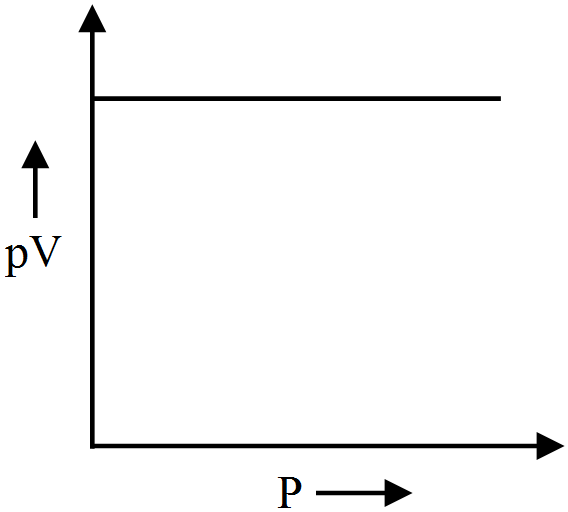
Which gas law is shown by following graph?
Calculate pH of $10^{-8} N KOH$ solution.
The equilibrium constant for a reaction is 100. What will be the value of $\Delta\text{G}^\circ?$ $\mathrm{R}=8.314 \mathrm{JK}^{-1} \mathrm{~mol}^{-1}, \mathrm{~J}=300 \mathrm{~K}$.
How will you prove that benzene have three double bonds, means it is an unsaturated compound but this double bond is different from normal double bonds?
Among the elements Li, K, Ca, S and Kr, which one is expected to have the lowest first ionisation enthalpy and which one has the highest first ionisation enthalpy?
Hydrogen generally forms covalent compounds. Give reason.
Sodium forms a crystalline ionic solid with dihydrogen. The solid is nonvolatile and non- conducting in nature. It reacts violently with water to produce dihydrogen gas. Write the formula of this compound and its reaction with water. What will happen on electrolysis of the melt of this solid.
Calculate wave number of the line having frequency $5 \times 10^{16} \mathrm{~Hz}$.
The first $(\Delta_{1}\text{H}_{1})$ and the second $(\Delta_{1}\text{H}_{1})$ ionization enthalpies (in $\mathrm{kJ} \mathrm{~mol}^{-1}$ ) and the $(\Delta_{1}\text{H}_{1})$ electron gain enthalpy (in $\mathrm{kJ} \mathrm{~mol}^{-1}$ ) of a few elements are given below:
Elements $\Delta\text{H}_{1}$ $\Delta{\text{H}}_{2}$ $\Delta_{\text{eg}}\text{H}$
I 520 7300 -60
II 419 3051 -48
III 1681 3374 -328
IV 1008 1846 -295
V 2372 5251 +48
VI 738 1451 -40
Which of the above elements is likely to be:
The most reactive metal.
(a) A rotating cricket ball does not have wave nature, why?
(b) Why should one not wear black clothes in summer?