Question
What do you understand by connecting link? Explain with examples.

Answer

self

Need a full question paper?

Generate a complete, print-ready paper with questions like this in minutes — across 16+ boards, with answer keys.
Start Generating Free

Similar questions

List the characteristics of the disorders mentioned above that help in their diagnosis.
Enumerate the salient features of human genome.
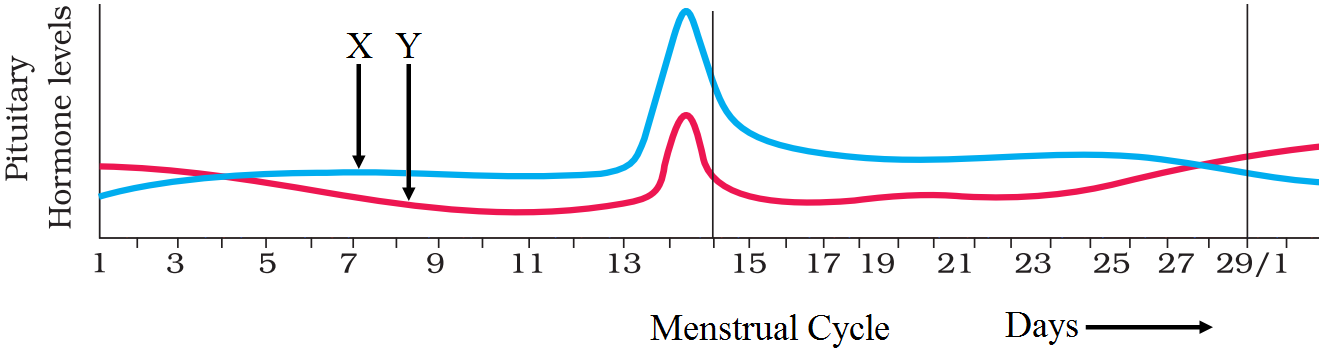
Study the graph given below and answer the questions that follow:

Explain the ovarian events (i), (ii) and (iii) under the influence of hormones ‘X’ and ‘Y’.

Unless the vector and source DNAs are cut, fragments separated and joined, the desired recombinant vector molecules cannot be created.
  1. How are the desired DNA sequences cut?
  2. Explain the technique used to separate the cut fragments.
  3. How are the resultant fragments joined to the vector molecule?
In a biology class, teacher was telling the students that the structures/components and their functions in a watch can be compared with various levels of organisation we find in nature. Radhika was surprised and asked teacher to explain it. Teacher got impressed with Radhika's interest and explained that there is a systematic arrangement of smaller and simpler components into larger one in a hierarchy or pyramid having different levels where each level is formed of components of lower level and itself becomes part of higher level for achieving a common goal.
(i) What are the four levels of biological organisation found in nature?
(ii) What is the basic unit of ecological organisation?
(iii) Define community.
(iv) What values are shown by Radhika?
'Analysis of age pyramids for human population can provide important inputs for long-term planning strategies'. Explain.
What is spermatogenesis? Briefly describe the process of spermatogenesis.
Taking a small pond as an example of an ecosystem, list the four components of this ecosystem. How do these components function as a unit in a small pond?
A species-area curve is drawn by plotting the number of species against the area. How is it that when a very large area is considered the slope is steeper than that for smaller areas?
Write the scientific name of the bacteria that causes pneumonia. What happens in this disease? What are its symptoms?