Question
What do you understand by the static or frictional electricity?

Answer

  1. Charging of two bodies on rubbing them together is called static or frictional electricity.
Explanation:
Static electricity is produced when a suitable combination of substances (e.g., glass rod and silk, ebonite rod and cat's skin, sealing wax and wool) are rubbed together and get electrified due to friction.

Need a full question paper?

Generate a complete, print-ready paper with questions like this in minutes — across 16+ boards, with answer keys.
Start Generating Free

Similar questions

The equivalent inductance of two inductances is 2.4 henry when connected in parallel and 10 henry when connected in series. The difference between the two inductances is(a) 2 henry(b) 3 henry(c) 4 henry(d) 5 henry
       
When semiconductor is doped half with trivalent and half with pentavalent impurities, junction formed is known as:
An electron is moving along the positive x-axis. You want to apply a magnetic field for a short time so that the electron may reverse its direction and move parallel to the negative x-axis. This can be done by applying the magnetic field along:
Which among the following is the source of the magnetic field (magnetism)?
Huygens principle of secondary waves:
Give the SI unit of the magnetic field.

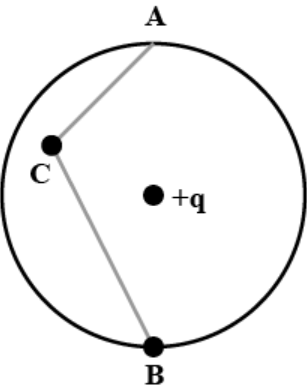
A charge q is placed at the center of a circle and B, C are the points on the circle. Another charge q is moved from A to B and from A to C. Which of them is correct?
Image
An uncharged capacitor is connected to a battery. On charging the capacitor(a) All the energy supplied is stored in the capacitor(b) Half the energy supplied is stored in the capacitor(c) The energy stored depends upon the capacity of the capacitor only(d) The energy stored depends upon the time for which the capacitor is charged


The electron emitted in beta radiation originates from(a) Inner orbits of atoms(b) Free electrons existing in nuclei(c) Decay of a neutron in a nucleus(d) Photon escaping from the nucleus
   
   
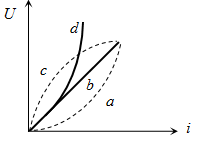
Which of the following plots may represent the thermal energy produced in a resistor in a given time as a function of the electric current