Question
What is a Statement of Affairs? How does it differ from the Balance Sheet?

Answer

A Statement of Affairs is a statement of assets and liabilities. Difference between the amounts of the two sides is taken as capital.
Under the Single Entry System, it is necessary to prepare Statement of Affairs at the end of the year and also in the beginning of the year, if not already prepared to determine profit. Statement of Affairs like Balance Sheet, has two sides-right-hand side for Assets and left-hand side for Liabilities. The difference between the total of assets and liabilities is capital.
Capital = Total Assets - Liabilities
Difference between Balance Sheet and Statement of Affairs:
 
Basis
Balance Sheet
Statement of Affairs
1
Objective
The main objective of preparing Balance Sheet is to know about the financial position of the business.
The main objective of preparing Statement of Affairs is to know about capital at a point of time.
2
Accounting System
Balance Sheet is prepared when accounts are maintained under Double Entry System.
Statement of Affairs is prepared when accounts are maintained under Single Entry System.
3
Accounts and Information
This is prepared exclusively on the basis of ledger accounts.
In view of incomplete accounts, its preparation is based on limited accounts, calculations, estimates and other information.

Need a full question paper?

Generate a complete, print-ready paper with questions like this in minutes — across 16+ boards, with answer keys.
Start Generating Free

Similar questions

From the following balances, prepare Final Accounts of M/s Raja & Sons for the year ended $31^{st} $March, $2019:$
Salary ₹ $5,400$ Insurance ₹ $2,500$ Cash ₹ $400$ Purchases ₹ $84,170$ Rent Received ₹ $3,150$ Drawings ₹$ 2,100$ Bills Payable ₹ $3,900$ Debtors ₹ $38,080$ Stock ($1^{st} $April, $2018) ₹ 29,500$ Bank Overdraft ₹ $9,700$ Carriage ₹ $2,200$ Creditors ₹ $4,200$ Trade Expenses ₹ $4,900$ Sales Return ₹ $4,700$ Machinery ₹ $12,000$ Wages ₹ $45,000$ Sales ₹ $1,47,200$ Purchases Return ₹ $3,900$ Capital ₹ $58,900$ Closing Stock ($31^{st}$ March, $2019) ₹ 36,200.$
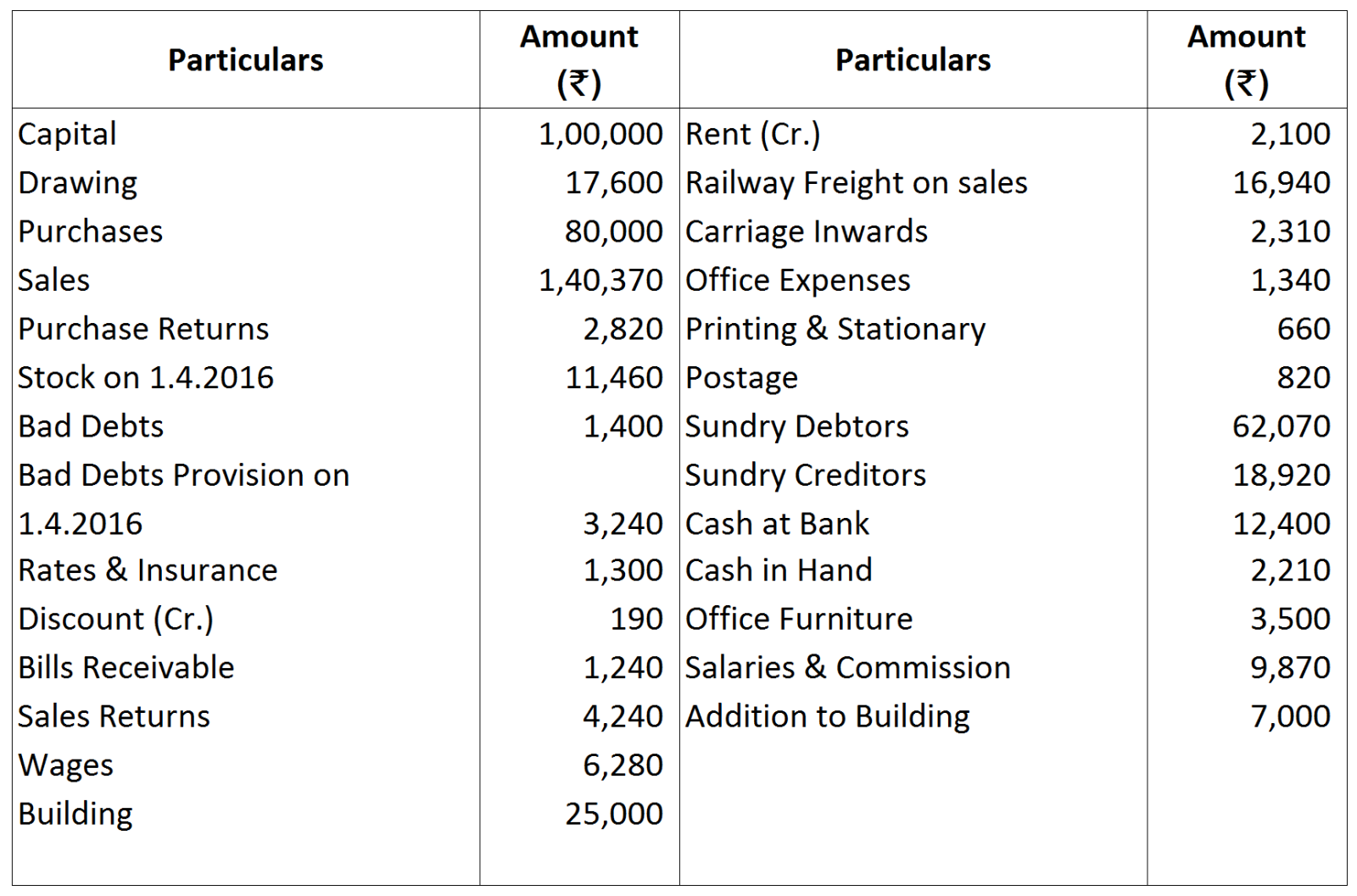
The following balances were taken from the books of Shri R. Lal as at 31st March, 2017.

Prepare Trading and Profit & Loss A/c and a Balance Sheet as at 31st March, 2017, after keeping in view the following adjustments:
  1. Depreciate old Building at $2\frac{1}{2}\%$ and addition to Building at 2% and Office Furniture at 5%.
  2. Write off further Bad-debts ₹ 570.
  3. Increase the Bad-debts Provision to 6% of Debtors.
  4. On 31st March, 2017 ₹ 570 are outstanding for salary.
  5. Rent receivable ₹ 200 on 31st March, 2017.
  6. Interest on capital at 5% to be charged.
  7. Unexpired Insurance ₹ 240.
  8. Stock was valued at ₹ 14,290 on 31st March, 2017.
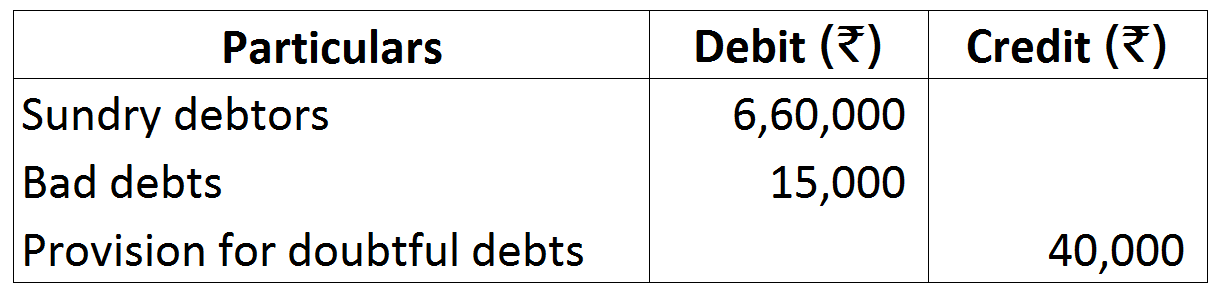
Give Journal Entries for the following adjustments in final accounts:
  1. Extract of Trial Balance as on 31st March, 2019

Additional Information:
  1. Additional Bad Debts ₹ 20,000.
  2. Maintain the provision for doubtful debts @ 5% on debtors.
  1. Goods costing ₹ 20,000 were distributed among staff members as free of cost. These goods were purchased paying IGST @ 12%.
  2. Two month's rent @ ₹ 15,000 per month is outstanding. Rent is subject to levy of 12% IGST.
  3. Included in general expenses is annual Insurance Premium of ₹ 10,000 paid for the year ending 30th June, 2019. IGST is levied @ 12%.
  4. Accrued commission ₹ 5,000. IGST is levied @ 12%.
From the following records kept on single entry basis, prepare final accounts assuming that ratio of gross profit to sales is 25%: Transactions during the year 2018:
Vardhman commenced business on $1^{st} $ April, $2018,$ with a capital of $₹\ 50,000.$ He immediately purchased furniture of $₹\ 20,000$. During the year he received from his uncle a gift of $₹\ 3,000$ and he borrowed from his father a sum of $₹\ 5,000.$ He had withdrawn $₹\ 600$ per month for his household expenses. He had no Bank account and all dealings were in cash. He did not maintain any books but following information is given :
He used goods worth $₹\ 1,300$ for personal purposes and paid $₹\ 500$ to his son for examination and college fees. On $31^{st}$ March, $2019$, his Debtors were worth $₹\ 21,000$ and Creditors $₹\ 15,000$. Stock in trade was valued at $₹\ 10,000$. Furniture to be depreciated by $10\%$ p.a. Prepare Trading and Profit and Loss Account for the year ended on $31^{st}$ March, $2019,$ and Balance Sheet as at $31^{st}$ March, $2019.$
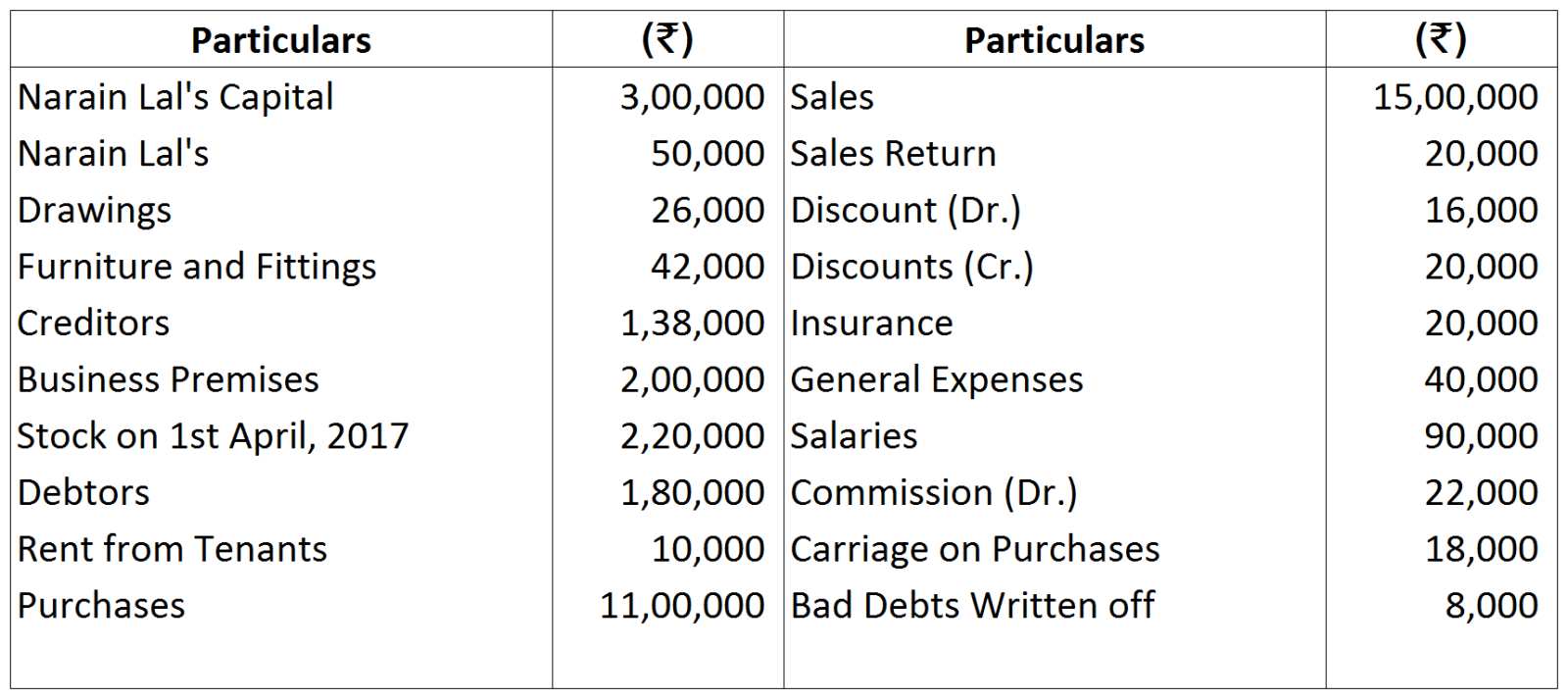
Following are the balances extracted from the books of Narain on 31st March, 2019:​

Additional Information:
  1. Closing Stock as on 31st March, 2019 was ₹ 2,00,600, whereas its Net Realisable Value (Market Value) was ₹ 2,05,000.
  2. Depreciate Business Premises by ₹ 3,000 and Furniture and Fittings by ₹ 2,500.
  3. Make a provision of 5% on debtors for doubtful debts.
  4. Carry forward ₹ 2,000 for unexpired insurance.
  5. Outstanding salary was ₹ 15,000.
Prepare Trading and Profit and Loss Account for the year and Balance Sheet as at that date.
‘An accounting report is essential a report which must be able to fulfil certain basic criteria' Explain? List the various types of accounting reports.
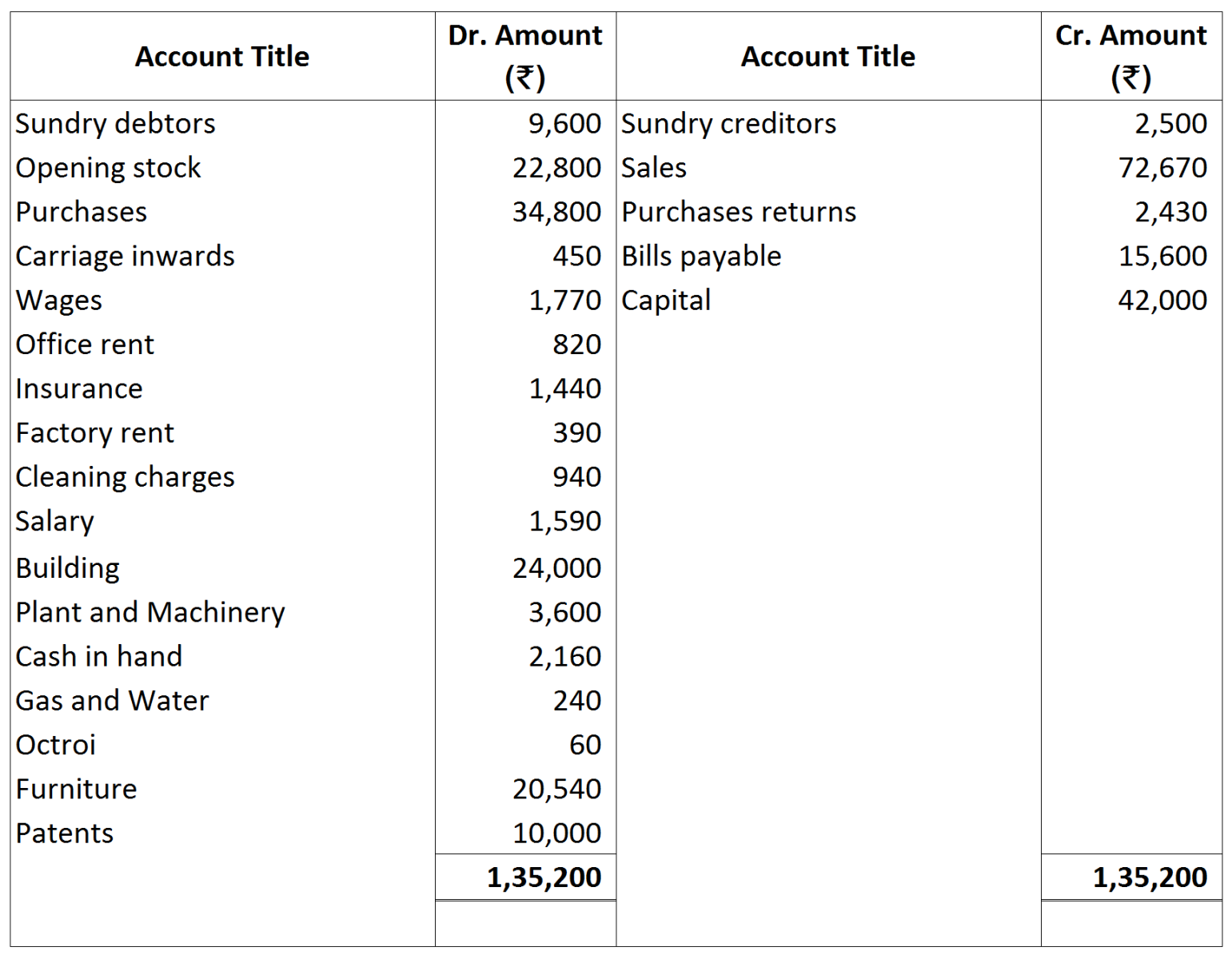
From the following balances of M/s Jyoti Exports, prepare trading and profit and loss account for the year ended March 31, 2017 and balance sheet as on this date.

Closing stock ₹ 10,000.
  1. To provision for doubtful debts is to be maintained at 5 per cent on sundry debtors.
  2. Wages amounting to ₹ 500 and salary amounting to ₹ 350 are outstanding.
  3. Factory rent prepaid ₹ 100.
  4. Depreciation charged on Plant and Machinery @ 5% and Building @ 10%.
  5. Outstanding insurance ₹100.
On 1st January, 2019, X sold goods of ₹ 20,000 to Y and drew a bill on Y at three months for the amount. Y accepted the bill. The bill is met on maturity. Pass the necessary Journal entries in the books of X and Y, if X discounted the bill @ 12% p.a. from bank on 4th January.
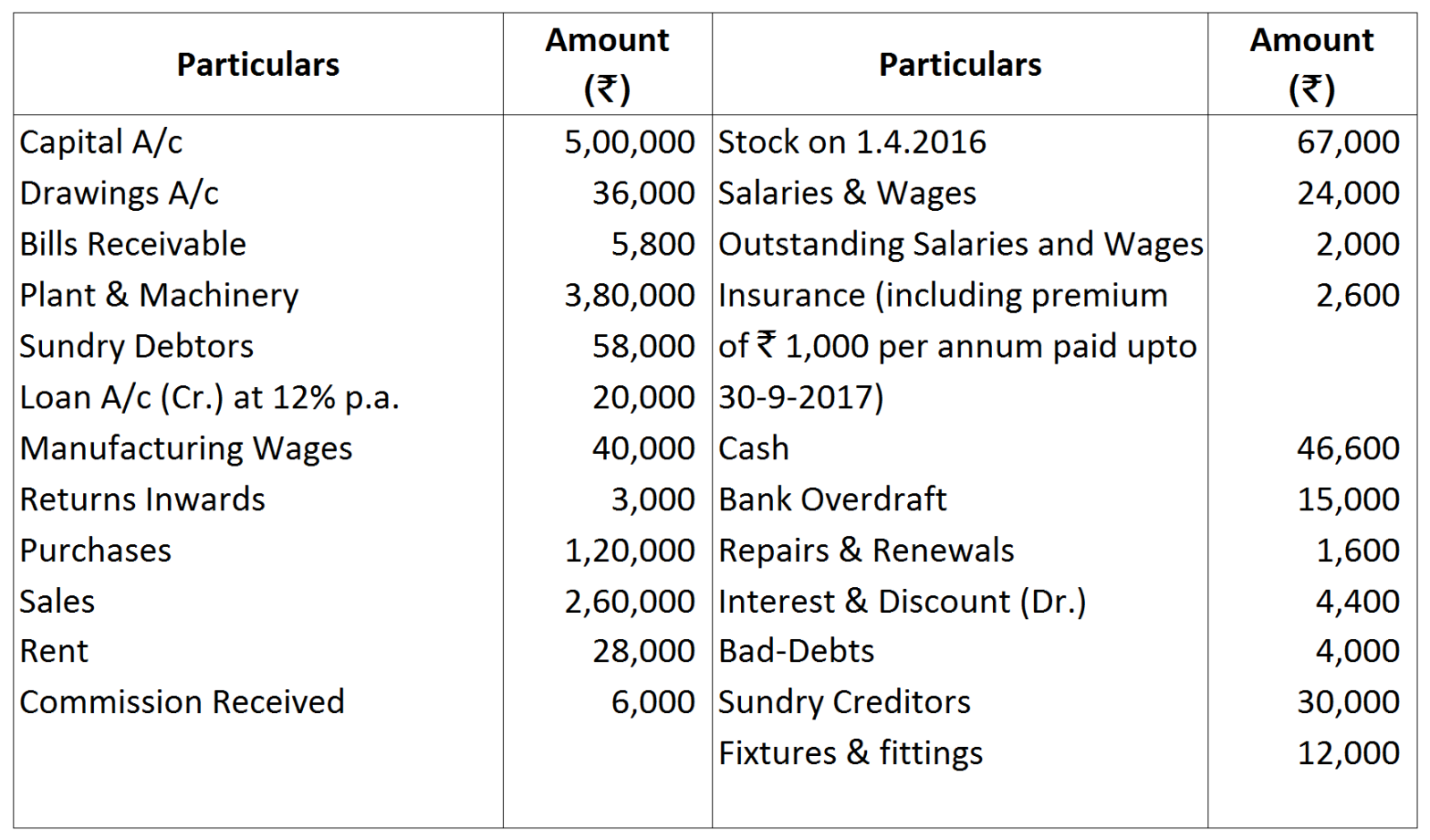
Prepare Trading and Profit & Loss Account and Balance Sheet as at 31st March, 2017, from the following balances:

Adjustments:
  1. Stock on hand on 31st March, 2017 was ₹ 80,000.
  2. Further Bad-debts written off ₹ 2,000 and Create a provision of 5% of Sundry Debtors.
  3. Rent has been paid up to 31st May, 2017.
  4. Manufacturing wages include ₹ 10,000 of a new Machinery purchased on 1st October, 2016.
  5. Depreciate Plant and Machinery by 10% p.a. and Fixtures and Fittings by 20% p.a.
  6. Commission earned but not received ₹ 1,000.
  7. Interest on Loan for the last two months is not paid.
  8. Goods worth ₹ 4,000 were distributed as free samples.