Question
What is DNA fingerprinting? Mention its application.

Answer

Among human being, 99.9 percent of base sequence is the same, yet there is a difference in the DNA sequences of any two individuals. The difference in these sequences of DNA make every individuals unique in their phenotypic appearance. The difference in these sequences of DNA can easily be determined by fingerprinting. If one aims to find out genetic differences between two individuals or among individuals of a population, DNA fingerprinting is a very quick way to compare the DNA sequences of these individuals.
In DNA fingerprinting, differences existed in some specific regions/of DNA sequences are identified that are known as Satellite DNA. In DNA fingerprinting. the differences of this satellite DNA is determined. The satellite DNA contains small stretches of base pairs repeated many times, it is therefore, also called repetitive DNA. These repetitive DNA can easily be separated from bulk of genomic DNA by caesium chloride density ultra-centrifugation method in the form of bands. The major peaks are obtained for bulk DNA and lower peaks for satellite/repetitive DNA. This technique was developed by Alec Jeffrey. This technique needs the use of DNA probe. Alec Jeffrey used satellite DNA as probe-as it shows very high degree of polymorphism.
Applications: This technique is now used to:
(1) Identify the criminals in forensic laboratories.
(2) Determine paternity, that is, who the true biological father or mother is of a child.
(3) Verify whether a hopeful immigrant is, as, he or she claims, really a close relative of already an established resident.
(4) identify racial groups to rewrite biological evolution.
Need a full question paper?

Generate a complete, print-ready paper with questions like this in minutes — across 16+ boards, with answer keys.

Start Generating Free

Similar questions

What is lacoperon. Draw its labelled diagram. Explain its structure and mechanism of action of lac operon.
Draw a diagrammatic sketch of the sectional view of a typical anatropous ovule.

OR

Draw a labelled diagram of the sectional view of a typical anatropous ovule.

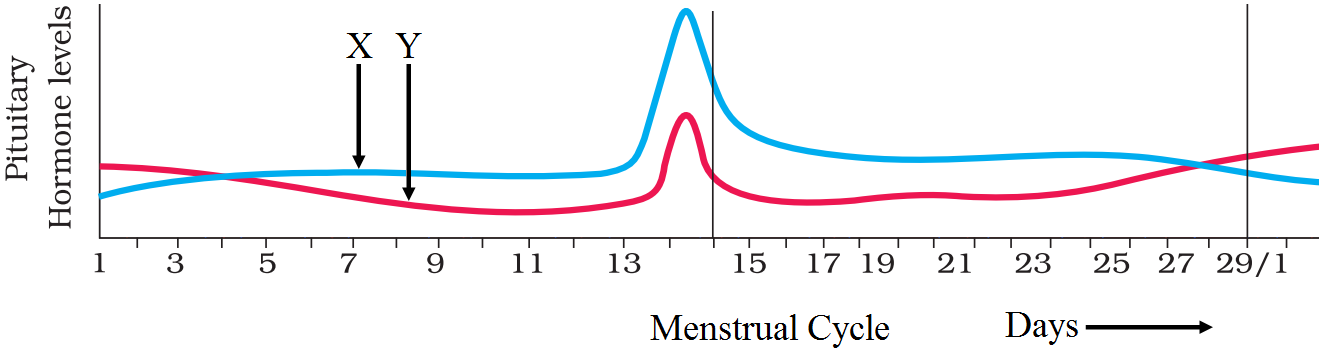
Study the graph given below and answer the questions that follow:

Identify the ovarian phases during a menstrual cycle:

  1. 5th day to 12th day of the cycle.
  2. 14th day of the cycle.
  3. 16th day to 25th day of the cycle.
  1. Draw a simplified model of phosphorus cycling in a terrestrial ecosystem.
  2. Write the importance of such cycles in ecosystems.
During the course of evolution why DNA was chosen over RNA as genetic material? Give reasons by first discussing the desired criteria in a molecule that can act as genetic material and in the light of biochemical differences between DNA and RNA.
Describe the components of an ecosystem.
Give an account of energy flow in an ecosystem.
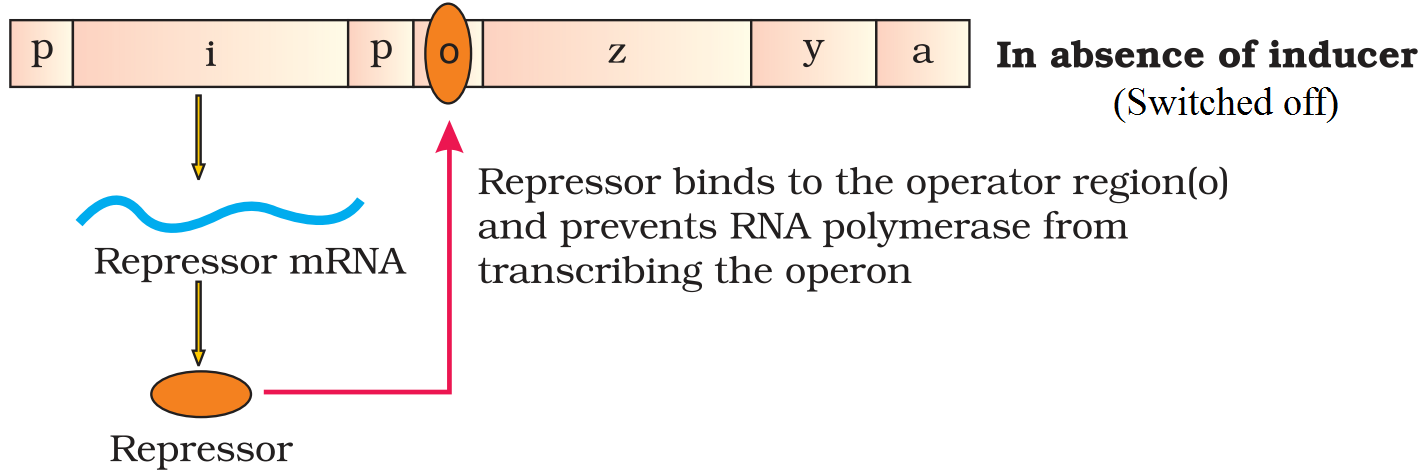
Look at the figure below depicting lac operon of E.coli.

  1. What could be the series of events when an inducer is present in the medium in which E. coli is growing?
  2. Name the Inducer.
Describe in sequence the process of spermatogenesis in humans.
a. Describe aminoacylation of tRNA.
b. Explain the process that takes place in the ribosomes when mRNA makes its entry into it in a prokaryote.
c. Due to transcription error, ATG codon of DNA is transcribed into UAG in mRNA which translates a nonfunctional polypeptide chain in the ribosome. Justify the statement.