Question
What is genetic engineering? Explain the technique of Recombinant DNA production.

Answer

The technique in which recombinant DNA is obtained by introducing the DNA of one species into the DNA of another species is called genetic engineering.
In genetic engineering, recombinant DNA is created using gene cloning and gene transfer. The first recombinant DNA was created by adding an antibiotic-resistant transcription gene to the plasmid of Salmonella typhimarium. Stanley Cohen and Herbert Boyer’s work was accomplished in 1972 by cutting a piece of DNA from a plasmid, which contained the gene responsible for providing antibiotic resistance. The discovery of 'restriction enzymes' called molecular scissors made it possible to cut DNA at specific places. The cut DNA portion is combined with the plasmid DNA. This plasmid acts as a DNA vector which transfers the DNA attached to it. The work of connecting the antibiotic resistance gene with the vector is done by the enzyme DNA ligase, which works on the cut part of the DNA molecule and joins its ends. By this combination, new circular self-replicating DNA is formed in vitro, which is called recombinant DNA. When this DNA is transferred into Escherichia coli, it makes multiple copies by using the DNA polymerase enzyme of the new host. 
Need a full question paper?

Generate a complete, print-ready paper with questions like this in minutes — across 16+ boards, with answer keys.

Start Generating Free

Similar questions

What are interferons. Explain its role in providing immunity. Also name the kind of immunity provided by it.
Write any four similarities in spermatogenesis and oogenesis.
Define ectoparasite and endoparasite and give suitable examples.
Explain giving one example, how co-extinction is one of the cause of biodiversity loss? List the other three causes also.
"Prevention is better than cure' is an apt slogan to safeguard adolescents from drug abuse. List any six steps that could be taken in this regard.
Name the scientific term used for the membrane that surrounds an ovum.
  1. Match the microbes listed under Column-A with the products mentioned under Column-B.
 
Column-A
 
Column-B
(a)
Penicillium notatum
(i)
Statin
(b)
Trichoderma polysporum
(ii)
Ethanol
(c)
Monascus purpurea
(iii)
Antibiotic
(d)
Saccharomyces cerevisiae
(iv)
Cyclosporin-A
  1. Why does ‘Swiss Cheese’ develop large holes?
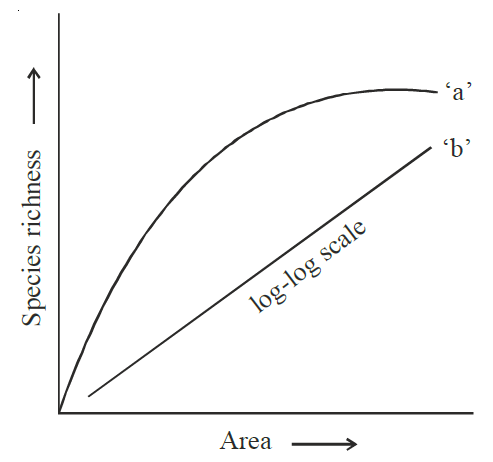
The following graph shows the species-area relationship. Answer the following question as directed.

  1. Name the naturalist who studied the kind of relationship shown in the graph. Write the observation made by him.
  2. Write the situations as discovered by the ecologists when the value of 'Z' (slope of the line) lies.
  1. 0.1 and 0.2
  2. 0.6 and 1.2

What does 'Z' stand for?

  1. When would the slope of the line 'b' become steeper?
AtRNA is charged with the amino acid phenylalanine.
  1. At what end of the tRNA is the amino acid attached?
  2. What is the mRNA codon that codes for phenylalanine?
  3. Name the enzyme responsible for this attachment. 
In eukaryotes, explain splicing & tailing (figure is not necessary).