Question
What is human immune system? What is a vaccine? How immunisation can be achieved?

Answer

The immune system protects the body against disease or other potentially damaging foreign bodies. When functioning properly, the immune system identifies and attacks a variety of threats, including viruses, bacteria and parasites, while distinguishing them from the body's own healthy tissue. An antigenic substance prepared from the causative agent of a disease or a synthetic substitute, used to provide immunity against one or several diseases. Immunization is done through various techniques, most commonly vaccination. Vaccines against microorganisms that cause diseases can prepare the body's immune system, thus helping to fight or prevent an infection.
Need a full question paper?

Generate a complete, print-ready paper with questions like this in minutes — across 16+ boards, with answer keys.

Start Generating Free

Similar questions

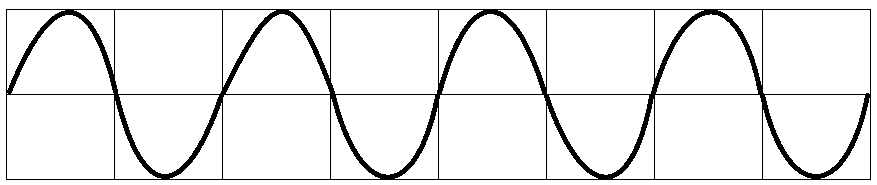
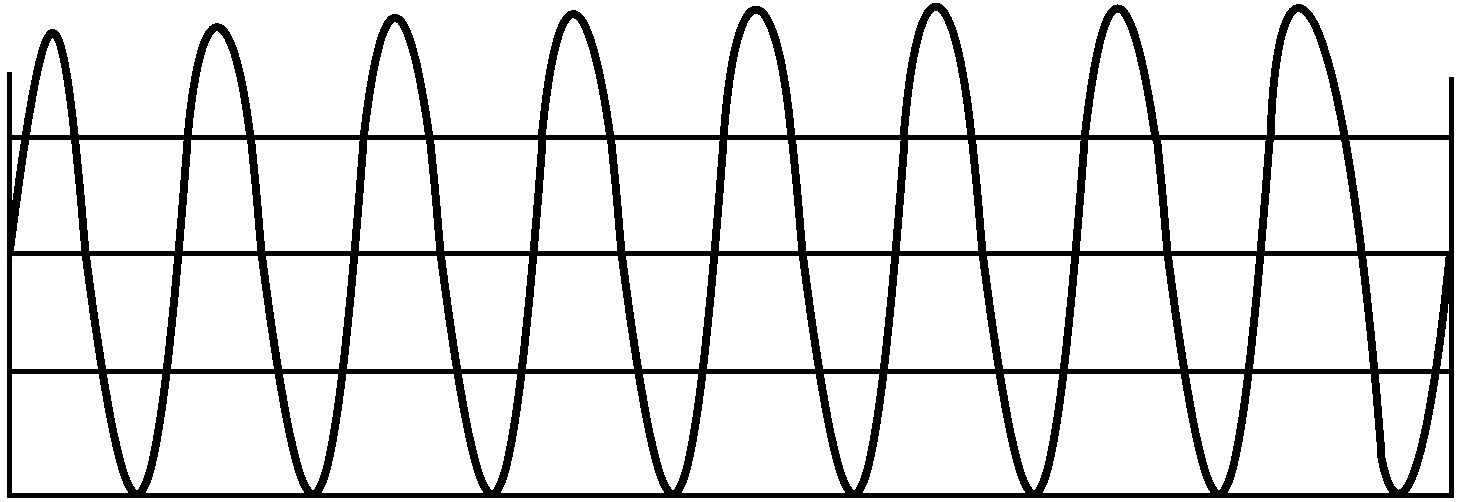
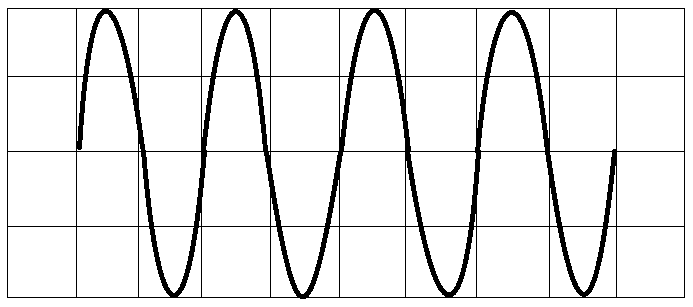
Consider the following sound waves marked $A, B, C$ and $D:$
  1. Which two waves represent sounds of the same loudness but different pitch$?$
  1. Which two waves represent sounds of the same frequency but different loudness?
  1. State whether all these sound waves have been produced by the same vibrating body or different vibrating bodies?
  1. Which vibrating body/bodies could have generated the sound waves shown here$?$
In an experiment, $4.90g$ of copper oxide was obtained form $3.92g$ of copper. In another experiment, $4.55g$ of copper oxide gave, on reduction, $3.64g$ of copper. Show with the help of calculations that these figures verify the law of constant proportions.
How would you prepare a saturated solution of sodium chloride in water at $25^\circ C?$ What will happen if this solution is cooled to $10^\circ C?$
Describe structure and functions of bone.
Explain the various preventive measures against insect pests.
How will you find the valency of chlorine, sulphur and magnesium?
Explain giving reasons: Social harmony and good economic conditions are necessary for good health.
An atom of element $E$ contains $3$ protons, $3$ electrons and $4$ neutrons:
  1. What is its atomic number?
  2. What is its mass number?
  3. Write the electronic configuration of the element $E$.
  4. State whether element $E$ is a metal or non-metal. Why?
  5. What type of ion, cation or anion, will be formed by an atom of element $E$? Why?
  6. Write the symbol of the ion formed by an atom of element $E$.
  7. What could element $X$ be?
Identify the plant bodies, which are commonly named as “cryptogamae”. State and explain two characteristics which are exhibited by each category of these plant bodies.
Describe the various steps involved in the separation of iodine, iron filings and salt from a mixture.