Question
What is meant by homologous series?

Answer

The length of the carbon chains in carbon compounds is different their chemical properties are very much similar due to the presence of the same functional group in them. The series of compounds formed by joining the same functional group in place of a particular hydrogen atom on the chains having sequentially increasing length is called

homologous series. Two adjacent members of the series differ by only one $-\mathrm{CH}_2-$ (methylene) unit and their mass differ by 14 units.

The homologous series of straight chain alkanes can be represented by the general formula $\mathrm{CnH}_{2 n+2}$. The members of this s

Methane - $\mathrm{CH}_4$

Ethane - $\mathrm{C}_2 \mathrm{H}_6$

- These differ by - $\mathrm{CH}_2$ units

Ethane $-\mathrm{C}_2 \mathrm{H}_6$

Propane $-\mathrm{C}_3 \mathrm{H}_8$

- These differ by $-\mathrm{CH}_2$ units

Butane - $\mathrm{C}_4 \mathrm{H}_{10}$

Pentane $-\mathrm{C}_5 \mathrm{H}_{12}$

- These differ by $-\mathrm{CH}_2$ units

Need a full question paper?

Generate a complete, print-ready paper with questions like this in minutes — across 16+ boards, with answer keys.
Start Generating Free

Similar questions

Describe the structure of diamond. Draw a simple diagram to show the arrangement of carbon atoms in diamond.
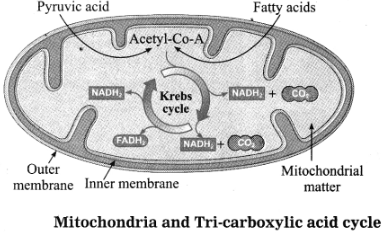
Mitochondria and Krebs cycle:
Image
(a) Which co-enzymes are shown in the diagram?
(b) Which chemical reaction takes place in the mitochondria? Which molecules are produced in this reaction?

 
A population of red beetles lives in green bushes in a garden. Once during the process of breeding, a green beetle is produced.
  1. State whether the change in colour of beetle is a process of evolution or not.
  2. Can the new colour of green beetle be passed on to its next generations?
  3. What will be the advantage (if any) of the green colour to the beetle?
  4. State whether the production of green colour involved a change in genetic material or not.
Name the products of combustion of fossil fuels like coal and petroleum products. How do they affect us and our environment?
Give the various functions of brain.
Answer the following questions
The observations made by Swarali while doing the experiment are given below. Based on these write answers to the questions;
Swarali found that the light ray travelling from the denser medium to rarer medium goes away from the normal. If the angle of incidence (i) is raised by Swarali, the angle of refraction ( $r$ ) went on increasing. However, after certain value of the angle of incidence the light ray is seen to return back into the denser medium.

i. What is the specific value of $\angle i$ called?
ii. What is the process of reflection of incident ray into denser medium called?
iii. Draw the diagrams of three observations made by Swarali.
The gas A is used by most of the animals to obtain energy from food by the process of respiration. When A is acted upon by radiation X , it gets converted into another gas B which is an allotrope of A but poisonous when inhaled. B forms a kind of layer C in the upper atmosphere which absorbs radiations X coming from a source Y and prevent them from reaching the earth. Some chemicals $Z$ released from the various devices on the earth are destroying the layer C slowly. In fact, a hole has already been formed in layer C over the area D of the earth.
a. What are gases (i) $A$, and (ii) $B$ ? Write their molecular formulae.
b. Name the layer $C$.
c. What are (i) X , (ii) Y , and (iii) Z ?
d. Name the area D.
e. Name any two human ailments which may be caused by $X$.
Which projects will you run in relation to environmental conservatioh? How?
(OR)
Write six strategies implemented by you for conservation of the environment.
What is natural resource? Why is it precious?
Explain the froth floatation method with a neat labelled diagram.