Question
What is ten per cent law? Explain with an example.

Answer

Ten PerCent Law – According to ten per cent law, only 10 per cent of the energy entering a particular trophic level of organisms is available for transfer to the next higher trophic level.Example – Suppose 1000 Joules of light energy emitted by the sun falls on the plants. Consider a food chain:$\text{Plants}\ \ \ \rightarrow\ \ \ \text{Deer}\ \ \ \rightarrow\ \ \ \text{Lion}\\{^\text{(Producer)}}\ \ \ \ \ \ \ {^\text{(Harbivore)}}\ \ \ \ \ \ {^\text{(Carnivore)}}$
The plants or first trophic level has 10 joules of energy in it. Now according to 10 percent law, only 10% of 10 joules of energy (which is 1 joule) will be available for transfer to the next trophic level, so that the herbivore will have only 1 joule of energy stored as food at the second trophic level. 10% of the remaining 1 joule will be transferred to third trophic level of carnivore. So, the energy available in the lion as food will be only 0.1 joule.

Need a full question paper?

Generate a complete, print-ready paper with questions like this in minutes — across 16+ boards, with answer keys.
Start Generating Free

Similar questions

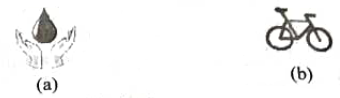
i. Identify the following symbols and state their significance:
Image
ii. How the biodiversity can be conserved?
Differentiate between nuclear fission and nuclear fusion.
Describe the structure of diamond. Draw a simple diagram to show the arrangement of carbon atoms in diamond.
Which projects will you run in relation to environmental conservatioh? How?
(OR)
Write six strategies implemented by you for conservation of the environment.
What is colourblindness?
Give preventive methods by giving examples of corrosion?
There are five animals A, B, C, D and E. The animal A uses its modified forelimbs for flying. The animal B uses its forelimbs for running whereas the animal C uses its forelimbs for grasping. The animal D can live on land as well as in water and uses its forelimbs to prop up the front end of its body when at rest. The animal E which respires by using spiracles and tracheae uses wings for flying but its wings are analogous to the modified forelimbs of animal A.
  1. What could the animals A, B, C, D and E be?
  2. Why are the forelimbs of animals A, B, C, D called homologous organs?
  3. What does the existence of homologous organs in animals A, B, C and D tell us about their ancestors?
  4. Why are the modified forelimbs of animal A and the wings of animal E called analogous organs?
  5. State whether animals A and E have a common ancestor or not.
Explain the theory of evolution and mention the proof supporting it.
A rainbow is the combined effect (an exhibition) of the refraction, dispersion, and total internal reflection of light (taken together). (Practice Activity Sheet – 1)
(OR)
With a neat labelled diagram, explain how the formation of rainbow occurs.
What is an electromagnet? Describe the construction and working of an electromagnet with the help of a labelled diagram.