Question
What is the basic difference between the atom and molecule of a diamagnetic and a paramagnetic material? Why are elements with even atomic number more likely to be diamagnetic?

Answer

Atoms/ molecules of a diamagnetic substance contain even number of electrons and these electrons from the pairs of opposite spin; while the atoms/ molecules of a paramagnetic substance have excess of electrons spinning in the same direction. The elements with even atomic number Z has even number of electrons in its atoms/ molecules, so they are more likely to form electrons pairs of opposite spin and hence more likely to be diamagnetic.

Need a full question paper?

Generate a complete, print-ready paper with questions like this in minutes — across 16+ boards, with answer keys.
Start Generating Free

Similar questions

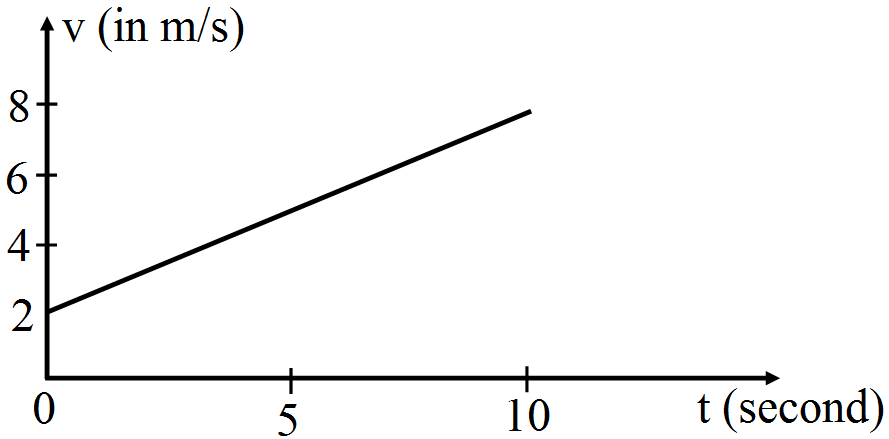
Figure shows the graph of velocity versus time for a particle going along the X-axis. Find:
  1. The acceleration.
  2. The distance travelled in 0 to 10s.
  3. The displacement in 0 to 10s.

An electric bulb, when connected across a power supply of 220V, consumes a power of 60W. If the supply drops to 180V, what will be the power consumed? If the supply is suddenly increased to 240V, what will be the power consumed?
Draw the graph to show variation of binding energy per nucleon with mass number of different atomic nuclei. Calculate binding energy/nucleon of $^{40}_{20}\text{Ca}$ nucleus.

Given:

mass of  $^{40}_{20}\text{Ca} = 39.962589\text{u}$.

mass of proton = 1.007825 u.

mass of neutron = 1.008665 u. 

and 1 u = 931 MeV/C2.
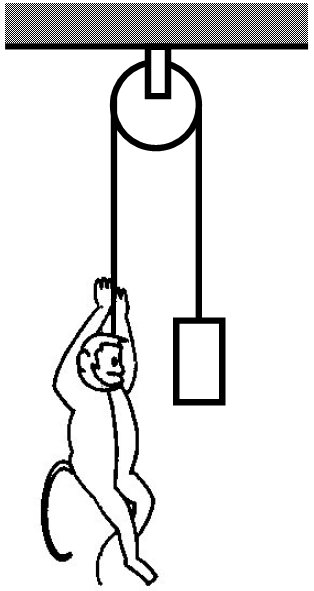
A monkey is climbing on a rope that goes over a smooth light pulley and supports a block of equal mass at the other end figure. Show that whatever force the monkey exerts on the rope, the monkey and the blockmove in the same direction with equal acceleration. If initially both were at rest, their separation will not change as time passes.

Find the moment of inertia of a uniform square plate of mass m and edge a about one of its diagonals.
A hydrogen atom in state n = 6 makes two successive transitions and reaches the ground state. In the first transition a photon of 1.13eV is emitted. (a) Find the energy of the photon emitted in the second transition (b) What is the value of n in the intermediate state?
A wheel rotating at a speed of 600rpm (revolutions per minute) about its axis is brought to rest by applying a constant torque for 10 seconds. Find the angular deceleration and the angular velocity 5 seconds after the application of the torque.
Calculate the number of states per cubic metre of sodium in 3s band. The density of sodium is 1013kg/ m3. How many of them are empty?
  1. A parallel plate capacitor (C1) having charge Q is connected, to an identical uncharged capacitor C2 in series. What would be the charge accumulated on the capacitor C2?
  2. Three identical capacitors each of capacitance 3mF are connected, in tern, in series and in parallel combination to the common source of V volt. Find out the ratio of the energies stored in two configurations.
Obtain the formula for the electric field due to a long thin wire of uniform linear charge density λ without using Gauss’s law.
[Hint: Use Coulomb’s law directly and evaluate the necessary integral.]