Question
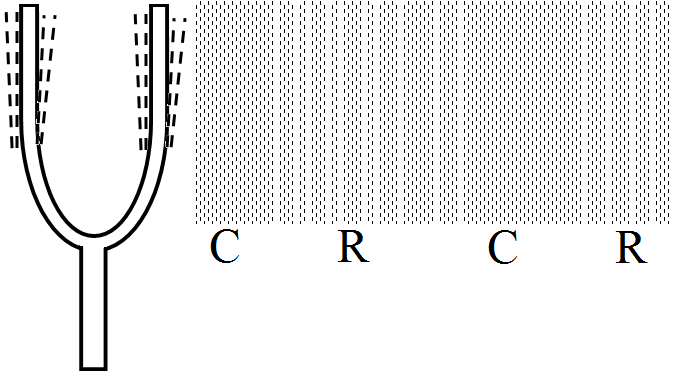
What is the difference between a compression and a rarefaction in a sound wave? Illustrate your answer with a sketch.

Answer

A compression is that part of a longitudinal wave in which the particles of the medium are closer to one another than they normally are, and there is a momentary reduction in volume of the medium. It is a region of high pressure. A rarefaction is that part of a longitudinal wave in which the particles of the medium are farther apart than normal, and there is a momentary increase in the volume of the medium. It is a region of low pressure.

Need a full question paper?

Generate a complete, print-ready paper with questions like this in minutes — across 16+ boards, with answer keys.
Start Generating Free

Similar questions

Consider the following sound waves marked A, B, C and D:
  1. Which two waves represent sounds of the same loudness but different pitch?
  1. Which two waves represent sounds of the same frequency but different loudness?
  1. State whether all these sound waves have been produced by the same vibrating body or different vibrating bodies?
  1. Which vibrating body/bodies could have generated the sound waves shown here?
How long will it take a force of $10\ N$ to stop a mass of $2.5\ kg$ which is moving at $20\ m/s$?
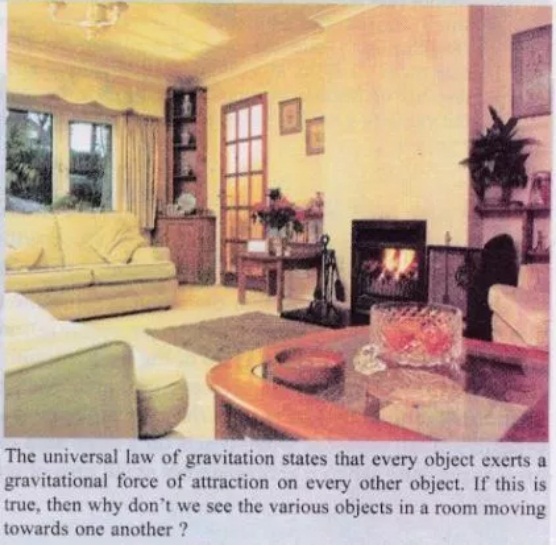
Universal law of gravitation states that every object exerts a gravitational force of attraction on every other object. If this is true, why don’t we notice such forces? Why don’t the two objects in a room move towards each other due to this force?

An element X forms the following compounds with hydrogen, carbon and oxygen:
$H_2X, CX_2, XO_2, XO_3$
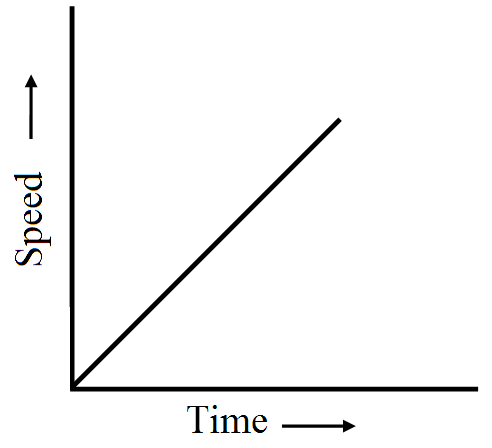
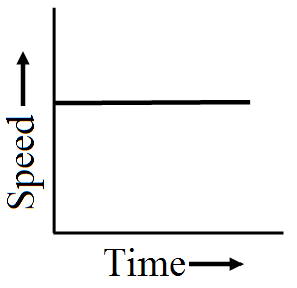
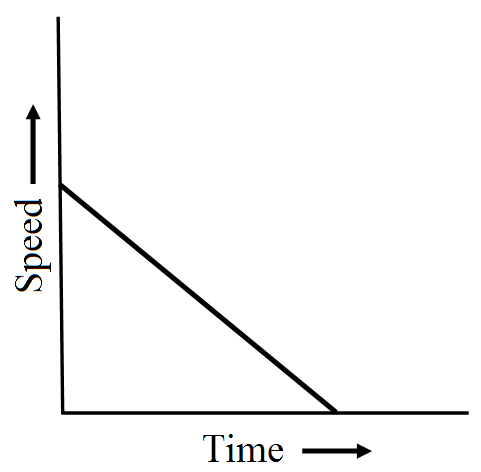
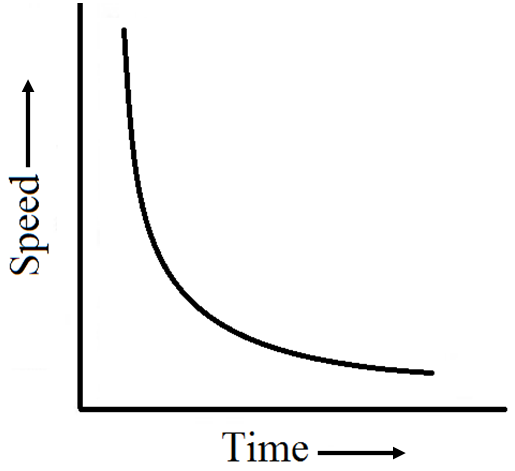
What type of motion is represented by each one of the following graphs?


An atom of an element $X$ may be written as ${ }_4^9 X$
a. What does the figure $9$ indicate?
b. What does the figure $4$ indicate?
c. What is the number of protons in atom $X $?
d. What is the number of neutrons in atom $X$ ?
e. What is the number of electrons in atom $X$ ?
f. How many electrons are there in the outermost shell of an atom of element $X$ ?
g. Write the symbol of ion formed by an element $Z$ is $2,8,8$.
What are longitudinal waves and transverse waves? Explain with the help of labelled diagrams.
Suppose a planet exists whose mass and radius both are half those of the earth. Calculate the acceleration due to gravity on the surface of this planet.
If one gram of sulphur contains $x$ atoms, calculate the number of atoms in one gram of oxygen element.
(Atomic masses: $S = 32\ u; O = 16\ u)$
Differentiate between a saturated and an unsaturated solution. How will you test whether a given solution is saturated or not?