Questions

Question Answer (5 Marks)

Take a timed test

19 questions · self-marked practice — reveal the answer and mark yourself.

Question 15 Marks
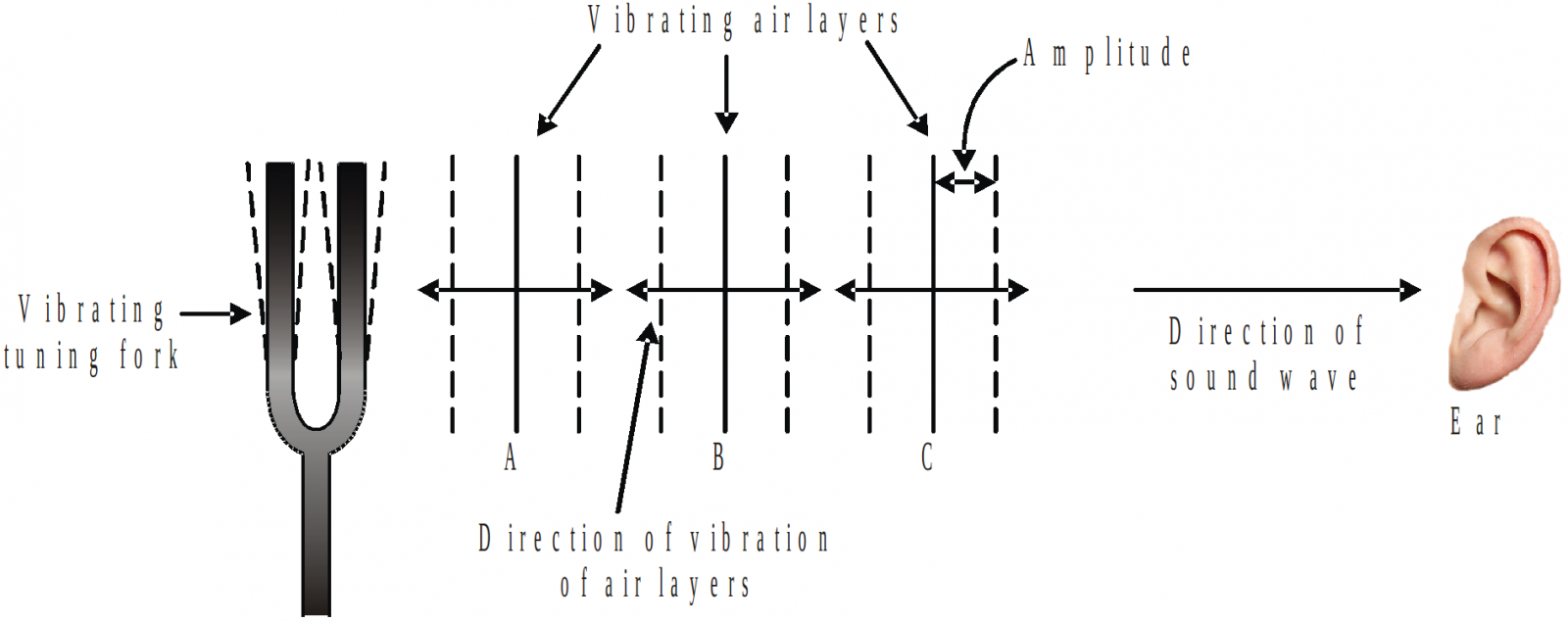
How does sound from a sound producing body travel through air to reach our ears? Illustrate your answer with the help of a labelled diagram.
Answer
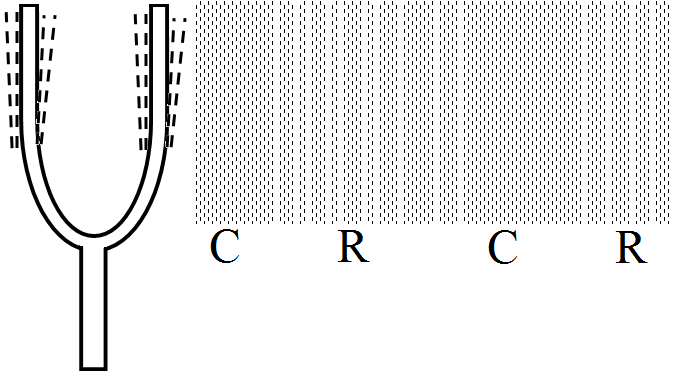
When an object vibrates (and makes sound), then the air layers around it also start vibrating in exactly the same way and carry sound waves from the sound producing object to our ears. Suppose a tuning fork is vibrating and producing sound waves in air. Since the prongs of the tuning fork are vibrating, the individual layers of air are also vibrating. Sound travels in the form of longitudinal waves in which the back and forth vibrations of the air layers are in the same direction as the movement of sound wave.
View full question & answer
Question 25 Marks
Explain the terms 'compression' and 'rarefactions' of a wave. What type of waves consist of compressions and rarefactions?
Answer
A compression is that part of a longitudinal wave in which the particles of the medium are closer to one another than they normally are, and there is a momentary reduction in volume of the medium.
A rarefaction is that part of a longitudinal wave in which the particles of the medium are farther apart than normal, and there is a momentary increase in the volume of the medium.
Longitudinal waves consist of compressions and rarefactions.
View full question & answer
Question 35 Marks
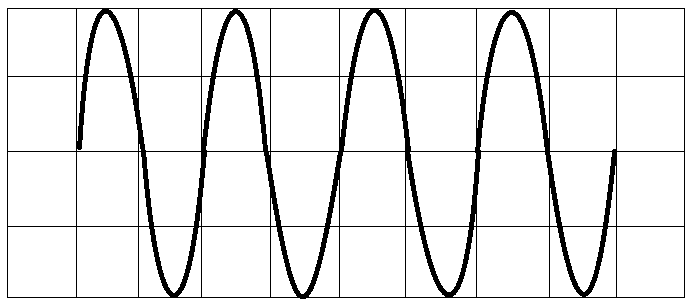
Consider the following sound waves marked A, B, C and D:
  1. Which two waves represent sounds of the same loudness but different pitch?
  1. Which two waves represent sounds of the same frequency but different loudness?
  1. State whether all these sound waves have been produced by the same vibrating body or different vibrating bodies?
  1. Which vibrating body/bodies could have generated the sound waves shown here?
Answer
  1. A and D waves represent sounds of the same loudness but different pitch as both of them have same amplitude but different frequency.
  2. B and D waves represent sounds of same frequency but different loudness as both have same frequency but different amplitude.
  3. Same vibrating body can produce all the given sound waves.
  4. Tuning fork is a device that can produce sound waves of different frequencies and amplitudes. Therefore, all these sound waves can be generated by a tuning fork.
View full question & answer
Question 45 Marks
How can reverberations in a big hall or auditotium be reduced?`
Answer
Reverberations in a big hall or auditorium can be reduced by the following methods:
  1. Panels made of sound absorbing materials are put on the walls and ceilings of hall and auditorium.
  2. Carpets are put on the floor to absorb sound and reduce reverberations.
  3. Heavy curtains are put on doors and windows to absorb sound and reduce reverberations.
  4. The seats in the hall are made from materials having sound absorbing properties.
View full question & answer
Question 55 Marks
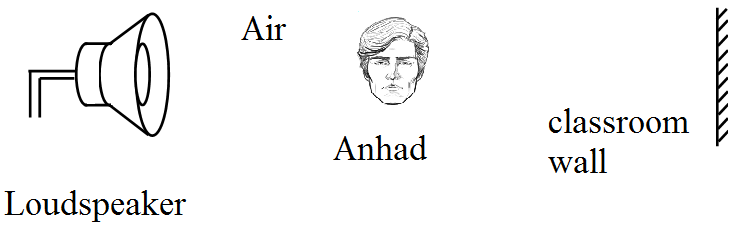
In an experiment, Anhad studies sound waves. He sets up a loudspeaker to produce sound as shown below:
Anhad adjusts the signal to the loudspeaker to give a sound of frequency 200Hz.
  1. What happens to the air in-between Anhas and the loudspeaker?
  2. Explain how Anhad receives sound in both ears.
Answer
  1. The air in between Anhad and speaker vibrates with the frequency of 200Hz. Sound is a longitudinal wave, so successive compression and rarefaction is formed between Anhad and the speaker.
  2. Anhad receives sound in the right ear by the sound waves transmitted directly from the loudspeaker, and in his left ear, he receives sound from sound waves reflected from the classroom wall.
View full question & answer
Question 65 Marks
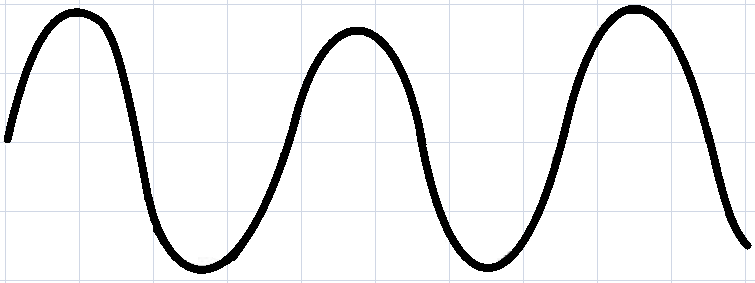
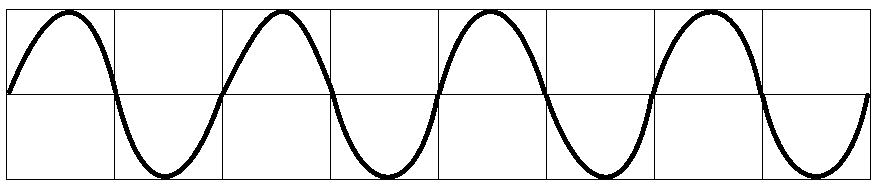
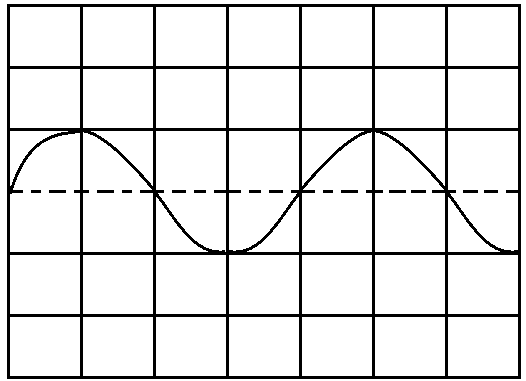
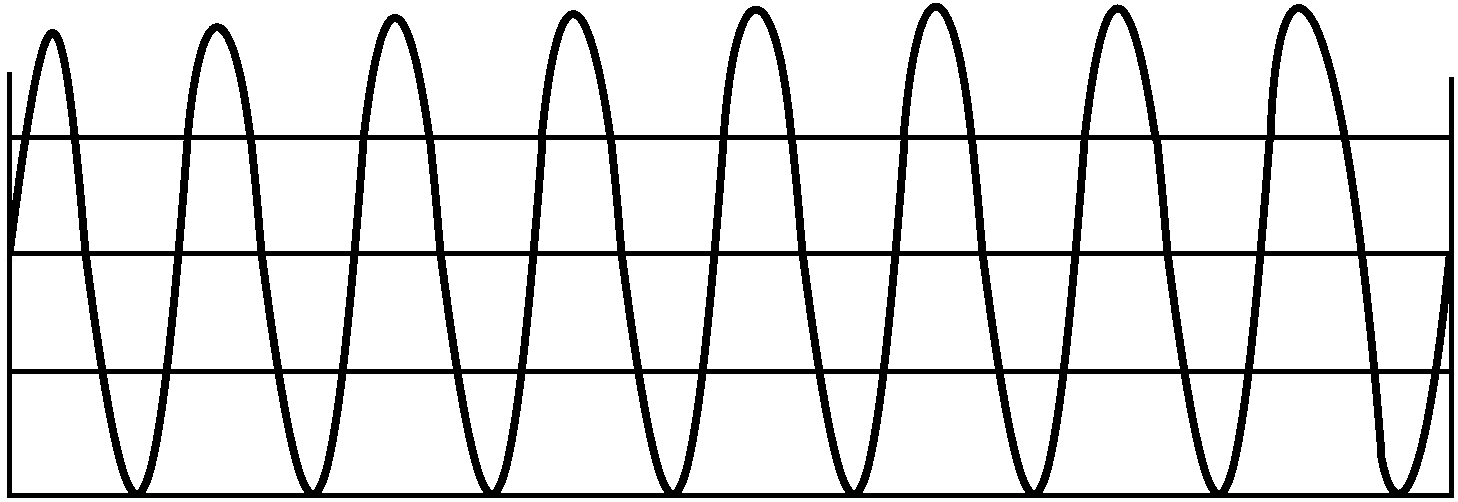
Figure X showa a trace of a sound wave produced by a particular tuning fork:


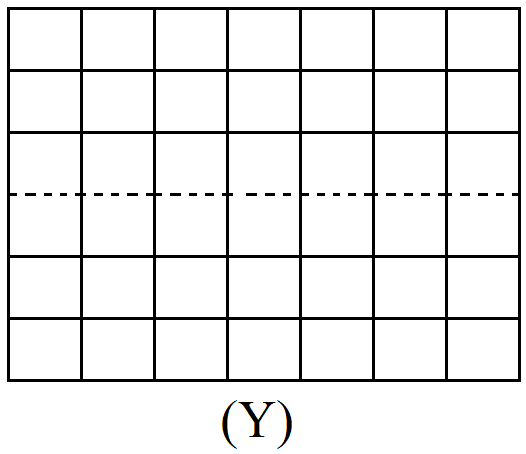
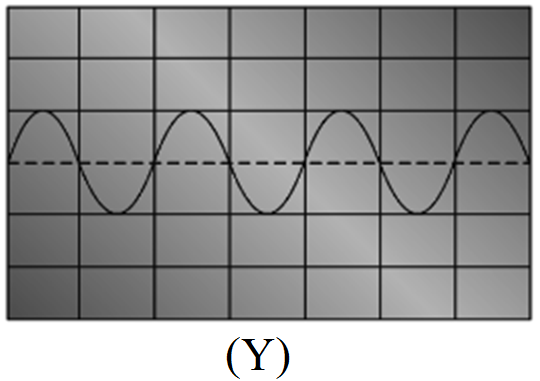
  1. On the graph paper given in Figure Y, draw a trace of the sound wave which has higher frequency than that shown in Figure X.
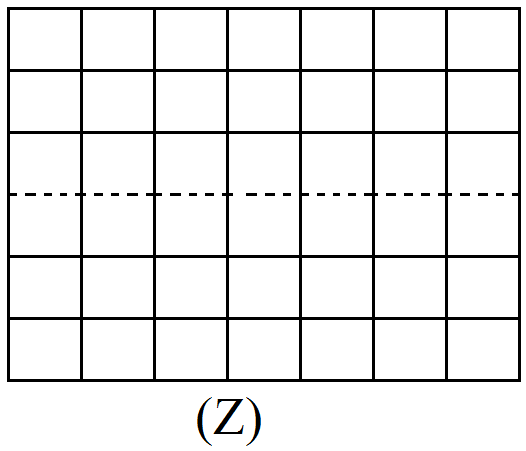
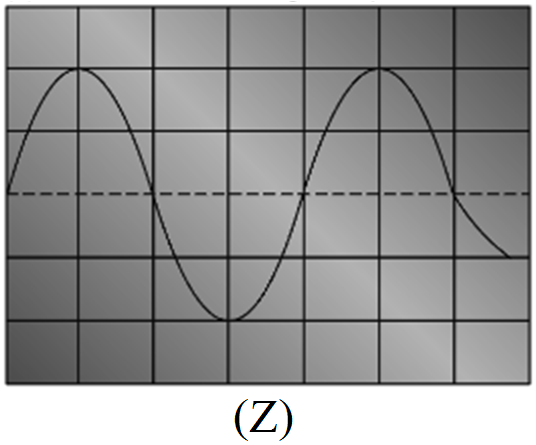
  2. On the graph paper shoen in Figure Z, draw a trace of the sound wave which has a larger amplitude than that shown in Figure X.
Answer
  1. Higher frequency sound wave in comparison to sound wave produced by the tuning fork in X.
  1. Sound wave with larger amplitude in comparison to sound wave produced by the tuning fork in X.
View full question & answer
Question 75 Marks
What is kidnapped, blindfolded and imprisoned in a big room. How could the man tell if he was in: (a) a city (b) a village (c) a bare room (d) a furnished room.
Answer
  1. The person would hear a lot of noise in heavy city traffic. Hence, he can conclude that he was in a city.
  2. The person would hear a very little noise in village traffic. Hence, he can conclude that he was in a village.
  3. The person would hear echoes when talking in a bare room.
  4. In furnished room, echo is very less. Hence, he can conclude that he was in a furnished room.
View full question & answer
Question 85 Marks
What is the difference between a compression and a rarefaction in a sound wave? Illustrate your answer with a sketch.
Answer
A compression is that part of a longitudinal wave in which the particles of the medium are closer to one another than they normally are, and there is a momentary reduction in volume of the medium. It is a region of high pressure. A rarefaction is that part of a longitudinal wave in which the particles of the medium are farther apart than normal, and there is a momentary increase in the volume of the medium. It is a region of low pressure.
View full question & answer
Question 95 Marks
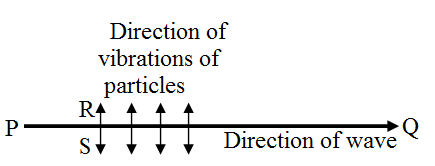
Distinguish between longitudinal and transverse waves.
Answer
Longitudinal wave: A wave in which the particles of the medium vibrate back and forth in the ‘same direction’, in which the wave is moving, is called a longitudinal wave.
These waves can be produced in all the three media: solids, liquids and gases.
Transverse wave: A wave in which the particles of the medium vibrate up and down, ‘at right angles’ to the direction in which the wave is moving, is called a transverse wave.
It can be produced in solids and liquids but not in gases.
View full question & answer
Question 105 Marks
Give two examples each of longitudinal waves and transverse waves.
Answer
Longitudinal waves:
  1. The waves which travel along a spring when it is pushed and pulled at one end.
  2. Sound waves in air.
Transverse waves:
  1. The waves produced by moving one end of a long spring up and down rapidly, while other end is fixed.
  2. The water waves or ripples formed on the surface of water in a pond.
View full question & answer
Question 115 Marks
A sound producing body is at considerable distance from a man. There can be four different media W, X, Y and Z between the sound producing body and the man. The medium X brings the sound to man most quickly whereas medium Z takes the maximum time. The time taken by medium W in bringing sound to man is less than that of X but more than that of Z. The medium Y, however, fails to bring the sound from the sound producing body to the man. Which medium could be the one:
  1. Having no fixed shape and no fixed volume?
  2. Having a fixed volume but no fixed shape?
  3. Having the same composition as that on the moon?
  4. Having a fixed shape and a fixed volume?
Answer
  1. Z medium has no fixed shape and no fixed volume.
  2. W medium has a fixed volume but no fixed shape.
  3. Y medium has the same composition as that on the moon.
  4. X medium has a fixed shape and a fixed volume.
View full question & answer
Question 125 Marks
Describe a simple experiment to show that the prongs of a sound producing tuning fork are vibrating.
Answer
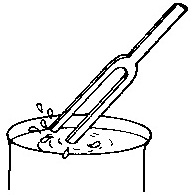
Fill water in a beaker up to its brim. Touch the surface of water with the prongs of a sound making tuning fork (which has been struck on a hard rubber pad). The prongs of tuning fork producing sound splash water. This shows that the prongs of a sound producing tuning fork are vibrating (moving forwards and backwards rapidly).

The prongs of a sound producing tuning fork splash water, so they are vibrating.
View full question & answer
Question 135 Marks
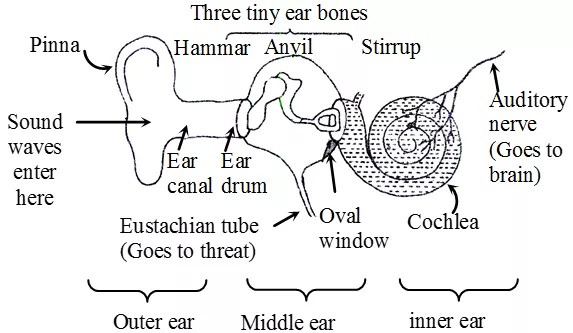
Draw a neat and labelled diagram of the human ear. With the help of this diagram, explain the construction and working of the human ear.
Answer

Construction of human ear: The ear consists of three compartments: outer ear, middle ear and inner ear. The outer ear consists of broad part called pinna and about 2 to 3 centimeters long passage called ear canal. At the end of ear canal is a thin, elastic, circular membrane called tympanum or ear-drum. The middle ear contains three small delicate bones called hammer, anvil and stirrup. These bones are linked to one another. The one end of hammer is touching the ear drum and its other end is connected to the second bone called anvil. The other end of anvil is connected to the third bone called stirrup. And the free end of stirrup is held against the membrane over the oval window of the inner ear. The lower part of middle ear has Eustachian tube going to the throat. The inner ear has a coiled structure called cochlea. The cochlea is filled with liquid containing sound sensitive nerve cells. The other side of cochlea is connected to the auditory nerve which goes to the brain.
Working of human ear: The sound waves are collected by the pinna. These sound waves pass through ear canal and fall on the ear-drum. Sound waves consist of compressions and rarefactions. When the compression strikes the ear drum, the pressure on the outside of ear drum increases and pushes the ear drum inwards. And when rarefaction strikes the ear drum, the pressure on the outside of ear drum decreases and it moves outwards. Thus, when sound waves fall on the ear drum, it vibrates back and forth rapidly. These vibrations are passed onto the three bones in the middle ear and finally to the liquid in the cochlea. Due to this, liquid in the cochlea starts to vibrate, setting up electrical impulses in the nerve cells present in it. These impulses are carried to the brain by auditory nerve. The brain interprets the impulses and we get the sensation of hearing.
View full question & answer
Question 145 Marks
What is a soundboard? Explain the working of a soundboard with the help of a labelled diagram.
Answer

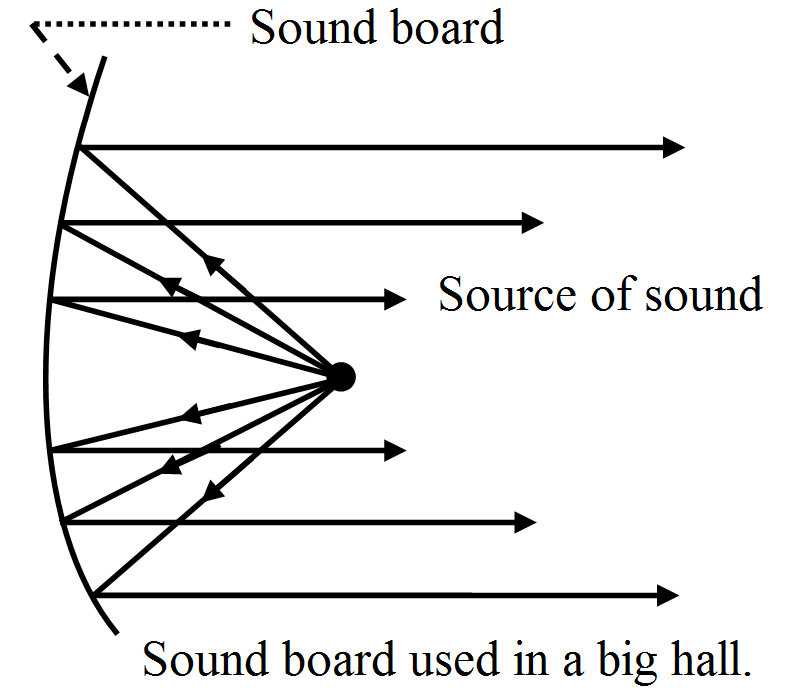
Soundboard: The soundboard is a concave board (curved board) which is placed behind the speaker in large halls or auditoriums so that his speech can be easily heard even by the persons sitting at a considerable distance.
The sound board works as follows: the speaker is made to stand at the focus of the concave soundboard. The concave surface of the soundboard reflects the sound waves of the speaker towards the audience (and hence prevents the spreading of sound in various directions). Due to this, sound is distributed uniformly throughout the hall and even the persons sitting at the back of the hall can hear the speech easily.
View full question & answer
Question 155 Marks
Three different vibrating objects produce three types of sounds X, Y and Z. Sounds X and Y cannot be heard by a man having normal range of hearing but sound Z can be heard easily. The sound X is used in hospitals to break kidney stones of a patient into fine grains whioch then get flushed out with urine. The sound Y is similar to that which is produced during an earthquake before the main shock wave is generated.
  1. What type of sounds are (i) X, (ii) Y, and (iii) Z?
  2. Name one device which can produce sound like X.
  3. Name one device in a science laboratory which can produce sound like Y.
  4. Name one device in our homes which can produce sound like Z.
  5. What is the frequency range of sounds like Z?
Answer
  1.  
  1. X is an ultrasonic sound as it is used in hospitals to break the kidney stones.
  2. Y is an infrasonic sound as it is produced during the earthquake.
  3. Z is an audible sound as it can be easily heard.
  1. Ultrasound machine in hospitals is used to produce ultrasonic sound waves.
  2. Simple pendulum can produce infrasonic sound waves.
  3. Loudspeaker can produce sound of audible range.
  4. Since Z is an audible sound, its frequency range is between 20Hz and 20,000Hz.
View full question & answer
Question 165 Marks
How could you convince a small child that when ou speak, it is not necessary for air to travel from your mouth to the ear of a listener?
Answer
There is no actual movement of air from the sound-producing body to our ear. The air layers only vibrate back and forth, and transfer the sound energy from one layer to the next layer till it reaches our ear.
Example: If we turn on a gas tap for a few seconds, a person standing a few metres away will hear the sound of escaping gas first and the smell of gas reaches him afterwards. The sound of gas travels through the vibrations of air layers so it reaches first, but the smell of gas reaches the person through the actual movement of the air layers, which takes more time. So, it is clear that the sound is not being transmitted by the actual movement of air from the gas tap to person, otherwise he would hear and smell the gas at the same time.
View full question & answer
Question 175 Marks
Describe an experiment to show that sound cannot pass through vacuum.
Answer
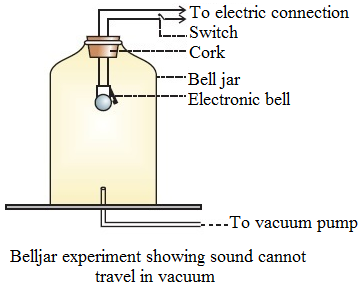
Sound cannot travel through vacuum. This can be shown by the following experiment:
  1. A ringing electric bell is placed inside an air tight glass jar containing air. We can hear the sound of ringing bell clearly. Thus, when air is present as medium in the bell jar, sound can travel through it and reach our ears.
  2. The bell jar containing ringing bell is placed over the plate of a vacuum pump. Air is gradually removed from the bell jar by switching on the vacuum pump. As more and more air is removed from the bell jar, the sound of ringing bell becomes fainter and fainter. And when all the air is removed from the bell jar, no sound can be heard at all. Thus, when vacuum is created in the bell jar, then the sound of ringing bell placed inside it cannot be heard.
This shows that sound cannot travel through vacuum.
View full question & answer
Question 185 Marks
What are longitudinal waves and transverse waves? Explain with the help of labelled diagrams.
Answer
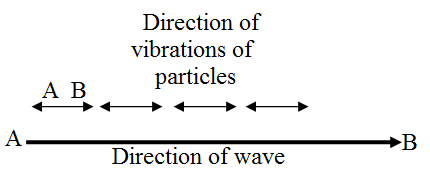
A wave in which the particles of the medium vibrate back and forth in the 'same direction', in which the wave is moving, is called a longitudinal wave. These waves can be produced in all the three media: solids, liquids and gases.
A wave in which the particles of the medium vibrate up and down 'at right angles' to the direction in which the wave is moving, is called a transverse wave. It can be produced in solids and liquids but not in gases.
View full question & answer
Question 195 Marks
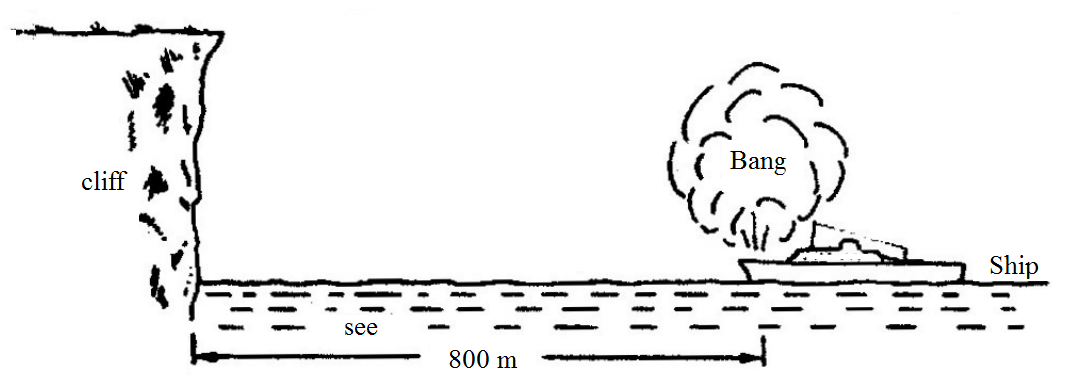
The drawing shoes a ship $800\ m$ from a cliff. A gun is fired on the ship. After $5$ seconds the people at the front of the ship hear the sound of the gun again.

  1. What is the name of this effect?
  2. What happens to the sound at the cliff?
  3. How far foes the sound travel in $5$ seconds?
  4. Calculate the speed of sound.
Answer
  1. The name of this effect is echo.
  1. Sound gets reflected back after reflecting from the cliff.
  1. Distance covered by sound wave in $5\ s$ can be calculated as follws:
Incident sound travels distance $(d_I) = 800\ m$
Sound after reflection travels $(d_R) = 800\ m$
Total distance travelled by sound
$= d_I + d_R$
$= (800 + 800)\ m$
$= 1600\ m$
  1. We have to calculate the speed of sound.
Given, Distance of cliff $d = 800\ m$
Time taken to listen to the echo $t = 5\ s$
So time taken to reach the cliff $(\text{t}_\text{I})=\frac{5}{2}\text{s}$
So, the speed of sound is
$=\frac{\text{d}}{\text{t}_\text{I}}$
$=\frac{800\times2}{5}\text{m/s}$
$=320\text{m/s}$
View full question & answer