Question
What is the difference between a direct current and an alternating current? How many times does AC used in India change direction in one second?

Answer

Difference between Direct current and an Alternating current:

 
Direct current
Alternating current
1.
The magnitude of direct current is constant and flows in one direction only.
The magnitude of AC changes with time and direction of alternating current reverses periodically.
2.
Direct current cannot be used for large scale supply of electricity for household purpose.
Alternating current is used to run electrical appliances like electric bulb, electric heater, electric iron, refrigerator etc.
3.
The frequency of direct current is zero.
Frequency of alternating current in india is 50Hz.

Since frequency is 50Hz, so a.c. completes 50 cycles in 1 second. Therefore, it reverses its direction 100 times in one second.

Need a full question paper?

Generate a complete, print-ready paper with questions like this in minutes — across 16+ boards, with answer keys.
Start Generating Free

Similar questions

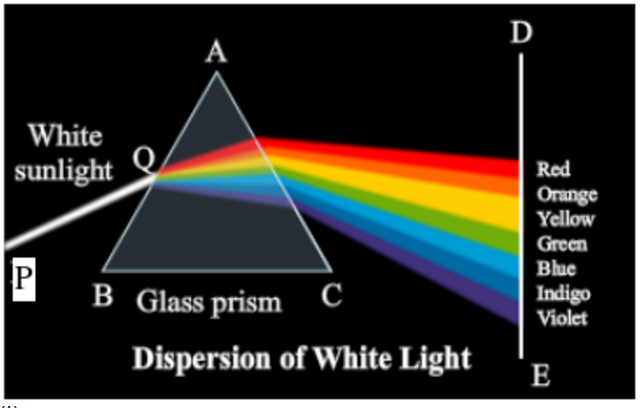
A narrow beam PQ of white light is passing through a glass prism ABC as shown in the diagram.

Trace it on your answer sheet and show the path of the emergent beam as observed on the screen DE.
  1. Write the name and cause of the phenomenon observed.
  2. Where else in nature is this phenomenon observed?
  3. Based on this observation, state the conclusion which can be drawn about the constituents of white light.
An electric kettle rated as 1200W at 220V and a toaster rated at 1000W at 220V are both connected in parallel to a source of 220V. If the fuse connected to the source blows when the current exceeds 9.0A, can both appliances be used at the same time? Illustrate your answer with calculations.
Draw a labelled diagram to show the domestic electric wiring from an electric pole to a room. Give the wiring for a bulb and a three-pin socket only.
State the important precautions which should be observed in the use of electricity.
It is possible to replace resistors joined in series by an equivalent single resistor of resistance. How?
A man standing in front of a special mirror finds his image having a very small head, a fat body and legs of normal size. What is the shape of:
  1. Top part of the mirror?
  2. Middle part of the mirror?
  3. Bottom part of the mirror?
Give reasons for your choice.
With the help of a circuit diagram, obtain the relation for the equivalent resistance of two resistances connected in parallel.
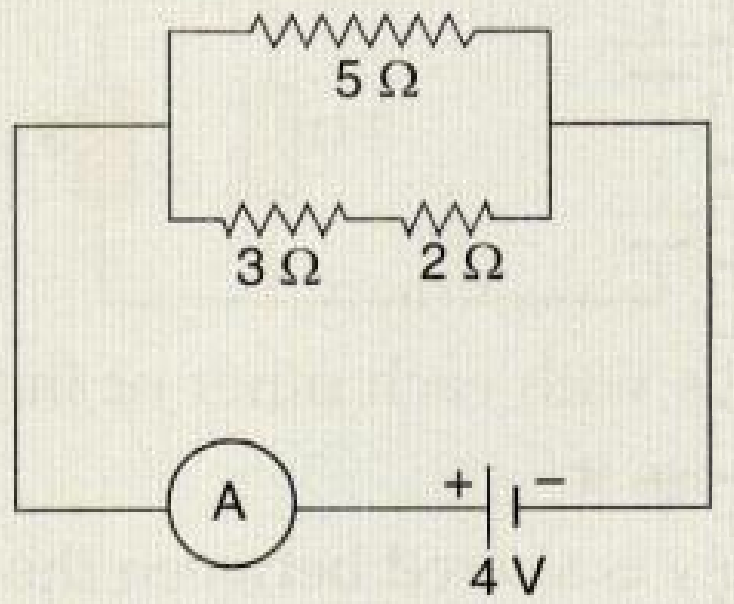
In the circuit diagram shown below, find:
  1. Total resistance.
  2. Current shown by the ammeter A

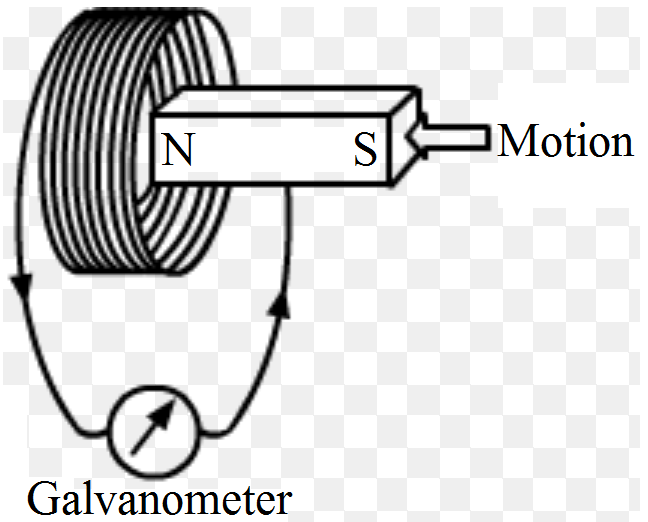
When the magnet shown in the diagram below is moving towards the coil, the galvanometer gives a reading to the right.

  1. What is the name of the effect being produced by the moving magnet?
  2. State what happens to the reading shown on the galvanometer when the magnet is moving away from the coil.
  3. The original experiment is repeated. This time the magnet is moved towards the coil at a great speed. State two changes you would notice in the reading on the galvanometer.
Which mirror is used as a torch reflector? Draw a labelled diagram to show how a torch reflector can be used to produce a parallel beam of light. Where is the bulb placed in relation to the torch reflector?
When an object is placed 20cm from a concave mirror, a real image magnified three times is formed. Find:
  1. The focal length of the mirror.
  2. Where must the object be placed to give a virtual image three times the height of the object?