Question
What is the difference between supersonic and ultrasonic?

Answer

The sounds having frequency more than 20,000 hertz (Hz) are called ultrasonic or ultrasound.
The sounds having frequency less than 20Hz are called infrasonic or infrasound.
Both of these sounds cannot be heard by human beings. The audible range for of hearing by human beings is 20Hz to 20000Hz.
The speed of sound is same for all frequencies in a particular medium. So, speed of ultrasonic sound and infrasonic sound are same in a particular medium.

Need a full question paper?

Generate a complete, print-ready paper with questions like this in minutes — across 16+ boards, with answer keys.
Start Generating Free

Similar questions

Derive the formula: $\text{s}=\text{ut}+\frac{1}{2}\text{at}^2,$ where the symbols have usual meanings.
Calculate the molecular masses of the following compounds:
$a.$ Methane$, CH_4$
$b.$ Ethane$, C_2 H_6$
$c.$ Ethene$, C_2 H_4$
$d.$ Ethyne$, C_2 H_2$
$($Atomic masses$: C = 12u; H = 1u)$
What will happen if:
  1. Excess amount of fertilizer is added to a green lawn?
  2. Salt is added to cut pieces of raw mango.
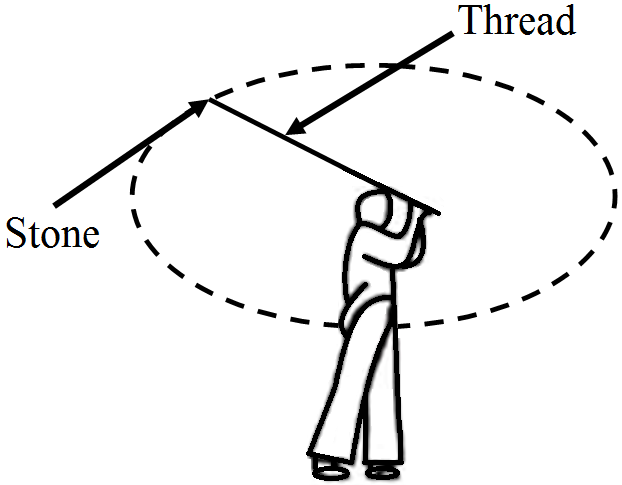
Look at the figure below and answer the following questions:
  1. Name the kind of motion of the stone.
  2. It this an example of accelerated motion? Why?
  3. Name the force that keeps the stone in its path.
  4. What is the direction of this force? Draw it in your answer sheet.
State two characteristic properties each of:
  1. A solid
  2. A liquid
  3. A gas
Why composite fish culture is a preferred method of fish culture? Give one reason.
An object is suspended with a string which gets stretched. When the object is completely immersed in water, the extension of string decreases. Explain why it happens.
A driver of a car travelling at $52\ km/ h^{−1}$ applies the brakes and accelerates uniformly in the opposite direction. The car stops in $5s.$ Another driver going at $3\ km/ h^{−1}$ in another car applies his brakes slowly and stops in $10s.$ On the same graph paper, plot the speed versus time graphs for the two cars. Which of the two cars travelled farther after the brakes were applied?
What is the difference between parenchyma and collenchyma?
In photosynthesis, $6$ molecules of carbon dioxide combine with an equal number of water molecules through a complex series of reactions to give a molecule of glucose having a molecular formula $C_6H_{12}O_6.$ How many grams of water would be required to produce $18g$ of glucose? Compute the volume of water so consumed assuming the density of water to be $1 \ g \ cm^{–3}.$