Question
What is the valence electron in alkali metal?

Answer

  1. S-electron
Explanation:
The valence electron in an alkali metal is an s-electron.
Generally, they make up Group 1 of the periodic table.
The different examples that come under this category are lithium, potassium, and francium.

Need a full question paper?

Generate a complete, print-ready paper with questions like this in minutes — across 16+ boards, with answer keys.
Start Generating Free

Similar questions

$ n $ equal resistors are first connected in series and then in parallel. The ratio of maximum and minimum resistances will be :
In the given nuclear reaction, how many $\alpha$ and $\beta$ particles are emitted $92^{\mathrm{X}^{285}} \rightarrow 82^{\mathrm{Y}^{207}}$
A straight wire of length $\left(\pi^2\right)$  metre is carrying a current of $2A$ and the magnetic field due to it is measured at a point distant $1 \ cm$ from it. If the wire is to be bent into a circle and is to carry the same current as before, the ratio of the magnetic field at its centre to that obtained in the first case would be
When a magnetic field is applied in a direction perpendicular to the direction of cathode rays, then their(a) Energy decreases(b) Energy increases(c) Momentum increases(d) Momentum and energy remain unchanged


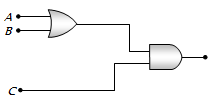
To get an output $1$ from the circuit shown in the figure, the input must be
Two bulbs of $ 40~W $ and $ 60~W $ are connected to $ 220~V $ source. The ratio of their resistances will be :
A certain mass of Hydrogen is changed to Helium by the process of fusion. The mass defect in fusion reaction is 0.02866u. The energy liberated per u is (Given 1 u = 931MeV)
A coil of area $80$ square cm and $50$ turns is rotating with $2000$ revolutions per minute about an axis perpendicular to a magnetic field of $0.05$ Tesla. The maximum value of the $\text{e.m.f.}$ developed in it is
What is immaterial for an electric fuse wire(a) Its specific resistance(b) Its radius(c) Its length(d) Current flowing through it
   
   
Suppose, the electron in a hydrogen atom makes transition from $n = 3$ to $n = 2$ in $10^{-8}s.$ The order of the torque acting on the electron in this period, using the relation between torque and angular momentum as discussed in the chapter on rotational mechanics is$:$