Question
What will be the mass of one ${ }^{12} C$ atom in g ?

Answer

Since,
the number of atoms in 1 mol of ${ }^{12} C$ atoms $=6.022 \times 10^{23}$ atoms $=$ Atomic mass of carbon -12 in gms. $=12 g$ Thus, $6.0022 \times 10^{23}$ atoms of ${ }^{12} C$ have mass $=12 g$ $\therefore 1$ atom of ${ }^{12} C$ will have mass $=\frac{12}{6.022 \times 10^{23}} g$ $=1.9927 \times 10^{-23} g$

Need a full question paper?

Generate a complete, print-ready paper with questions like this in minutes — across 16+ boards, with answer keys.
Start Generating Free

Similar questions

Standard vaporisation enthalpy of benzene at boiling point is $30.8 \mathrm{~kJ} \mathrm{~mol}^{-1}$. For how long would 100 W electric heater have to operate in order to vaporise a 100 g sample at that temperature (power = energy/ time and $1 \mathrm{~W}=1 \mathrm{~J} \mathrm{~s}^{-1}$ )?
Consider the elements:
Cs, Ne, I and F
Identify the element which exhibits neither the negative nor does the positive oxidation state.
At 298 K what will be the change in standard internal energy change for the given reaction:
$\mathrm{OF}_2(\mathrm{~g})+\mathrm{H}_2 \mathrm{O}(\mathrm{~g}) \rightarrow \mathrm{O}_2(\mathrm{~g})+2 \mathrm{HF}(\mathrm{~g}) \Delta \mathrm{H}=-310 \mathrm{~kJ}$
Justify that the following reactions are redox reactions:$4NH_3(g) + 5O_2(g) → 4NO(g) + 6H_2O(g)$
Define the term entropy. Write its unit. How does entropy of a system change on increasing temperature?

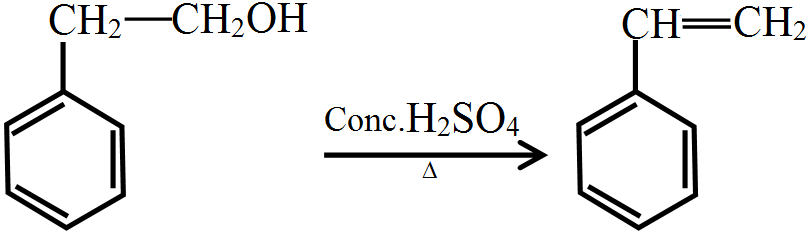
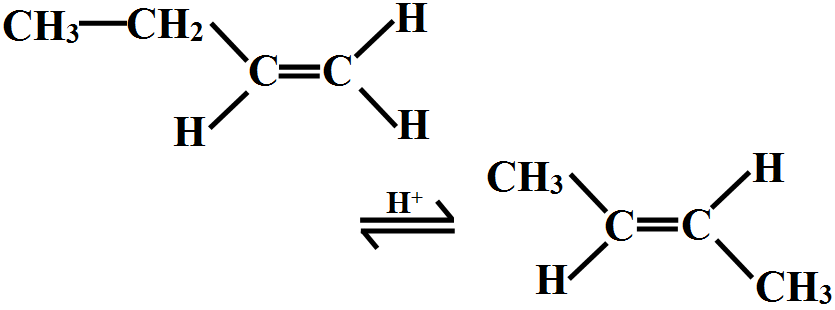
Classify the reaction type as elimination, rearrangement, addition and substitution.
  1.  
  1.  
  1. $\text{CH}_3-\text{CH(Br)}-\text{CH}(\text{CH}_3)_2\xrightarrow{\text{aq. KOH}}$
$\ \ \ \ \ \ \ \ \ \ \ \ \ \ \ \ \ \ \ \ \ \ \ \text{OH}\\\ \ \ \ \ \ \ \ \ \ \ \ \ \ \ \ \ \ \ \ \ \ \ \ \ \ |\\\text{CH}_3-\text{CH}_2-\text{C}-\text{CH}_3\\\ \ \ \ \ \ \ \ \ \ \ \ \ \ \ \ \ \ \ \ \ \ \ \ \ \ |\\\ \ \ \ \ \ \ \ \ \ \ \ \ \ \ \ \ \ \ \ \ \ \ \text{CH}_3$
Calculate the mass percent of calcium, phosphorus and oxygen in calcium phosphate $\mathrm{Ca}_3\left(\mathrm{PO}_4\right)_2$.
For the solution of salt made from weak acid and strong base, give the relationship between $K_b, K_w$ and $K_a$, the amount of hydrolysis and the formula to determine the pH of solution.
How would you explain the following observations?
BeO is almost insoluble but $\mathrm{BeSO}_4$ is soluble in water
Identify the oxidant and reductant in the following reaction:
$2\text{K}_4[\text{Fe(CN)}_6]\text{(aq)}+\text{H}_2\text{O}_2\text{(aq)}\\\xrightarrow{ \ \ \ \ \ \ }2\text{K}_3[\text{Fe(CN)}_6]\text{(aq)}+2\text{KOH}\text{(aq)}$