Question
What would have happened if the greenhouse gases were totally missing in the earth’s atmosphere? Discuss.

Answer

Earth's most abundant greenhouse gases are $\mathrm{CO}_2, \mathrm{CH}_4, \mathrm{O}_3, \mathrm{CFCs}$, and water vapour. These gases are present near the Earth's surface. They absorb solar energy that is radiated back from the surface of the Earth. The absorption of radiation results in the heating up of the atmosphere. Hence, greenhouse gases are essential for maintaining the temperature of the Earth for the sustenance of life.
In the absence of greenhouse gases, the average temperature of the Earth will decrease drastically, making it uninhabitable. As a result, life on Earth would be impossible.

Need a full question paper?

Generate a complete, print-ready paper with questions like this in minutes — across 16+ boards, with answer keys.

Start Generating Free

Similar questions

Using the standard electrode potentials given in the Table, predict if the reaction between the following is feasible:
$\mathrm{Ag}^{+}(\mathrm{aq})$ and $\mathrm{Cu}(\mathrm{s})$.
A 0.02M solution of pyridinium hydrochloride has pH = 3.44. Calculate the ionization constant of pyridine.
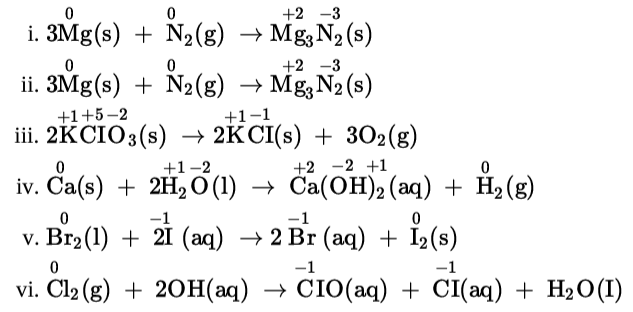
Identify the type of redox reaction taking place in the following.
Image
When 1 mole of water is converted into steam at 1 atmospheric pressure and temperature of 373 K then 40,670 joules of heat is absorbed. How much will the internal energy change in this process? The molar volumes of water and steam are 18.0 and $30,600 cm^3$ respectively.
1. Two ideal gases under the same pressure and temperature are allowed to mix in an isolated system.
What will be the sign of entropy change?
2. Water can be lifted into the water tank at the top of the house with the help of a pump. Then why is it not considered to be spontaneous?
3. What is the enthalpy change for an adiabatic process?
The unpaired electrons in Al and Si are present in 3p orbital. Which electrons will experience more effective nuclear charge from the nucleus?
Name a suitable technique of separation of the components from a mixture of calcium sulphate and camphor.
QUESTION Calculate the standard Gibbs energy change for the formation of propane at $298 K .3 C ( graphite )+4 H _2(g) \rightarrow C _3 H _8(g) \Delta_{ f } H ^{\circ}$ for propane, $C _3 H _8(g)$ is $-103.8 kJ mol ^{-1}$
Given, $S _{ m }^{\circ} C _3 H _8(g)=270.2 JK ^{-1} mol^{-1} S_{ m }^{\circ} C ($ graphite $)=5.70 JK ^{-1} mol^{-1}$ and $S _{ m }^{\circ} H _2(g)=130.7 JK ^{-1} mol^{-1}$
Predict the formulas of the stable binary compounds that would be formed by the combination of the following pairs of elements.
  1. Lithium and oxygen.
  2. Magnesium and nitrogen.
  3. Aluminium and iodine.
  4. Silicon and oxygen.
  5. Phosphorus and fluorine.
  6. Element 71 and fluorine.
$2\text{NO}(\text{g})+\text{O}_2(\text{g})\rightleftharpoons2\text{NO}_2(\text{g}),\Delta\text{H}=-117\text{J}$
Predict the effect of an increase in concentration of NO on the equilibrium concentration of $\text{NO}_2$.
Predict the effect of pressure decrease as a result of increased volume on the equilibrium concentration of $\text{NO}_2$.