Question
When a candle burns, both physical and chemical changes take place. Identify these changes. Give another example of a familiar process in which both the chemical and physical changes take place.

Answer

When a candle burns, both physical and chemical changes take place.

Physical change → Melting of wax

Chemical change → Burning of wax

Eating of food is another example where both physical and chemical changes occur simultaneously

Physical change → Breaking down of larger food particles into smaller particles

Chemical change → Digestion of food

Need a full question paper?

Generate a complete, print-ready paper with questions like this in minutes — across 16+ boards, with answer keys.
Start Generating Free

Similar questions

Distinguish between the following. Real image and Virtual image.
Like humans and animals, transportation of water, mineral and nutrients also take place in plants. How?
State two differences between a convex and a concave lens.

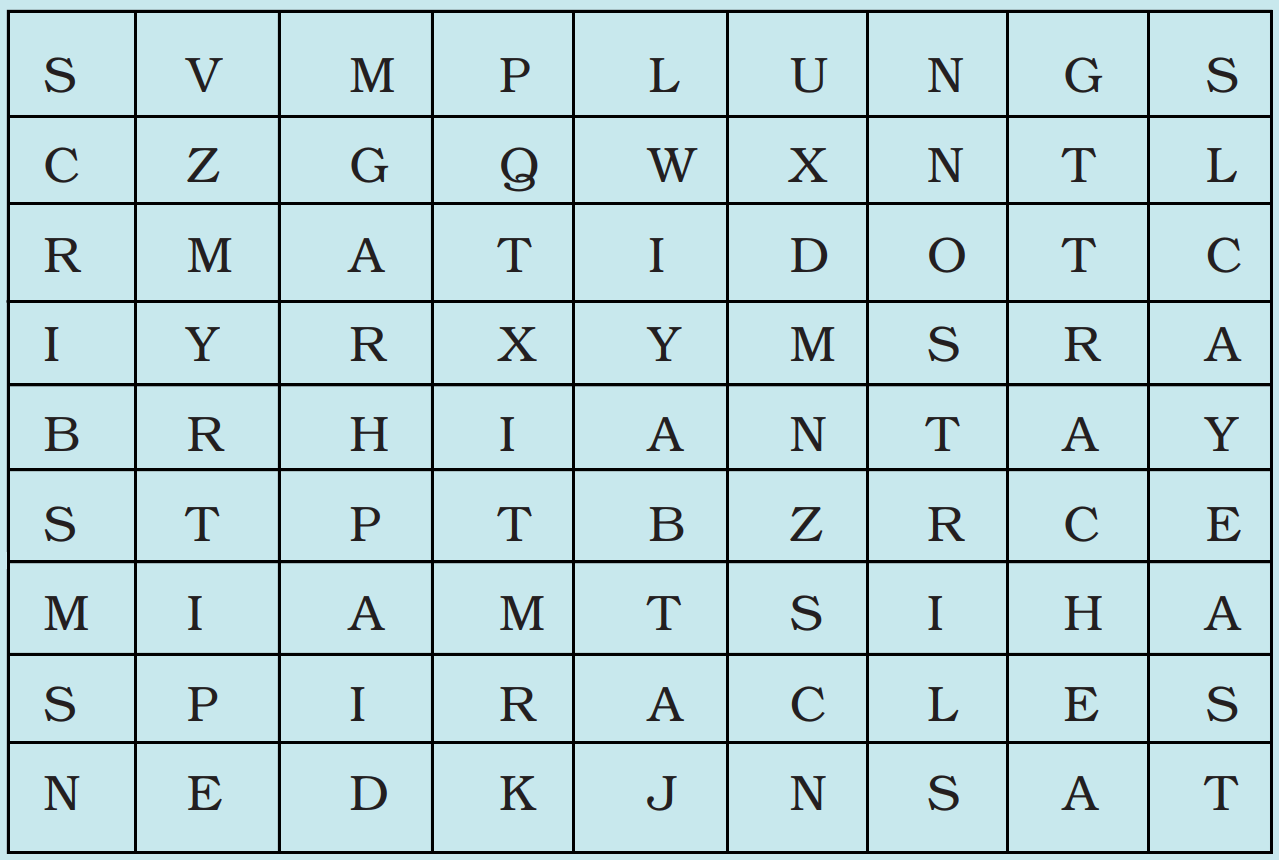
Given below is a square of letters in which are hidden different words related to respiration in organisms. These words may be present in any direction-upwards, downwards, or along the diagonals. Find the words for your respiratory system. Clues about those words are given below the square.

  1. The air tubes of insects.
  2. Skeletal structures surrounding chest cavity.
  3. Muscular floor of chest cavity.
  4. Tiny pores on the surface of leaf.
  5. Small openings on the sides of the body of an insect.
  6. The respiratory organs of human beings.
  7. The openings through which we inhale.
  8. An anaerobic organism.
  9. An organism with tracheal system.
Light and shadows are not only found around us at home. Even the Earth and the Moon can cast shadows, which causes eclipses. We also have day and night because of sunlight. To understand these things, we need to learn how the Earth spins on its axis, how the Moon moves around the Earth, and how the Earth moves around the Sun. These movements affect life on our planet. You will observe things, do fun experiments, and learn to think like a scientist. Even simple experiments can lead to more questions and learning.
Q.1 What causes day and night on Earth?
Q.2. What do we need to understand to learn about eclipses?
Q.3. Why should we do experiments while learning science?
Differentiate between uniform speed and average speed.
Answer the following:
  1. When does a person need artificial respiration?
  2. From where can the person get supply of oxygen for artificial respiration?
  3. Does the person need to be kept on artificial respiration temporarily or permanently?
Differentiate between aerobic and anaerobic respiration.
What are adaptations? Explain the types of adaptations.
Explain in brief, why we wear dark coloured clothes in winter and light coloured clothes in summer.