Question
When and how does placenta develop in human female?

Answer

Placenta develops after implantation of embryo in human female in the uterus. After implantation, finger-like projections called chorionic villi are surrounded by the uterine tissue and maternal blood. The chorionic villi and uterine tissue become interdigitated with each other and together form a structural and functional unit between developing embryo and maternal body called placenta.

Need a full question paper?

Generate a complete, print-ready paper with questions like this in minutes — across 16+ boards, with answer keys.

Start Generating Free

Similar questions

Public all over India is very much concerned about the deteriorating air quality in large parts of North India. Alarmed by this situation the Resident’s Welfare Association of your locality organised an awareness programme entitled "Bury not burn". They invited you, being a biology student to participate.
  1. How would you justify your arguments that promote burying and discourage burning? (Give two reasons)
  2. With the help of flow charts, one for each practice depict the chain of events that follow.
Explain the principle of insertional inactivation by giving a suitable example.
How does replication of the long DNA molecule occur? Explain the process.
OR
Explain the process of DNA replication with the help of a replicating fork.
Answer the following questions:
Explain the changes the primary oocyte undergoes while in different follicular stages before ovulation.
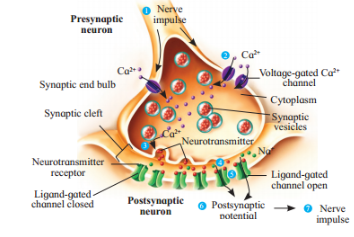
Answer the questions after observing the diagram given below.
Image
(1) What do the synaptic vesicles contain?
(2) What process is used to release the neurotransmitter ?
(3) What should be the reason for the next impulse to be conducted?
(4) Will the impulse be carried by post synaptic membrane even if one pre-synaptic neuron is there?
(5) Can you name the channel responsible for their transmission?
Describe the mechanism of sex determination in human beings with a suitable cross.
How can the goals of RCH be achieved?
Use this key for Questions A-D Key:
  1. thymus gland.
  2. spleen.
  3. lymph node.
  4. red bone marrow.
  1. Causes differentiation of T-cells.
  2. Purifies lymph.
  3. Contains red pulp and white pulp.
  4. Formation of granular and a granular leukocytes.
As we know, our rivers Ganga and Yamuna are getting polluted day-by-day. Many factories discharge sewage effluents into these rivers. The load of pollution in these rivers also increases due to municipal sewage and many things thrown by people in the name of worship. The government has however taken some steps to save these rivers.
  1. What are the values shown by people who throw wastes in rivers?
  2. How could we help in decreasing pollution of rivers?
  3. State some advantages of saving the river
  4. State the action taken by the government to stop the pollution in these rivers.
In your view what motivates youngsters to take to alcohol or drugs and how can this be avoided?