Question
When Debt to Equity Ratio is 2, state giving reason, whether this ratio will increase or decrease or will. have no change in each of the following cases:
  1. Sale of Land (Book value ₹ 4,00,000) for ₹ 5,00,000.
  2. Issue of Equity Shares for the purchase of Plant and Machinery worth ₹ 10,00,000.
  3. Issue of Preference Shares for redemption of 13% Debentures, worth ₹ 10,00,000.
Answer

Debt-Equity Ratio = 2 : 1
Let Long-term loan = ₹ 20,00,000
Shareholders’ Funds = ₹ 10,00,000
  1. Sale of Land (Book Value ₹ 4,00,000) for ₹ 5,00,000 - Decrease
Reason: This transaction will result increase in Shareholders’ Funds by ₹ 1,00,000 as profit on sale of Land.

Shareholders’ Funds after adjusting profit on sale of land = 10,00,000 + 1,00,000 = ₹ 11,00,000

$\text{Debt-Equity Ratio}=\frac{20,00,000}{11,00,000}=1.81:1$
  1. Issue of Equity share for the purchase of plant and Machinery worth ₹ 10,00,000 - Decrease.
Reason: This transaction will increase the amount of Shareholders Fund by ₹ 10,00,000 in the form of equity shares and have no effect on Long-term Loans.

$\text{Debt-Equity Ratio}=\frac{20,00,000}{(10,00,000+10,00,000)}=1:1$
  1. Issue of preference Shares for redemption of 13% Debentures worth ₹ 10,00,000- Decrease.
Reason: This transaction will lead to decrease in Long-term Loan by ₹ 10,00,000 in the form of redemption of debentures and increase in Shareholders’ Funds with the same amount in the form of Preference Shares.

$\text{Debt-Equity Ratio}=\frac{(20,00,000-10,00,000)}{(10,00,000+10,00,000)}=0.5:1$

Need a full question paper?

Generate a complete, print-ready paper with questions like this in minutes — across 16+ boards, with answer keys.

Start Generating Free

Similar questions

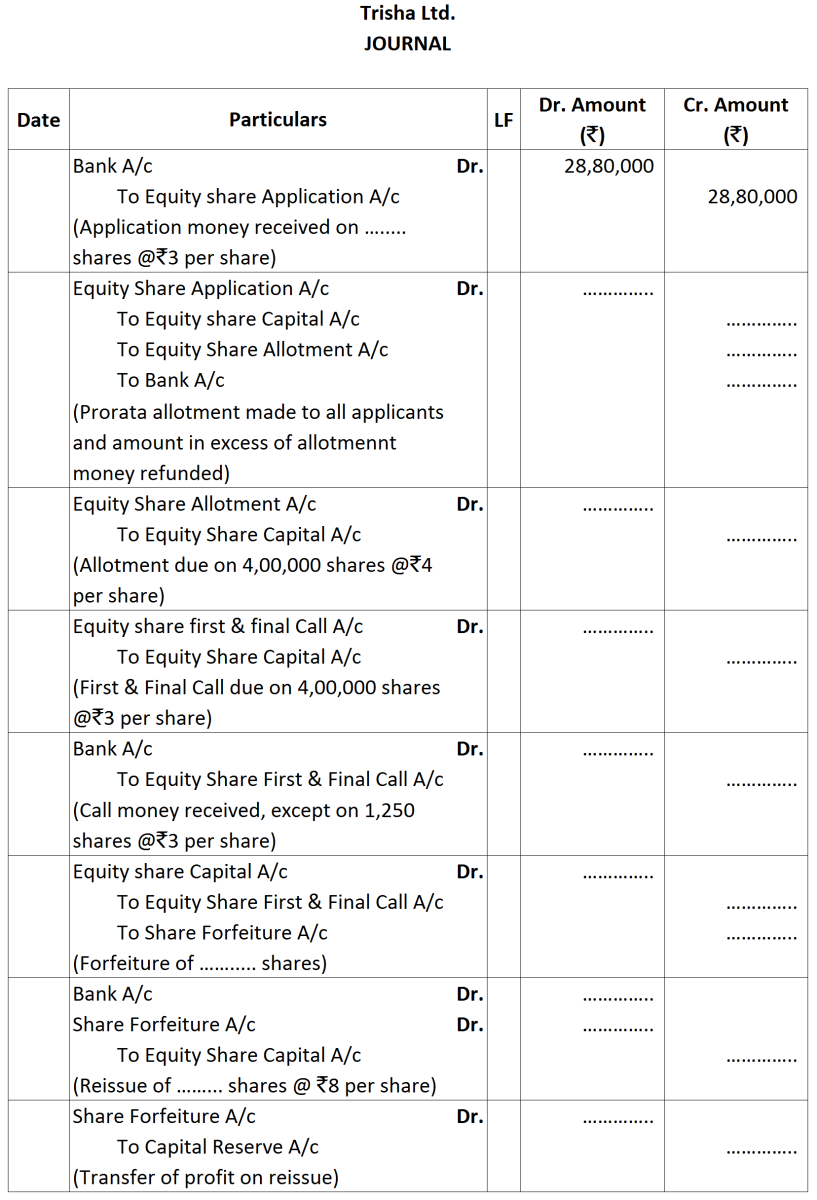
Trisha Ltd. invited applications for 4,00,000 Equity shares of ₹ 10 each, payable as ₹ 3 on application, ₹ 4 on allotment and the balance on first and final call. The excess application money was to be adjusted against allotment only. Shreya, a shareholder, who had applied for 3,000 shares, failed to pay the call money and his shares were accordingly forfeited and reissued in such a way that ₹ 6,250 should be transferred to capital reserve.
You are required to fill in the missing information in the journal entries given below:
Under which line item (major head) of the Statement of Profit and Loss of a financial company will the following be shown:
  1. Interest on Loans Given.
  2. Gain (Profit) on Sale of Securities.
  3. Loss on Sale of Fixed Assets.
  4. Interest paid on Deposits.
  5. Depreciation on Computers.
  6. Goodwill Written off.
  7. Commission paid for Deposit Mobilisation.
  8. Repairs Expenses?
Calculate current assets of a company from the following information:
  1. Inventory turnover 4 times.
  2. Inventory in the end is ₹ 20,000 more than inventory in the beginning.
  3. Revenue from Operations ₹ 3,00,000.
  4. Gross profit ratio 20%.
  5. Current liabilities ₹ 40,000.
  6. Quick ratio 0.75.
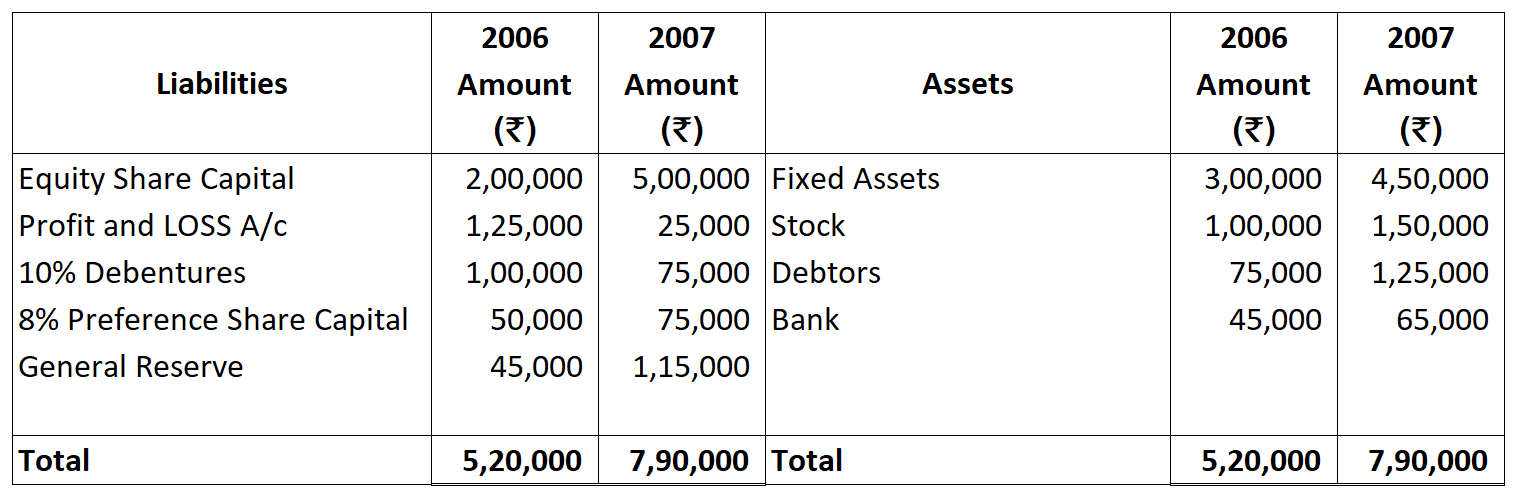
From the following Balance Sheets of Som Ltd. as on 31.3.2006 and 31.3.2007 prepare a Cash Flow Statement:
During the year a machine costing ₹ 70,000 was sold for ₹. 15,000. Dividend paid ₹ 24,000.
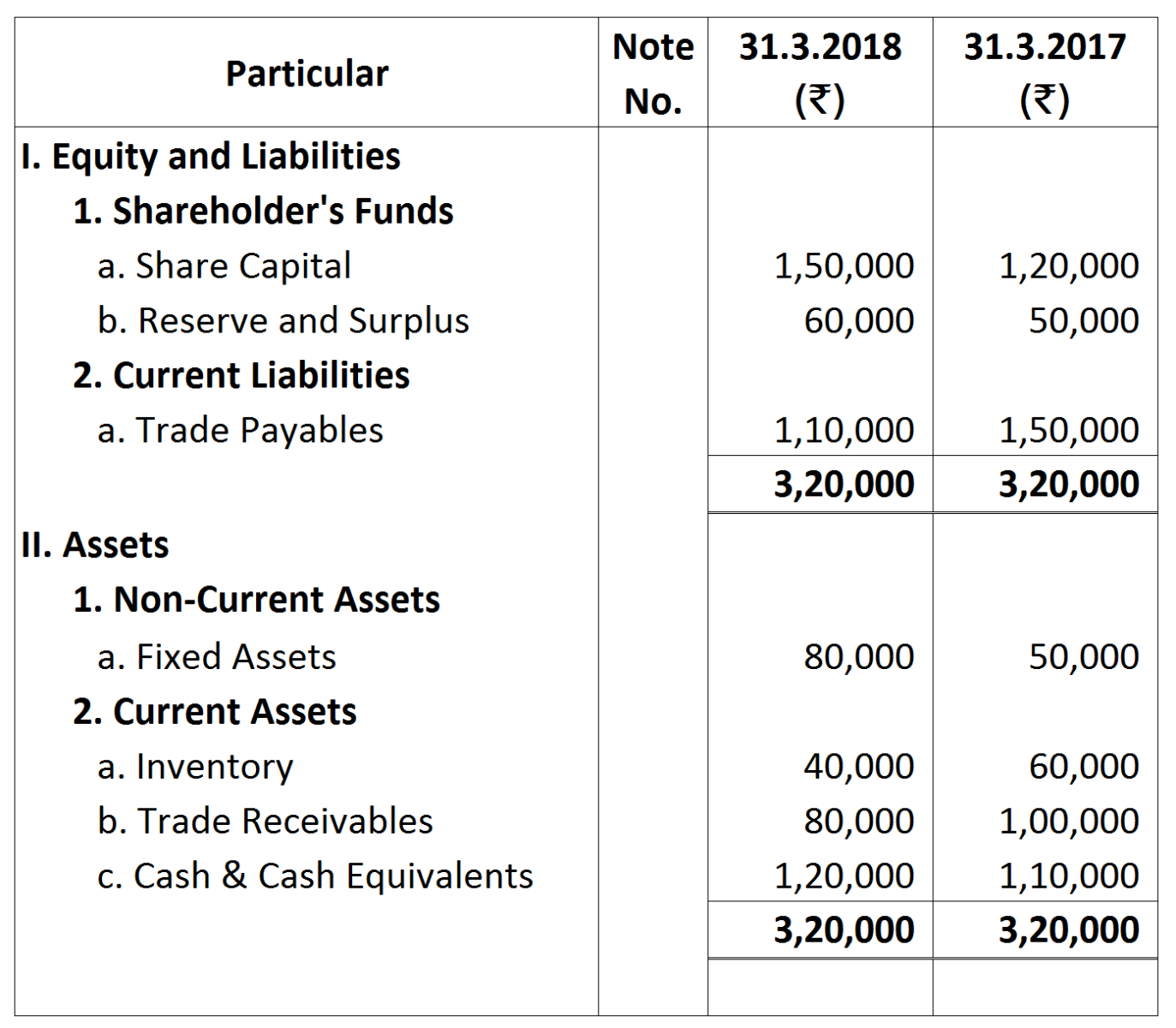
From the following Balance Sheets, prepare a Cash Flow Statement as per AS-3 (revised):

A dividend of ₹ 30,000 was paid during the year 2017-18.
Venus Ltd. had 9,000, 9% Debentures of ₹ 100 each due for redemption. These debentures are to be redeemed in 3 equal instalments (starting from 31st March, 2015) at a premium of 10%. The company had a balance of ₹ 25,000 in the Debentures Redemption Reserve.
Pass necessary entries for redemption of debentures assuming that company transfer the balance of DRR to General Reserve after redeeming all the debentures.
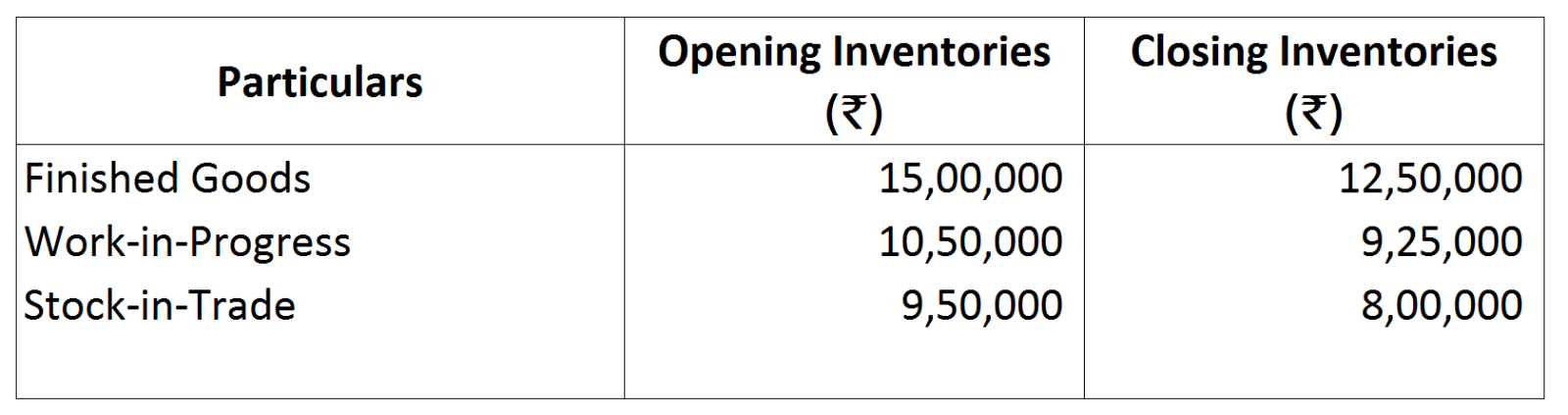
From the following information of Manchur Ltd. for the year ended 31st March, 2018, calculate amount that will be shown in the Note to Accounts on Changes in Inventories of Finished Goods, WIP and Stock-in-Trade:
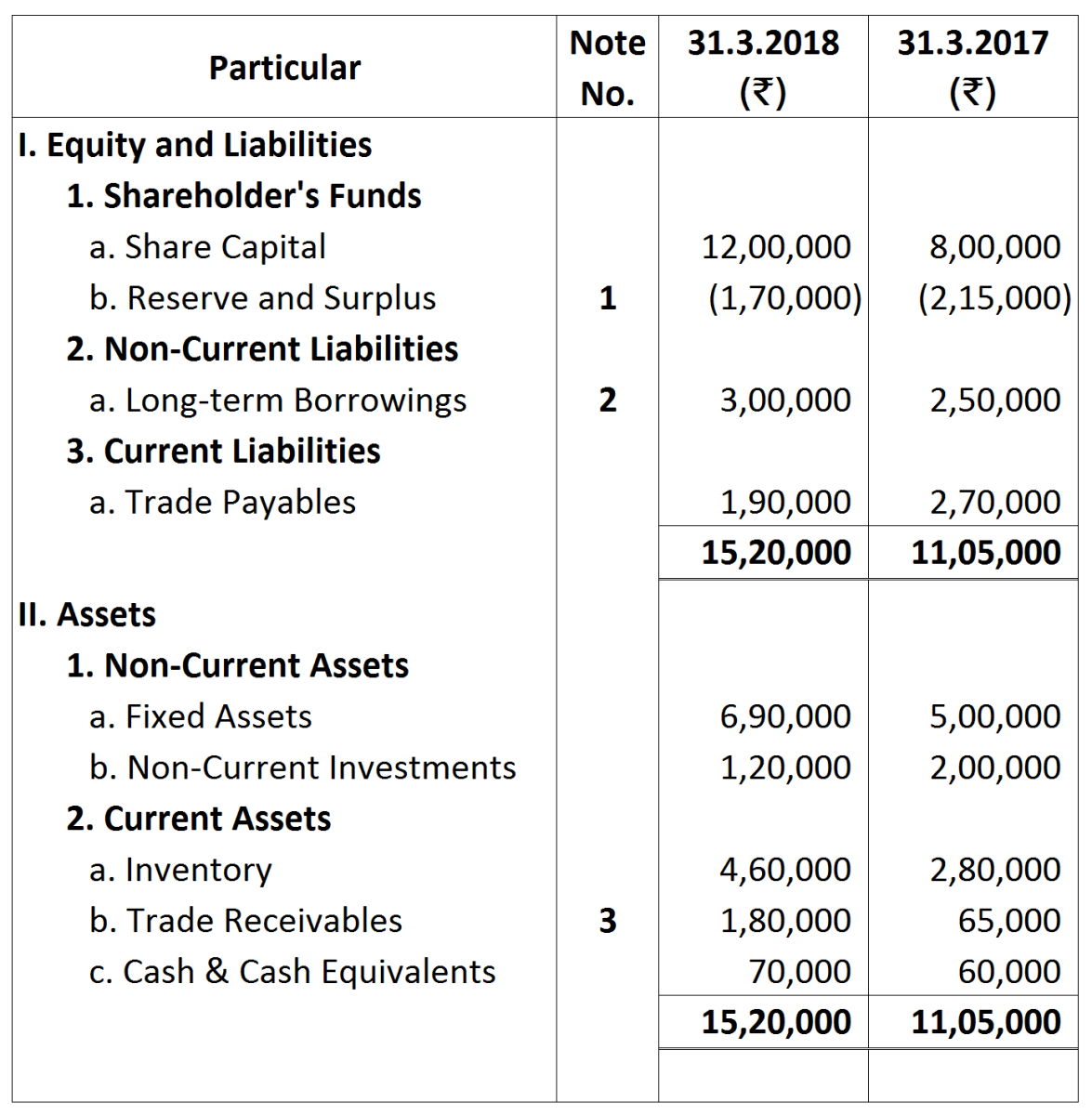
Following are the Balance Sheets of Rashi Ltd. as at 31st March 2018 and 31st March 2017:
Notes: Additional Information:
  1. New public deposits were accepted on 1st January, 2018.
  2. Machinery costing ₹ 2,00,000 on which depreciation charged was ₹ 70,000 was sold for ₹ 1,50,000
  3. New machinery purchased during the year amounted to ₹ 4,00,000.
  4. Non-Current Investments Investments were sold at a profit of 25%.
Prepare Cash Flow Statement.
Mahesh Ltd. had issued $20,000, 10\%$ debentures of ₹ $100$ each. $8,000, 10\%$ debentures were due for redemption on $31^{st}$ March, $2019$. The company had a balance of ₹ $4,40,000$ in the Debenture Redemption Reserve Account on $31^{st}$​​​​​​​ March, $2018$. The company invested the required amount in the Debenture Redemption Investment on $1^{st}$​​​​​​​ April, $2018$.
Pass the necessary journal entries for redemption of debentures. Ignore the entries for interest on debentures.
Mansi Ltd. had 6,000; 10% Debentures of ₹ 100 each due for redemption on 31st March, 2017. Assuming that the debentures were redeemed out of profits, pass necessary journal entries for the redemption of debentures. There was a credit balance of ₹ 6,00,000 in Surplus, i.e,Balance in Statement of Profit and Loss.