Question
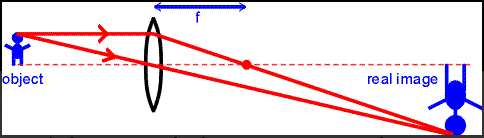
When is the real image formed?

Answer

  1. When the rays of light after reflection or refraction actually meet at some point.
Explanation:
Real image formed when the rays of light after reflection or refraction actually converge at some point and when objects are placed outside the focal length of a converging lens or outside the focal length of a converging mirror.

Need a full question paper?

Generate a complete, print-ready paper with questions like this in minutes — across 16+ boards, with answer keys.
Start Generating Free

Similar questions

A proton exerts a force on a proton which is:
  1. Gravitational.
  2. Electromagnetic.
  3. Nuclear.
  4. Weak.
The concept of stationary orbits was proposed by(a) Neil Bohr(b) J.J. Thomson(c) Ruther ford(d) I. Newton
       
If the electric flux entering and leaving an enclosed surface respectively is $\emptyset_1$ and $\emptyset_2$ the electric charge inside the surface will be
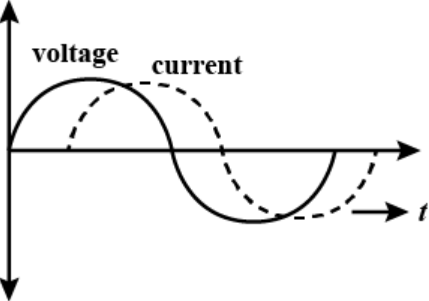
The diagram given show the variation of voltage and current in an AC circuit. The circuit contains.
Image
The relation between geometrical length $(L_{g})$ of a magnet and its magnetic length $(L_{m})$ is :
Mutual inductance of two coils placed near is 4.0 H (Henry). If current in the primary coil decreases from 5 A to zero in $10^{-2}$ seconds, then magnitude of induced emf in secondary coil is :
In forward bias, the width of potential barrier in a P-N junction diode(a) Increases(b) Decreases(c) Remains constant(d) First increases then decreases
   
   
A radioactive nucleus undergoes a$-$emission to form a stable element. What will be the recoil velocity of the daughter nucleus if $V$ is the velocity of a$-$emission and $A$ is the atomic mass of radioactive nucleus
A star emits light of 5500 Å wavelength. Its appears blue to an observer on the earth, it means(a) Star is going away from the earth(b) Star is stationary(c) Star is coming towards earth(d) None of the above
   
   
The photoelectric effect can be understood on the basis of(a) The principle of superposition(b) The electromagnetic theory of light(c) The special theory of relativity(d) Line spectrum of the atom