MCQ
When light emitted by a white hot solid is passed through a sodium flame, the spectrum of the emergent light will show
  • A
    The ${D_1}$ and ${D_2}$ bright yellow lines of sodium
  • Two dark lines in the yellow region
  • C
    All colours from violet to red
  • D
    No colours at all

Answer

Correct option: B.
Two dark lines in the yellow region
b
When light emitted by a white hot solid passes through sodium vapour then cooler sodium vapour absorb energy from white light spectrum producing spectrum of bright yellow light with two dark lines in the yellow region.

Need a full question paper?

Generate a complete, print-ready paper with questions like this in minutes — across 16+ boards, with answer keys.

Start Generating Free

Similar questions

The photograph of a house occupies an area of $1.75\; cm^2$ on a $35\; mm$ slide. The slide is projected on to a screen, and the area of the house on the screen is $1.55\; m^2$. What is the linear magnification of the projector-screen arrangement
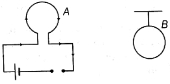
A system $S$ consists of two coils $A$ and $B$. The coil $A$ carries a steady current $I .$ While the coil $B$ is suspended nearby as shown in figure. Now, if the system is heated, so as to raise the temperature of two coils steadily, then
A person in front of a mountain is beating a drum at the rate of $40$ per minute and hears no distinct echo. If the person moves $90 \,m$ closer to the mountain, he has to beat the drum at $60$ per minute to not hear any distinct echo. The speed of sound is .............. $ms^{-1}$
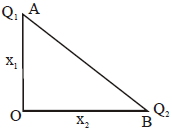
Charges $Q _{1}$ and $Q _{2}$ arc at points $A$ and $B$ of a right angle triangle $OAB$ (see figure). The resultant electric field at point $O$ is perpendicular to the hypotenuse, then $Q _{1} / Q _{2}$ is proportional to
When arsenic is added as an impurity to silicon, the resulting material is
Acetaldehyde on treatment with dil. $NaOH $ followed by heating gives
Three containers $\mathrm{C}_{1}, \mathrm{C}_{2}$ and $\mathrm{C}_{3}$ have water at different temperatures. The table below shows the final temperature $T$ when different amounts of water (given in litres) are taken from each containers and mixed (assume no loss of heat during the process)

$\begin{array}{|c|c|c|c|}\hline \mathrm{C_{1 }} & {\mathrm{C}_{2}} & {\mathrm{C}_{3}} & {\mathrm{T}} \\ \hline {1 l} & {2 l} & {-} & {60^{\circ} \mathrm{C}} \\ \hline {-} & {1 l} & {2 l} & {30^{\circ} \mathrm{C}} \\ \hline  {2 l} & {-} & {1 l} & {60^{\circ} \mathrm{C}} \\ \hline  {1 l} & {1 l} & {1 l} & {\theta} \\ \hline\end{array}$

The value of $\theta$ (in $^{\circ} \mathrm{C}$ to the nearest integer) is

A wire carrying a current $I$ along the positive $x$-axis has length $L$ It is kept in a magnetic field $\overrightarrow{ B }=(2 \hat{ i }+3 \hat{ j }-4 \hat{ k }) T$. The magnitude of the magnetic force acting on the wire is $..........IL$
The radius of fifth orbit of the $L ^{++}$is $.........\times 10^{-12}\,m$. Take : radius of hydrogen atom $=0.51 \mathring A$
When a bicycle is in motion, the force of friction exerted by the ground on the two wheels is such that it acts