MCQ
When $S{O_2}$ is passed through acidified solution of ${H_2}S$
- A${H_2}S{O_4}$ is formed
- B${H_2}S{O_3}$ is formed
- ✓Sulphur is precipitated
- DNone of these
Generate a complete, print-ready paper with questions like this in minutes — across 16+ boards, with answer keys.
Reason : It is the mechanism and not the balanced chemical equation for the overall change that governs the reaction rate.
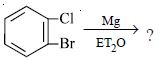
$A$, (molecular formula $\left.\mathrm{C}_{6} \mathrm{H}_{12} \mathrm{O}_{2}\right)$ with a straight chain structure gives a $C_{4}$ carboxylic acid. $A$ is :
$A \frac{{Li} {A} {H} {H}_{4}}{{H}_{3} {O}^{+}} \longrightarrow B \stackrel{\text { Oxidation }}{\longrightarrow} {C}_{4}-$ carboxylic acid
$A$. The successive half lives of zero order reactions decreases with time.
$B$. A substance appearing as reactant in the chemical equation may not affect the rate of reaction
$C$. Order and molecularity of a chemical reaction can be a fractional number
$D$. The rate constant units of zero and second order reaction are $mol\, L ^{-1} s ^{-1}$ and $mol ^{-1} Ls ^{-1}$ respectively