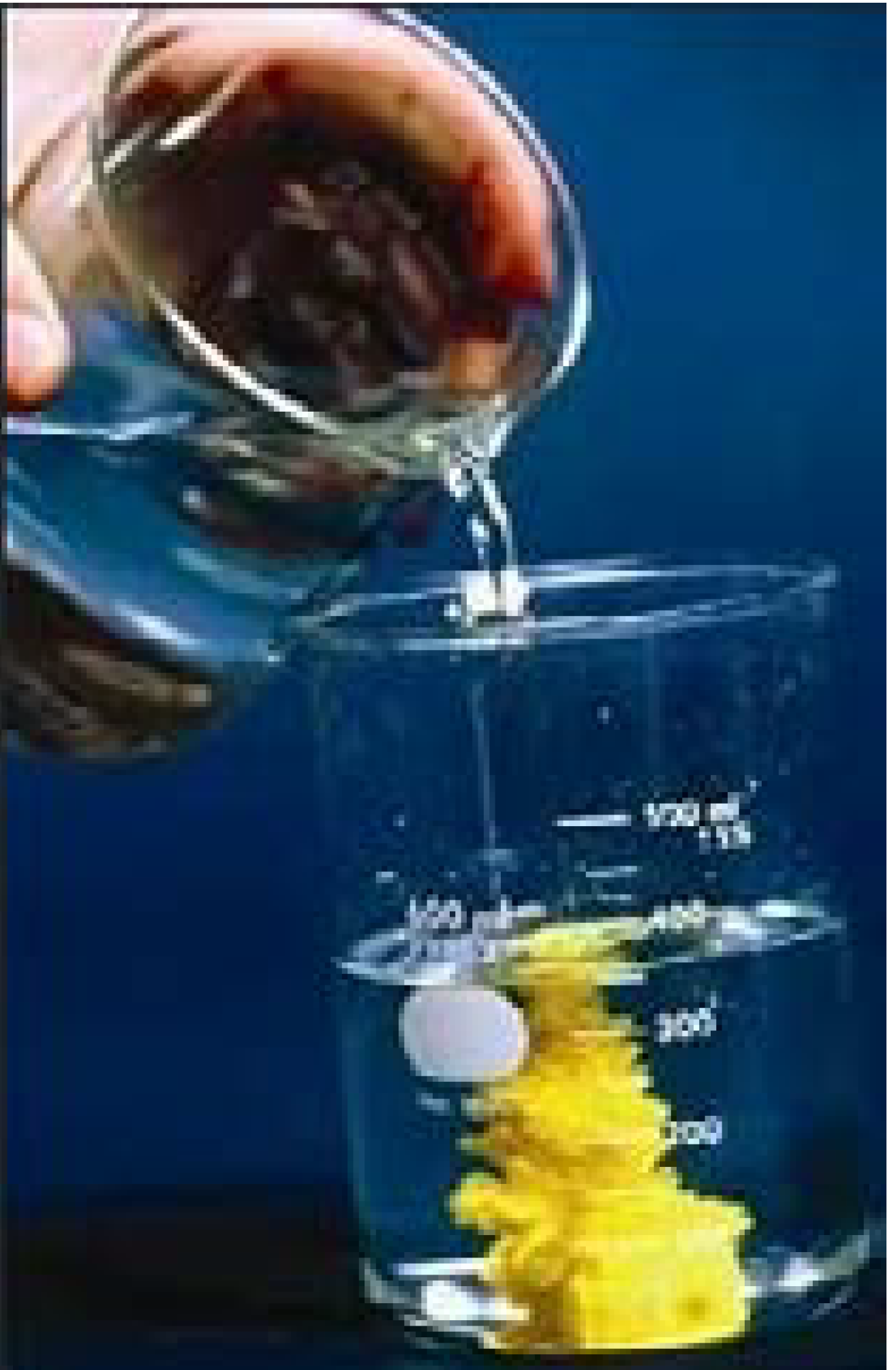
(i) Define a chemical equation.
(ii) Which law is followed by all chemical reactions?
(iii) Name four types of chemical reactions.
or
(iv) Give example of precipitation reactions.
(i) Define a chemical equation.
(ii) Which law is followed by all chemical reactions?
(iii) Name four types of chemical reactions.
or
(iv) Give example of precipitation reactions.
Generate a complete, print-ready paper with questions like this in minutes — across 16+ boards, with answer keys.
| Position of object | Position of image | Relative size of image |
| At infinity | At focus F_(2) | Highly diminished point sized |
| Beyond 2F_(1) | Between F_(2) and 2F_(2) | Diminished |
| At 2F_(1) | At 2F_(2) | Same size |
| Between F_(1) and 2F_(1) | Beyond 2F_(2) | Enlarged |
| At focus F_(1) | At infinity | Infinitely large or highly enlarged |
| Between focus F_(1) and optical centre O | On the same side of the lens as the object | Enlarged |
(i) What is the nature of the image, if an object is placed at infinity ?
(ii) Identify the nature of the image for which the object is between focus and optical centre.
(iii) What is position of image, when object is place at focus $\left(f_1\right)$ ?
or
(iv) What is the focal length of a lens for an object placed $50 cm$ from the lens producing virtual image at a distance of $10 cm$ in front of the lens?

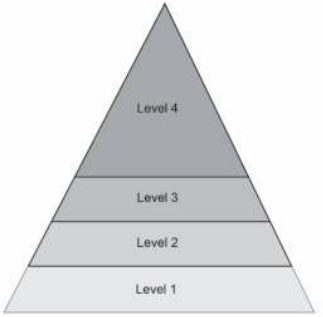
5. Which level consists of herbivores?
A. Level 1
B. Level 2
C. Level 3
D. Level 4

| Magnesium (Mg) | Sulphur (S) |
Number of electrons in the shells of the atom | 2, 8, 2 | 2, 8, 6 |
10. How many atoms of sulphur will react with one atom of magnesium to form a compound?
A. One
B. Two
C. Three
D. Four