Question
When two waves of almost equal frequencies $n_1$ and $n_2$ reach at a point simultaneously, what is the time interval between successive maxima?

Answer

If two waves of almost equal frequencies interfere, they are producing beats.Let $\text{n}_1>\text{n}_2$
Beat frequency $\text{f}_\text{beat}=\text{n}_1-\text{n}_2$
$\therefore$ Time period of beats $\text{T}_\text{beats}=\frac{1}{\text{f}_\text{beat}}=\frac{1}{\text{n}_1-\text{n}_2}$
This time period will be wqual to the time interval between successive mixima.

Need a full question paper?

Generate a complete, print-ready paper with questions like this in minutes — across 16+ boards, with answer keys.
Start Generating Free

Similar questions

What are longitudinal waves? Give examples too.
$1~\text {cm}^3$ sample of oxygen has been given at normal temperature and pressure which sample has more number of molecules?
Every great physical theory starts as a heresy and ends as a dogma. Give examples for the validity of this remark.
The vernier scale of a travelling microscope has 50 divisions which coincide with 49 main scale divisions. If each main scale division is 0.5mm, calculate the minimum inaccuracy in the measurement of distance.
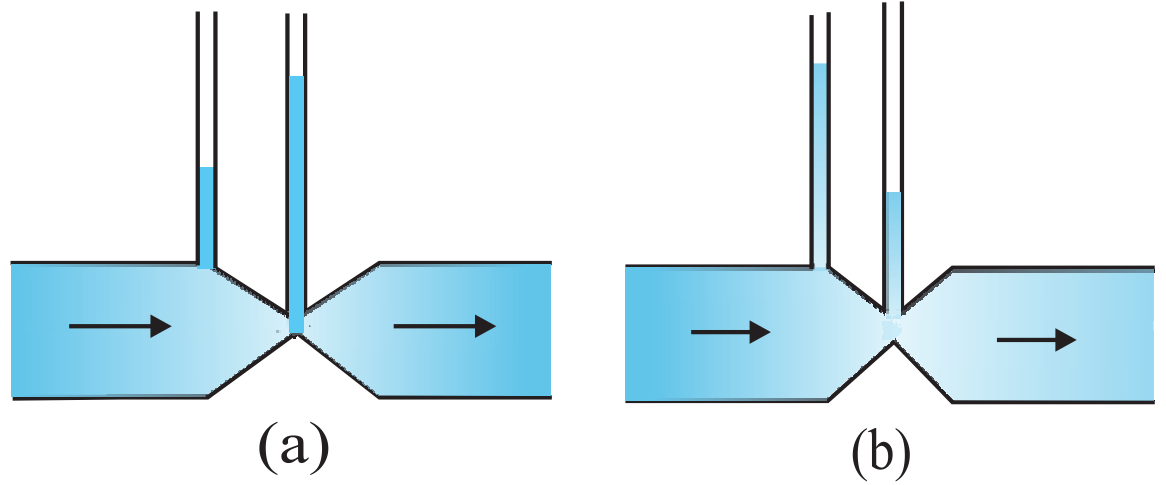
Figures(a) and (b) refer to the steady flow of a (non viscous) liquid. Which of the two figures is incorrect? Why?
When the filament of a bulb is given an energy of 32 watt then its temperature becomes 2000 K. Find that energy given to the filament when its temperature becomes 3000 K. Here the filament acts, as black-body.
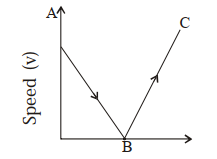
An object is thrown vertically upwards. After some time it returns to earth. Draw the speed time graph for the ball. (Note: Consider the air borne resistance as negligible here.)
Image
The time period of a simple harmonic oscillator is 6 seconds. How much time will it take for the oscillator to start moving from the equilibrium position? After that its displacement will be half of its amplitude?
A spherical surface of radius 30cm separates two transparent media A and B with refractive indices 1.33 and 1.48 respectively. The medium A is on the convex side of the surface. Where should a point object be placed in medium A so that the paraxial rays become parallel after refraction at the surface?
The SI unit of energy is $J = kg m ^2 s ^{-2}$; that of speed $v$ is $m s ^{-1}$ and of acceleration $a$ is $m s ^{-2}$. Which of the formulae for kinetic energy ( $K$ ) given below can you rule out on the basis of dimensional arguments ( $m$ stands for the mass of the body) :
(a) $K=m^2 v^3$
(b) $K=(1 / 2) m v^2$
(c) $K=m a$
(d) $K=(3 / 16) mv ^2$
(e) $K=(1 / 2) m v^2+m a$