MCQ
When we remove polyester or woollen clothes in dark, we can see a spark and hear a crackling sound. Which of the following is responsible for it?
  • A
    Static electricity.
  • B
    Current electricity.
  • C
    Reflection of light.
  • D
    Refraction of light.

Answer

  1. Static electricity.

Need a full question paper?

Generate a complete, print-ready paper with questions like this in minutes — across 16+ boards, with answer keys.

Start Generating Free

Similar questions

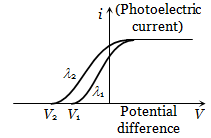
In the following diagram if V2 > V1 then
(a)  

(b)  

(c)  

(d)   

Which of the following happens when a body is charged positively?
Filter circuit:

A planet of mass m moves in an ellipse around the sun of mass   so that its maximum and minimum distances are  and   respectively. The angular momentum of the planet relative to the centre of the sun is

(a)  

(b)

(c)

(d)

A parallel beam of light is incident on a converging lens parallel to its principal axis. As one moves away from the lens on the other side on its principal axis, the intensity of light:
  1. Remains, constant.
  2. Continuously increases.
  3. Continuously decreases.
  4. First increases then decreases.
Magnetic dipole moment is a vector quantity directed from :
An Aluminium (Al) rod with area of cross-section 4 × 10⁻⁶m2 has a current of 5 ampere. Flowing through it. Find the drift velocity of electron in the rod. Density of Al = 2.7 × 10³kg/m3 and Atomic wt. = 27. Assume that each Al atom provides one electron:
If all matters were made of electrically neutral particles such as neutrons:
  1. There would be no force of friction.
  2. There would be no tension in the string.
  3. It would not be possible to sit on a chair.
  4. The earth could not move around the sun.
If the intensity of the radiation incident on a photo-sensitive plate is doubled, how does the stopping potential change?
For nuclei with A > 100:
  1. The binding energy of the nucleus decreases on an average as A increases.
  2. The binding energy per nucleon decreases on an average as A increases.
  3. If the nucleus breaks into two roughly equal parts, energy is released.
  4. If two nuclei fuse to form a bigger nucleus, energy is released.