MCQ
Which compound can reduce Fehling reagent?
  • A
    Acetophenone
  • Acetaldehyde
  • C
    Acetone
  • D
    Benzaldehyde

Answer

Correct option: B.
Acetaldehyde
B

Need a full question paper?

Generate a complete, print-ready paper with questions like this in minutes — across 16+ boards, with answer keys.
Start Generating Free

Similar questions

Which of the following will be optically inactive
Which one of the following nitro-compounds does not react with nitrous acid ?
The correct order of increasing basic nature for the bases $N{H_3},\,C{H_3}N{H_2}$ and ${(C{H_3})_2}NH$ is
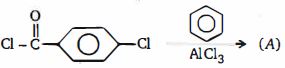
Unknown $(A)$ is
Acidic property of phenol can be explained when it is reacted with
The internal resistance of a dry cell is of the order of:
Euchlorine is a mixture of
An amino acid may be represented by general formula $\begin{matrix}
   R\,\,\,\,\,\,\,\,  \\
   |\,\,\,\,\,\,\,\,  \\
   {{H}_{2}}N-CH-COOH  \\
\end{matrix}$ If $R = -CH_2C_6H_5$ then it is phenylalanine $(Phe)$ and if $R = CH_3$ then it is alanine $(Ala)$. Find the sequence of reagents from those given below to synthesize $Phe- Ala$

$(1)$ $\begin{matrix}
   C{{H}_{3}}  \\
   |\,\,\,\,\,\,  \\
   ZNH\,C\,HC{{O}_{2}}H  \\
\end{matrix}$                             $(2)$ $\begin{matrix}
   C{{H}_{3}}\,\,\,\,\,\,\,\,\,\,\,\,\,\,\,\,\,\,\,\,  \\
   |\,\,\,\,\,\,\,\,\,\,\,\,\,\,\,\,\,\,\,\,\,\,\,\,\,\,\,\,  \\
   {{H}_{2}}N\,C\,HC{{O}_{2}}C{{H}_{2}}{{C}_{6}}{{H}_{5}}  \\
\end{matrix}$

$(3)$ $\begin{matrix}
   \,\,\,\,\,\,\,\,\,\,\,\,C{{H}_{3}}{{C}_{6}}{{H}_{5}}  \\
   |\,\,\,\,\,  \\
   ZNH\,C\,HC{{O}_{2}}H  \\
\end{matrix}$                $(4)$ $\begin{matrix}
   C{{H}_{2}}{{C}_{6}}{{H}_{5}}\,\,\,\,\,  \\
   |\,\,\,\,\,\,\,\,\,\,\,\,\,\,\,\,\,\,\,\,\,\,\,\,\,\,\,  \\
   {{H}_{2}}N\,CHC{{O}_{2}}C{{H}_{2}}{{C}_{6}}{{H}_{5}}  \\
\end{matrix}$

Acidified potassium permanganate solution is decolourised by
For a reaction $2A + B \to $ Products, doubling the initial concentration of both the reactants increases the rate by a factor of $8$, and doubling the concentration of $+B$  alone doubles the rate. The rate law for the reaction is