MCQ
Which decay increases the atomic number?
  • A
    $\beta^-$decay
  • B
    $\beta^+$ decay
  • C
    Electron capture
  • D
    Gamma decay

Answer

  1. $\beta^-$decay

Explanation:

$\beta^-$ decay: $_\text{Z}^\text{A}\text{​X}→_{\text{Z}+1}^{\text{A}}\text{​Y} + _{−1}^0\text{​e}$

Thus, the atomic number is increased in $\beta^-$ decay.

Need a full question paper?

Generate a complete, print-ready paper with questions like this in minutes — across 16+ boards, with answer keys.
Start Generating Free

Similar questions

A transverse wave travels along the Z-axis. The particles of the medium must move:
  1. Along the Z-axis
  2. Along the X-axis
  3. Along the Y-axis
  4. In the X-Y plane.
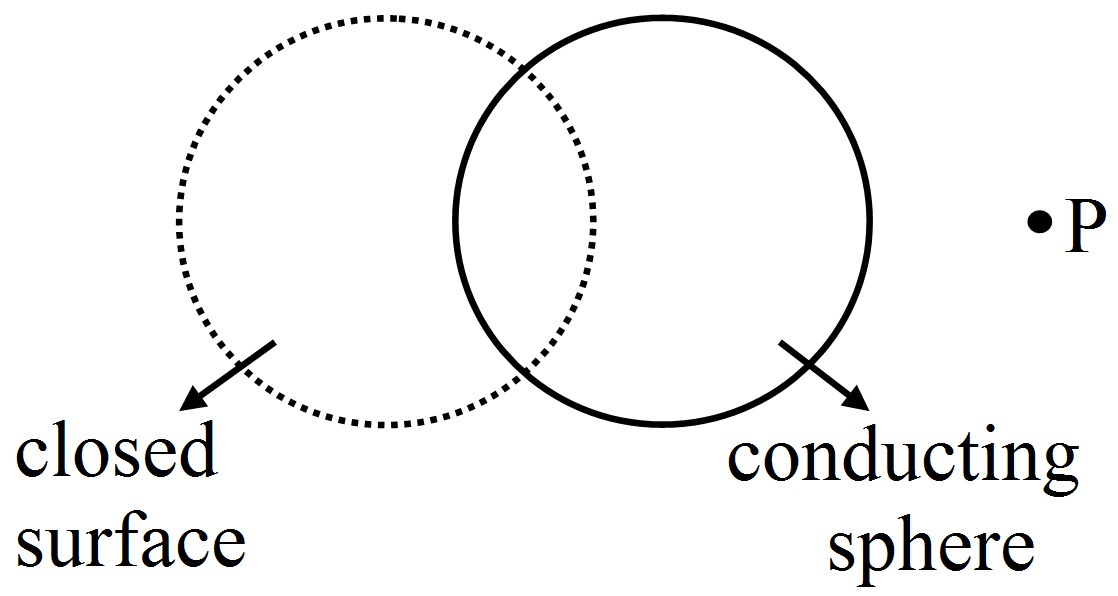
Figure shows a closed surface which intersects a conducting sphere. If a positive charged is placed at the point P, the flux of the electic field through the closed surface:

  1. Will remain zero.
  2. Will become positive.
  3. Will become neagative.
  4. Will become undefined.
The inability of a lens to bring all the rays coming from a point object to focus at one single point is called:
If the source of light used in a Young's double slit experiment is changed from red to violet:
  1. The fringes will become brighter.
  2. Consecutive fringes will come closer.
  3. The intensity of minima will increase.
  4. The central bright fringe will become a dark fringe.
Magnitude of intensity of magnetic field at the center of any circular current carrying conductor is:
A circular current loop of magnetic moment M is in an arbitrary orientation in an external magnetic field B. The work done to rotate the loop by 30° about an axis perpendicular to its plane is:

Magnifying power of a simple microscope is (when final image is formed at D = 25 cm from eye)

(a)   

(b) 1 +  

(c)

(d)  

A sinusoidal voltage $\text{V}=200\sin314\text{t}$ is applied to a $10\Omega$ resistor. Find the peak voltage.

 amp is flowing through a resistance of 1000Ω. To measure the correct potential difference, the voltmeter is to be used of which the resistance should be

(a) 0 Ω

(b) 500 Ω

(c) 1000 Ω

(d) >> 1000 Ω 

Mark the correct statement

(a) Nuclei of different elements can have the same number of neutrons

(b) Every element has only two stable isotopes

(c) Only one isotope of each element is stable

(d) All isotopes of every element are radioactive