Question
Which is correct $?$

$\begin{array}{*{20}{c}}
  O \\ 
  {||} \\ 
  {C{H_3} - C{H_2} - C - C{H_2} - C{H_2}} 
\end{array}$

$\begin{array}{*{20}{c}}
  {\,\,\,\,\,\,\,\,\,\,\,\,\,\,\,\,\,\,\,\,\,\,\,\,\,\,\,\,\,\,\,\,\,\,\,\,\,\,\,\,O} \\ 
  {\,\,\,\,\,\,\,\,\,\,\,\,\,\,\,\,\,\,\,\,\,\,\,\,\,\,\,\,\,\,\,\,\,\,\,\,\,\,\,||} \\ 
  {C{H_3} - C{H_2} - C{H_2} - C - N{H_2}} 
\end{array}$
Answer

Get the step-by-step solution for this question inside the Vidyadip app.

Get the answer in the app

Need a full question paper?

Generate a complete, print-ready paper with questions like this in minutes — across 16+ boards, with answer keys.

Start Generating Free

Similar questions

The ability of a substance to assume two or more crystalline structures is called
Which is the $IUPAC$ name of

$\begin{array}{*{20}{c}}
  {\,{C_2}{H_5}} \\ 
  {|\,\,\,\,\,} \\ 
  {C{H_3} - C - C{H_2}Cl} \\ 
  {|\,\,\,\,\,} \\ 
  {\,{C_2}{H_5}} 
\end{array}$

On passing a current through molten $KCl$, $19.5\, g$ of potassium is deposited. If the same quantity of electricity is passed through molten aluminium chloride then the amount of aluminium deposited will be ............. $\mathrm{g}$
The order of reactivity of following compounds :

$(I)$ $\phi -CH_3$

$(II)$ $\phi -CH_2-CH_3$

$(III)$ $\phi -CH(CH_3)_2$

$(IV)$ $\phi-C(CH_3)_3$

towards electrophilic substitution will be - [where $\phi =C_6H_5$]

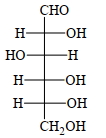
The structure of $D-(+)-$glucose is

$Image$

The structure of $L -(-)$-glucose is

The concentration of potassium ions inside a biological cell is at least twenty times higher than the outside. The resulting potential difference across the cell is important in several processes such as transmission of nerve impulses and maintaining the ion balance. A simple model for such a concentration cell involving a metal $\mathrm{M}$ is:

$\mathrm{M}(\mathrm{s}) \mid \mathrm{M}^{+}$(aq; $0.05$ molar) || $\mathrm{M}^{+}(\mathrm{aq}), 1$ molar) $\mid \mathrm{M}(\mathrm{s})$

For the above electrolytic cell the magnitude of the cell potential $\left|E_{\text {cell }}\right|=70 \mathrm{mV}$.

$1.$ For the above cell

$(A)$ $\mathrm{E}_{\text {cell }}<0 ; \Delta \mathrm{G}>0$ $(B)$ $\mathrm{E}_{\text {cell }}>0 ; \Delta \mathrm{G}<0$

$(C)$ $\mathrm{E}_{\text {cell }}<0 ; \Delta \mathrm{G}^{\circ}>0$ $(D)$ $\mathrm{E}_{\text {cell }}>0 ; \Delta \mathrm{G}^{\circ}>0$

$2.$ If the $0.05$ molar solution of $\mathrm{M}^{+}$is replaced by $0.0025$ molar $\mathrm{M}^{+}$solution, then the magnitude of the cell potential would be

$(A)$ $35 \mathrm{mV}$ $(B)$ $70 \mathrm{mV}$ $(C)$ $140 \mathrm{mV}$ $(D)$ $700 \mathrm{mV}$

Give the answer question $1,2.$ 

Which statement is not true concerning alkanes
Choose the correct option regarding the following complex compound which  follows $(F)$ and does not follow $(NF)$ the Sidgwick $EAN$ rule :
 
$(I)\, [(Ph_3P)_2PdCl_2PdCl_2]$         $(II)\,[NiBrCl(en)]$
$(III)\, Na_4 [Fe(CN)_5 NOS]$             $(IV)\, Cr(CO)_3(NO)_2$
 
$(I)\,-\,(II)\,-\,,(III)\,-\,(IV)$
A short peptide on complete hydrolysis produces $3$ moles of glycine $(G)$, two moles of leucine $(L)$ and two moles of valine $(V)$ per mole of peptide. The number of peptide linkages in it are $..............$.
The major products $\mathrm{A}$ and $\mathrm{B}$ in the following set of reactions are :