MCQ
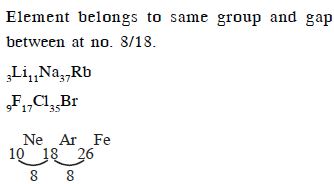
Which is dobereiner's triad
  • A
    $Ne, Ar, Fe$
  • B
    $Li, Na, Rb$
  • C
    $F, Cl, Br$
  • None

Answer

Correct option: D.
None
d

Need a full question paper?

Generate a complete, print-ready paper with questions like this in minutes — across 16+ boards, with answer keys.

Start Generating Free

Similar questions

Calculate the frequency of yellow radiation having wavelength 5800 Å.
Assign $A, B, C, D$ from given type of reaction. $P{b_3}{O_4} + HN{O_3}\,\left( {dil} \right)\xrightarrow{{R.T.}}Pb{\left( {N{O_3}} \right)_2} + Pb{O_2} \downarrow $
In which of the following compound hyperconjugation effect is not present
Of the following elements, which one has highest electro-negativity
The electronic configuration of four elements are

$(I)\,[Kr]\,5s^1$                                  $(II)\, [Rn]\,5f^{14}\,6d^1\,7s^2$ 

$(III)\,[Ar]\,3d^{10}\,4s^2\,4p^5$           $(IV)\,[Ar]\,3d^6\,4s^2$
Consider the following Statements

$(i)\, I$ shows variable oxidation State

$(ii)\, II$ is a $d-block$ element
$(iii)$ The compound formed between $I$ and $III$ is covalent
$(iv)\,IV$ shows single oxidation state
Which Statement is True $(T)$ or False $(F)$?

The total number of intensive properties from the following is $........$.

Volume, Molar heat capacity, Molarity, $E ^\theta$ cell, Gibbs free energy change, Molar mass, Mole

Which of the following compound can form hydrogen bonds
How many geometrical isomers and stereoisomers are possible for 
$[Pt(NO_2)(NH_3)(NH_2OH)(Py)^+$ and $[Pt(Br)(Cl)(I)(NO_2)(NH_3)(Py)]$ respectively?
What is the weight of oxygen required for the complete combustion of $2.8\, kg$ of ethylene ................ $\mathrm{kg}$
The electrochemical equivalent $Z$ of any element can be obtained by multiplying the electrochemical equivalent of hydrogen with