MCQ
Which is not an electrostatic phenomenon:
  • A
    Comb rubbed with hair attracts paper bits.
  • B
    A blanket in winters in dark when scrambled gives electrical sparks.
  • C
    Two people shaking hands feel a small spark in winters.
  • D
    Heat is generated in a resistor carrying current.
Answer

  1. Heat is generated in a resistor carrying current.

Explanation:


(d) is based on Joule's Law.

Rest are electrostatic phenomenon.

Need a full question paper?

Generate a complete, print-ready paper with questions like this in minutes — across 16+ boards, with answer keys.

Start Generating Free

Similar questions

For television broadcasting, the frequency employed is normally

(a) 30-300 MHz

(b) 30-300 GHz

(c) 30-300 KHz

(d) 30-300 Hz

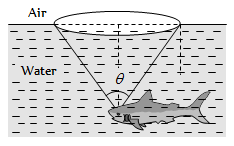
A fish is a little away below the surface of a lake. If the critical angle is 49°, then the fish could see things above the water surface within an angular range of θ° where

(a) θ =  49°

(b) θ = 90°

(c) θ = 98°

(d) θ = 24

Refractive index for a material for infrared light is

(a) Equal to that of ultraviolet light

(b) Less than for ultraviolet light

(c) Equal to that for red colour of light

(d) Greater than that for ultraviolet light

A straight conductor of length 0.4 m is moved with a speed of 7 m/s perpendicular to the magnetic field of intensity of 0.9 Wb/m2. The induced e.m.f. across the conductor will be

(a) 7.25 V

(b) 3.75 V

(c) 1.25 V

(d) 2.52 V

In a triode valve the amplification factor is 20 and mutual conductance is 10–3 mho. The plate resistance is

(a) 2 × 10³ W

(b) 4 × 10³ W

(c) 2 ×10⁴ W

(d) 2 ×10⁴ W

If there were only one type of charge in the universe, then

If the ratio of amplitude of two waves is 4 : 3, then the ratio of maximum and minimum intensity is

(a) 16  : 18

(b) 18 : 16

(c) 49 : 1 

(d) 94 : 1

A cell of internal resistance r is connected to an external resistance R. The current will be maximum in R, if

(a) R = r

(b) R < r

(c) R > r

(d) R = r/2

An electric dipole is placed at an angle of 30° to a non-uniform electric field. The dipole will experience:
Refer to figure. Let $\Delta\text{U}_1$ and $\Delta\text{U}_2$ be the changes in internal energy of the system in the processes A and B. Then,
  1. $\Delta\text{U}_1>\Delta\text{U}_2$
  2. $\Delta\text{U}_1=\Delta\text{U}_2$
  3. $\Delta\text{U}_1<\Delta\text{U}_2$
  4. $\Delta\text{U}_1\neq\Delta\text{U}_2$