MCQ
Which of the cations in more stable ?
  • A
    $\begin{array}{*{20}{c}}
      {H\,\,\,\,\,\,} \\ 
      {\,|\,\,\,\,\,\,\,\,\,} \\ 
      {R' - {C^ + } - OR} 
    \end{array}$
  • $\begin{array}{*{20}{c}}
      {H\,\,\,\,} \\ 
      {|\,\,\,\,\,} \\ 
      {R' - C = \mathop O\limits^ +  R} 
    \end{array}$
  • C
    both equal
  • D
    both are unstable

Answer

Correct option: B.
$\begin{array}{*{20}{c}}
  {H\,\,\,\,} \\ 
  {|\,\,\,\,\,} \\ 
  {R' - C = \mathop O\limits^ +  R} 
\end{array}$
b
Although $(b)$ has positive charge on $O$ (an electronegative element), it is more stable because here every atom has octet of electrons.

Need a full question paper?

Generate a complete, print-ready paper with questions like this in minutes — across 16+ boards, with answer keys.

Start Generating Free

Similar questions

In the chemical reaction ${N_2} + 3{H_2}$ $\rightleftharpoons$ $2N{H_3}$ at equilibrium point, state whether
Which of the following processes does not involve oxidation of iron?
What is the molar solubility of $Mn(OH)_2$ $(K_{sp} = 4.5\times10^{-14})$ in a buffer solution contain equal moles of $NH_4^+$ and $NH_3$ $(K_b = 1.8\times10^{-5})$ ?

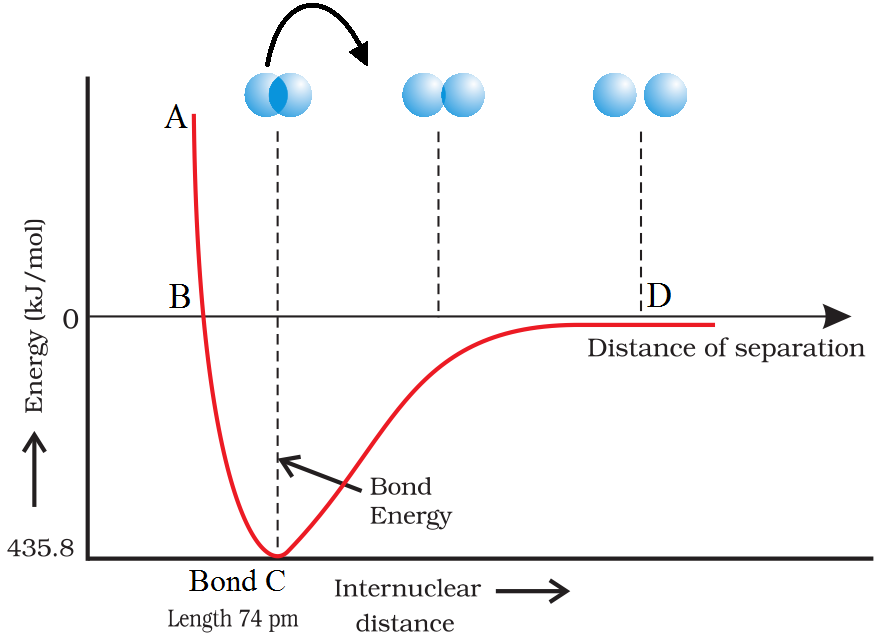
The above potential energy curve is given for the formation of $\ce{H_2}$ molecule as a function of internuclear distance of $H-$ atoms. At what point in the curve $H,$ is found in the most stable state?
Resonance is due to
Consider the following reactions, In which cases is product formation favoured by decreased temperature?

$(a)\,\,{N_2}(g)  +  {O_2}(g)  \rightleftharpoons \,\,2NO(g); $    $\Delta {H^o}\, = \,181\,\,kJ$

$(b)\,\,2C{O_2}(g)\,\,\,\, \rightleftharpoons \,2CO(g)\, + \,{O_2}(g);$   $\Delta {H^o}\, = \,566\,\,kJ$

$(c)\,\,{H_2}(g)  + {I_2}(g) \rightleftharpoons \,2HI(g) ;$   $\Delta {H^o}\, = \,-9.4\,\,kJ$

$(d)\,\,{H_2}(g)  + {F_2}(g) \rightleftharpoons \,2HF(g) ;$   $\Delta {H^o}\, = \,-541\,\,kJ$

The dipole moment of chlorobenzene is $1.73 \,\,D$. The dipole moment of $p$-dichlorobenzene is expected to be ............. $\mathrm{D}$
Which one of the following molecules is polar ?
Which one of the following compounds does not give addition reactions
Hydrogen resembles halogens in many respects for which several factors are responsible. Of the following factors which one is most important in this respect?