MCQ
Which of the following are conservative forces:
  • A
    Spring force.
  • B
    Gravitational force.
  • Both $a$ and $b.$
  • D
    None.

Answer

Correct option: C.
Both $a$ and $b.$

Need a full question paper?

Generate a complete, print-ready paper with questions like this in minutes — across 16+ boards, with answer keys.

Start Generating Free

Similar questions

Excitation energy of a hydrogen like ion in its first excitation state is 40.8 eV. Energy needed to remove the electron from the ion in ground state is
If the source of light used in a Young's double slit experiment is changed from red to violet:
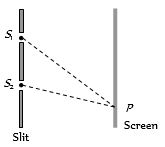
In a Young's Double slit experiment, first maxima is observed at a fixed point $P$ on the screen. Now the screen is continuously moved away from the plane of slits. The ratio of intensity at point $P$ to the intensity at point $O$ (centre of the screen)
In a Young’s double slit experimental arrangement shown here, if a mica sheet of thickness $t$ and refractive index $\mu $ is placed in front of the slit ${S_1},$ then the path difference $({S_1}P - {S_2}P)$
If $\varepsilon_0$ and $\mu_0$ are respectively, the electric permittivity and the magnetic permeability of free space, $\varepsilon$ and $\mu$ the corresponding quantities in a medium, the refractive index of the medium is
A radioactive sample of $U^{238}$ decay to $Pb$ through a process for which half life is $4.5 \times 10^9$ years. The ratio of number of nuclei of Pb to $\mathrm{U}^{238}$ after a time of $1.5 \times 10^9$ years $($given $2^{1 / 3}=1.26 )$
A steady current $i$ flows in a small square loop of wire of side $L$ in a horizontal plane. The loop is now folded about its middle such that half of it lies in a vertical plane. Let $\overrightarrow {{\mu _1}} $ and $\overrightarrow {{\mu _2}} $ respectively denote the magnetic moments due to the current loop before and after folding. Then
Which of the following is possible application of an RC circuit?
If a charged particle is projected perpendicular to a uniform magnetic field, then:
  1. It revolves in circular path
  2. Its $K.E.$ remains constant
  3. Its momentum remains constant
  4. Its path is spiral
An inductor coil stores $U$ energy when $I$ current is passed through it and dissipates energy at the rate of $P.$ The time constant of the circuit, when this coil is connected across a battery of zero internal resistance is