Question
Which of the following are electromagnetic waves?

Answer

  1. $\gamma-\text{decay}$
Explanation:
Alpha rays, beta-plus and beta-minus rays carry charged particles that show particle behaviour. On the other hand, gamma rays carry photons that show particle as well as wave behaviour. Hence, only gamma rays are electromagnetic waves.

Need a full question paper?

Generate a complete, print-ready paper with questions like this in minutes — across 16+ boards, with answer keys.
Start Generating Free

Similar questions

Sixty-four drops are jointed together to form a bigger drop. If each small drop has a capacitance C, a potential V, and a charge q, then the capacitance of the bigger drop will be(a) C (b) 4C(c) 16C    (d) 64C
       
The work function of metal is $1\ eV$. Light of wavelength $3000 \mathring A$ is incident on this metal surface. The velocity of emitted photo$-$electrons will be
If the current is doubled, the deflection is also doubled in:
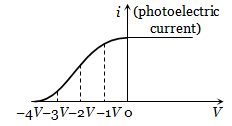
The value of stopping potential in the following diagram
A heavy stone is thrown from a cliff of height $h$ with a speed $\nu.$ The stone will hit the ground with maximum speed if it is thrown:
Fission of nuclei is possible because the binding energy per nucleon in them(a) Increases with mass number at high mass numbers(b) Decreases with mass number at high mass numbers(c) Increases with mass number at low mass numbers(d) Decreases with mass number at low mass numbers


Three charges each of magnitude $q$ are placed at the corners of an equilateral triangle, the electrostatic force on the charge placed at the center is $($each side of triangle is $L)$
A bar magnet having centre $O$ has a length of $4 \ cm .$ Point $P_1$ is in the broad side-on and $P_2$ is in the end side$-$on position with $O P_1=O P_2=10$ metres. The ratio of magnetic intensities $H$ at $P_1$ and $P_2$ is
A parallel plate capacitor is connected to a battery. The plates are pulled apart with a uniform speed. If $x$ is the separation between the plates, the time rate of change of electrostatic energy of capacitor is proportional to
Flux passing through an equipotential surface is always: