Question
  1. Which of the following are isostructural species. Give their structures.
$\text{NO}^+_2,\text{BCl}_3,\text{CO}_2,\text{BeCl}_2$
  1. Which has most electronegativity of carbon? Why?
$\text{CH}_3-\text{CH}_3,\text{CH}=\text{CH}_2,\text{HC}\equiv\text{CH}$

Answer

i. $\mathrm{NO}_2^{+}, \mathrm{CO}_2, \mathrm{BeCl}_2$ also isostructural as these are linear.
$\mathrm{BCl}_3$ has trigonal planar structure.
ii.
a. has most electronegative ' C ' because it is sp hybridised ( $50 \%$ ' s ' character) than $\mathrm{sp}^2$ hybridised ' C ' in $\mathrm{CH}_2=\mathrm{CH}_2$, sp ${ }^2$ (33\% 's' character) and sp ${ }^3$ ( $25 \%$ s-character) in $\mathrm{CH}_3-\mathrm{CH}_3$.

Greater the s-character, more electronegativity.
$\therefore$ 's' orbital is closer to nucleus.

Need a full question paper?

Generate a complete, print-ready paper with questions like this in minutes — across 16+ boards, with answer keys.
Start Generating Free

Similar questions

In a reaction
$\mathrm{A}+\mathrm{B}_2 \rightarrow \mathrm{AB}_2$
Identify the limiting reagent, if any, in the following reaction mixtures.
$5 \mathrm{mol}\mathrm{~A}+2.5 \mathrm{~mol} \mathrm{~B}$.
Why does $\text{SO}_3$ act as an electrophile?
How does electron deficient compound $\mathrm{BF}_3$ achieve electronic saturation, i.e. fully occupied outer electron shells?
Benzoic acid is a organic compound. Its crude sample can be purified by crystallisation from hot water. What characteristic differences in the properties of benzoic acid and the impurity make this process of purification suitable?
Assign the position of the element having outer electronic configuration.
$n s^2 n p^4$ for $n=3$

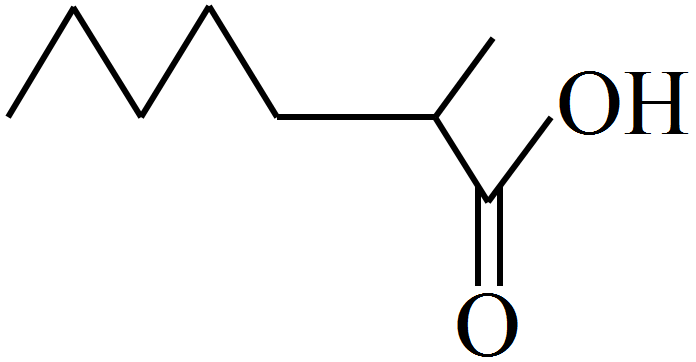
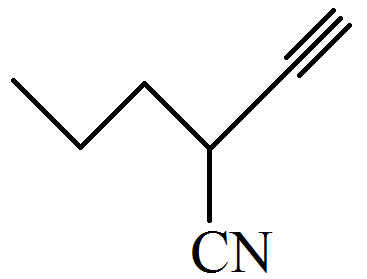
Expand each of the following bond line formula to show all the atoms including carbon and hydrogen.
  1.  
  1.  
  1.  
Calculate pH of 0.1 M solution of $HCOONH _4$, if $pK _{ a }$ of $HCOOH =3.6$ and $pK _{ b }$ of $NH _4 OH =4.8$.
$\mathrm{pK}_{\mathrm{a}}$ values of acids $\mathrm{A}, \mathrm{B}, \mathrm{C}, \mathrm{D}$ are 1.5, 3.5, 2.0 and 5.0 .
Which of them is strongest acid? Give reason.
Find out the value of equilibrium constant for the following reaction at 298K.$2\text{NH}_3(\text{g})+\text{CO}_2(\text{g})\rightleftharpoons\text{NH}_2\text{CONH}_2(\text{aq})+\text{H}_2\text{O(l)}$
Standard Gibbs energy change, $\Delta_\text{r}\text{G}^\circ$ at the given temperature is $-13.6 \mathrm{~kJ} \mathrm{~mol}^{-1}$.
How many elements can be accommodated in the present set up of the long form of the periodic table? Explain.