MCQ
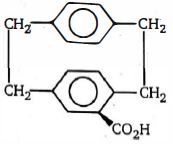
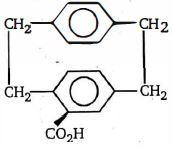
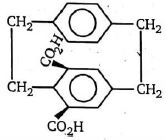
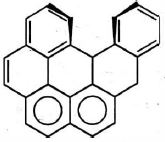
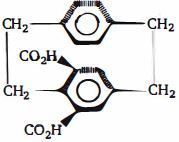
Which of the following compound is achiral ?
  • A

  • B


  • D

Answer

Correct option: C.

c
now, plane passing through square will give $P.O.S$ Plane of symmetry is  present.

Need a full question paper?

Generate a complete, print-ready paper with questions like this in minutes — across 16+ boards, with answer keys.

Start Generating Free

Similar questions

Identify the element for which electronic configuration in $+3$ oxidation state is $[\mathrm{Ar}] 3 \mathrm{~d}^{5}$ :
Most acidic among given compound is
 $\begin{array}{*{20}{c}}
  {C{H_3} - CH - C{H_2} - C{H_3}\xrightarrow[\Delta ]{{KOH}}product} \\ 
  {|\,\,\,\,\,\,\,\,\,\,\,\,\,\,\,\,\,\,\,\,\,\,\,\,\,\,\,\,\,\,\,\,\,\,\,\,\,\,\,\,\,\,\,\,\,\,\,\,\,\,\,\,\,\,\,\,\,\,\,\,} \\ 
  {Cl\,\,\,\,\,\,\,\,\,\,\,\,\,\,\,\,\,\,\,\,\,\,\,\,\,\,\,\,\,\,\,\,\,\,\,\,\,\,\,\,\,\,\,\,\,\,\,\,\,\,\,\,\,\,\,\,\,\,\,} 
\end{array}$

Possible number of elimination products (alkene) of the given reaction is?

In a potassium atom, electronic energy levels are in the following order
Benzene is unreactive because
Arrange the following alkanes in decreasing order of their heats of combustion

$(i)\,\mathop {\begin{array}{*{20}{c}}
  {\,\,\,\,\,C{H_3}} \\ 
  | \\ 
  {C{H_3} - C - C{H_3}} \\ 
  | \\ 
  {\,\,\,\,\,C{H_3}} 
\end{array}}\limits_{(Neo - pen\tan e)\,(i)} $

$(ii\mathop {)\,\begin{array}{*{20}{c}}
  {C{H_3} - CH - C{H_2} - C{H_3}} \\ 
  {|\,\,\,\,\,\,\,\,\,\,\,\,\,\,\,\,\,\,} \\ 
  {\,\,\,\,\,C{H_{3\,\,\,\,\,\,\,\,\,\,\,\,\,\,\,\,\,\,\,\,\,\,\,\,}}} 
\end{array}}\limits_{(Iso - pen\tan e)\,\,(ii)} $

$(iii)\,\mathop {C{H_3} - C{H_2} - C{H_2} - C{H_2} - C{H_3}}\limits_{(n - pen\tan e)} $

$Ph-CH = NO_2H \xrightarrow[{3days}]{{isomerises}}\mathop {(x)}\limits_{(50 - 50\% )}$ , Isomer $(x)$ is
When ${K_2}C{r_2}{O_7}$ is converted to ${K_2}Cr{O_4},$ the change in the oxidation state of chromium is
The mass of the proton is $1840 $ times that of electron, its potential difference is $ V. $ The kinetic energy of proton is ............ $\mathrm{KeV}$
The $pH$ of a buffer solution containing $25\,ml$ of $1\,M\,C{H_3}COONa$ and $25\,\,ml$ of $1\,\,M\,\,C{H_3}COOH$ will be appreciably affected by $5\,\,ml$ of