MCQ
Which of the following conditions represents an equilibrium
  • A
    Freezing of ice in a open vessel, temperature of ice is constant
  • Few drops of water is present along with air in a balloon, temperature of balloon is constant
  • C
    Water is boiling in an open vessel over stove, temperature of water is constant
  • D
    All the statements $(a), (b)$ and $(c)$ are correct for the equilibrium
Answer

Correct option: B.
Few drops of water is present along with air in a balloon, temperature of balloon is constant
(b)Equilibrium can be achieved only in closed vessel.

Need a full question paper?

Generate a complete, print-ready paper with questions like this in minutes — across 16+ boards, with answer keys.

Start Generating Free

Similar questions

The standard potential at ${25\,^o}C$ for the following half reactions are given against them

$Z{n^{2 + }} + 2e \to Zn,{E^o} = - 0.762\,V$

$M{g^{2 + }} + 2e \to Mg,{E^o} = - 2.37\,V$

When zinc dust is added to the solution of $MgC{l_2}$

Given below are two statements $:$ one is labelled as
Assertion $(A)$ and the other is labelled as Reason $(R).$
Assertion $(A) :$ In aqueous solutions $Cr^{2+}$ is reducing while $Mn^{3+}$ is oxidising in nature.
Reason $(R) :$ Extra stability to half filled electronic
configuration is observed than incompletely filled electronic configuration.
In the light of the above statement, choose the most appropriate answer from the options given below:
$1-$methyl ethylene oxide when treated with an excess of $HBr$ produces
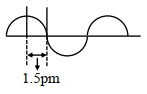
A hypothetical electromagnetic wave is show below.

(Image)

The frequency of the wave is $\mathrm{x} \times 10^{19} \mathrm{~Hz}$. $x=$ . . . .  (nearest integer)

The rate of reaction between $A$ and $B$ increases by a factor of  $100,$ when the concentration of $A$ is increased $10$ folds. The order of reaction with respect to $A$ is
A hydrocarbon has $C=85.72\%$ and remaining $H$. The hydrocarbon is
$\begin{array}{*{20}{c}}
  {C{H_3} - CH - CH = C{H_2} + HBr \to X\,\left( {major\,product} \right)} \\ 
  {|\,\,\,\,\,\,\,\,\,\,\,\,\,\,\,\,\,\,\,\,\,\,\,\,\,\,\,\,\,\,\,\,\,\,\,\,\,\,\,\,\,\,\,\,\,\,\,\,\,\,\,\,\,\,\,\,\,\,\,\,\,\,\,\,\,\,\,\,\,\,\,\,\,\,\,\,\,\,\,\,\,\,\,\,\,\,\,\,\,\,\,\,\,\,\,\,\,\,\,\,\,\,\,\,\,\,} \\ 
  {C{H_3}\,\,\,\,\,\,\,\,\,\,\,\,\,\,\,\,\,\,\,\,\,\,\,\,\,\,\,\,\,\,\,\,\,\,\,\,\,\,\,\,\,\,\,\,\,\,\,\,\,\,\,\,\,\,\,\,\,\,\,\,\,\,\,\,\,\,\,\,\,\,\,\,\,\,\,\,\,\,\,\,\,\,\,\,\,\,\,\,\,\,\,\,\,\,\,\,\,\,} 
\end{array}$

$X$ is

The aqueous solution of $AlC{l_3}$ is acidic due to the hydrolysis of
Energy of the electron in Hydrogen atom is given by
Among the following organic acids, the acid present in rancid butter is