Question

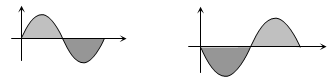
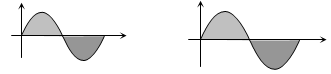
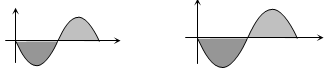
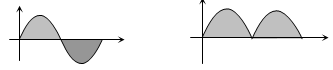
Which of the following figures correctly shows the phase relation between the input signal and the output signal of triode amplifier

 (a)

(b)

(c)

(d)

Answer

 (a)

Need a full question paper?

Generate a complete, print-ready paper with questions like this in minutes — across 16+ boards, with answer keys.

Start Generating Free

Similar questions

Which of the following is not a mode of radioactive decay?
A bar magnet of magnetic moment $m$ when kept in a maenetic field of intensity $\vec{B}$ experiences a torgue:

A potential difference of 2V is applied between the opposite faces of a Ge crystal plate of area 1 cm2 and thickness 0.5 mm. If the concentration of electrons in Ge is 2 × 10¹⁹/m3 and mobilities of electrons and holes are 0.36   and 0.14   respectively, then the current flowing through the plate will be

(a) 0.25 A

(b) 0.45 A

(c) 0.56 A 

(d) 0.64 A

A long straight wire carries an electric current of 2A. The magnetic induction at a perpendicular distance of 5m from the wire is

(a) 4 

(b) 8  

(c) 12  

(d)  16  

The ratio of secondary to the primary turns in a transformer is 3 : 2. If the power output be P, then the input power neglecting all loses must be equal to

(a) 5 P

(b) 1.5 P

(c) P 

(d)  

The threshold wavelength for photoelectric emission from a material is 5200 Å.  Photo-electrons will be emitted when this material is illuminated with monochromatic radiation from a

(a) 50 watt infrared lamp

(b) 1 watt infrared lamp

(c) 50 watt ultraviolet lamp

(d) Both (c) and (d)

The absorption of radio waves by the atmosphere depends upon:

A copper wire has a square cross-section, 2.0 mm on a side.  It carries a current of 8 A and the density of free electrons is 8  . The drift speed of electrons is equal to

(a) 0.156 ×   m.s–1

(b) 0.156 ×   m.s–1

(c) 3.12 ×   m.s–1

(d) 3.12 ×   m.s–1

Refer to figure. Let $\Delta\text{U}_1$ and $\Delta\text{U}_2$ be the changes in internal energy of the system in the processes A and B. Then,
  1. $\Delta\text{U}_1>\Delta\text{U}_2$
  2. $\Delta\text{U}_1=\Delta\text{U}_2$
  3. $\Delta\text{U}_1<\Delta\text{U}_2$
  4. $\Delta\text{U}_1\neq\Delta\text{U}_2$
Suppose potential energy between electron and proton at separation r is given by U = K ln (r), where K is a constant. For such a hypothetical hydrogen atom, the ratio of energy difference between energy levels (n = 1 and n = 2) and (n = 2 and n = 4) is?