MCQ
Which of the following gases has maximum rms speed at a given temperature?
  • Hydrogen.
  • B
    Nitrogen.
  • C
    Oxygen.
  • D
    Carbon dioxide.

Answer

Correct option: A.
Hydrogen.
The rms speed of a gas is given by $\sqrt{\frac{3\text{RT}}{\text{M}_\text{O}}}.$
Since hydrogen has the lowest $M_O$ compared to other molecules, it will have the highest rms speed.

Need a full question paper?

Generate a complete, print-ready paper with questions like this in minutes — across 16+ boards, with answer keys.
Start Generating Free

Similar questions

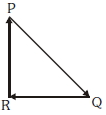
A particle moving with velocity $\overrightarrow{\mathrm{V}}$ is acted by three forces shown by the vector triangle $PQR$. The velocity of the particle will 
There are $100$ divisions on the circular scale of a screw gauge of pitch $1 \mathrm{~mm}$. With no measuring quantity in between the jaws, the zero of the circular scale lies $5$ divisions below the reference line. The diameter of a wire is then measured using this screw gauge. It is found the $4$ linear scale divisions are clearly visible while $60$ divisions on circular scale coincide with the reference line. The diameter of the wire is :
A block of ice at $-20\,^oC$ having a mass of $2\, kg$ is added to a $3\, kg$ water at $15\,^oC$. Neglecting heat losses and the heat capacity of the container
Three samples of the same gas $A, B$ and $C(\gamma = 3/2)$ have initially equal volume. Now the volume of each sample is doubled. The process is adiabatic for $A$ isobaric for $B $ and isothermal for $C$. If the final pressures are equal for all three samples, the ratio of their initial pressures are
A wave is represented by the equation $y = 7\sin \{ \pi (2t - 2x)\} $ where $x$ is in metres and $t$ in seconds. The velocity of the wave is ..... $m/s$
If mass of earth decreases by $25 \%$ and its radius increases by $50 \%$, then acceleration due to gravity at its surface decreases by nearly ......... $\%$
Which of the following statements are correct.
A block of mass $m$ is kept in an elevation which starts moving downward with an acceleration $a$ as shown in figure. The block is observed by two observers $A$ and $B$ for a time interval $t_0$. The observer $B$ finds that the work done by gravity on the block is
Which of the following time measuring devices is most precise?
Two lithium nuclei in a lithium vapour at room temperature do not combine to form a carbon nucleus because: