MCQ
Which of the following halogens does not form oxyacid
  • Fluorine
  • B
    Chlorine
  • C
    Bromine
  • D
    Iodine

Answer

Correct option: A.
Fluorine
a
(a)Fluorine does not form oxyacids because it is more electronegative than oxygen.

Need a full question paper?

Generate a complete, print-ready paper with questions like this in minutes — across 16+ boards, with answer keys.
Start Generating Free

Similar questions

${{C}_{6}}{{H}_{5}}OH+ClCOC{{H}_{3}}\xrightarrow{\text{aq}\text{. }NaOH}{{C}_{6}}{{H}_{5}}OCOC{{H}_{3}}$  is an example of
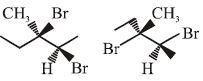
How are the following compounds related ?
Which one of the following statement is false?
find out the reactivity order with $LiAlH_4$
Which of the following is not correct
Following solutions were prepared by mixing different volumes of $NaOH$ and $HCl$ of different concentrations

$(a)\;\;60\; \mathrm{mL} \frac{\mathrm{M}}{10}\; \mathrm{HCl}+40 \;\mathrm{mL} \frac{\mathrm{M}}{10} \;\mathrm{NaOH}$

$(b)\;\;55\; \mathrm{mL} \frac{\mathrm{M}}{10}\; \mathrm{HCl}+45 \;\mathrm{mL} \frac{\mathrm{M}}{10} \;\mathrm{NaOH}$

$(c)\;\;75\; \mathrm{mL} \frac{\mathrm{M}}{5}\; \mathrm{HCl}+25 \;\mathrm{mL} \frac{\mathrm{M}}{5} \;\mathrm{NaOH}$

$(d)\;\;100\; \mathrm{mL} \frac{\mathrm{M}}{10}\; \mathrm{HCl}+100 \;\mathrm{mL} \frac{\mathrm{M}}{10} \;\mathrm{NaOH}$

$pH$ of which one of them will be equal to $1$ ?

To which block is related an element having electronic configuration $1{s^2}2{s^2}2{p^6}3{s^2}3{p^6}3{d^{10}}4{s^1}$ in the periodic table
For a certain reaction at $300 \mathrm{~K}, \mathrm{~K}=10$, then $\Delta \mathrm{G}^{\circ}$ for the same reaction is _____________$\times 10^{-1} \mathrm{~kJ} \mathrm{~mol}^{-1}$. (Given $\mathrm{R}=8.314 \mathrm{JK}^{-1} \mathrm{~mol}^{-1}$ )
Colligative properties of a solution depends upon
Passage of a current for $548\, seconds$ through a silver coulometer results in the deposition of $0.746\, g$ of silver. What is the current (in $A$)