MCQ
Which of the following is a transitional element
- A$Al$
- B$As$
- ✓$Ni$
- D$Rb$
Explanation:
The electronic configuration of nickel is $[ Ar ] 3 d ^8 4 s ^2$ which is in sync with the general electronic configuration of a transition element $(n-1) d^{1-10} ns ^2$.
Aluminum, arsenic, and lead don't possess the required configuration so they are not the transition elements.
The electronic configuration of Nickel is $[ Ar ] 3 d ^8 4 s ^2$. So it is a transition element.
Generate a complete, print-ready paper with questions like this in minutes — across 16+ boards, with answer keys.
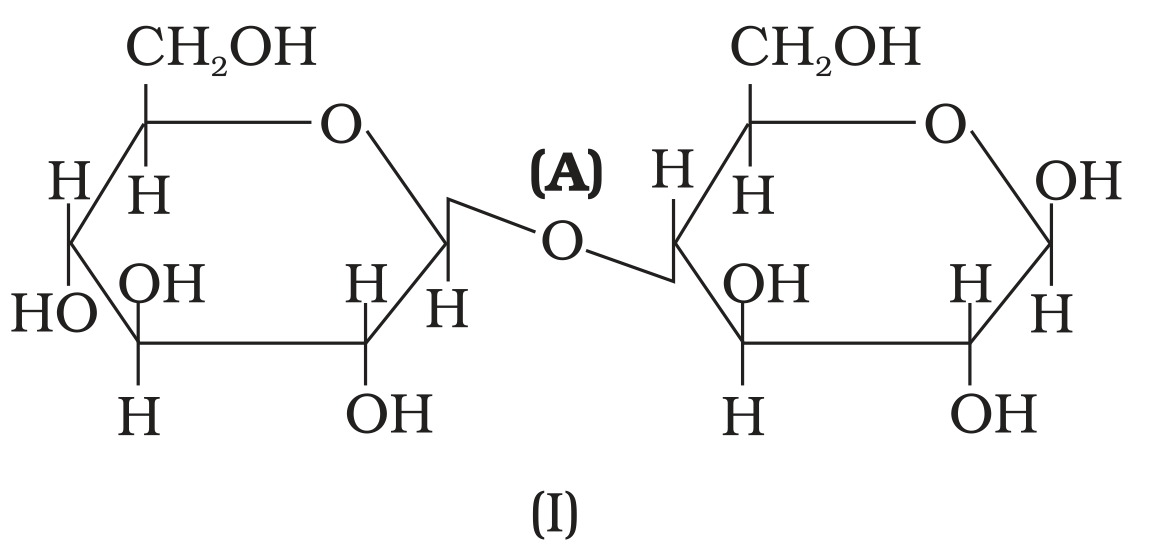
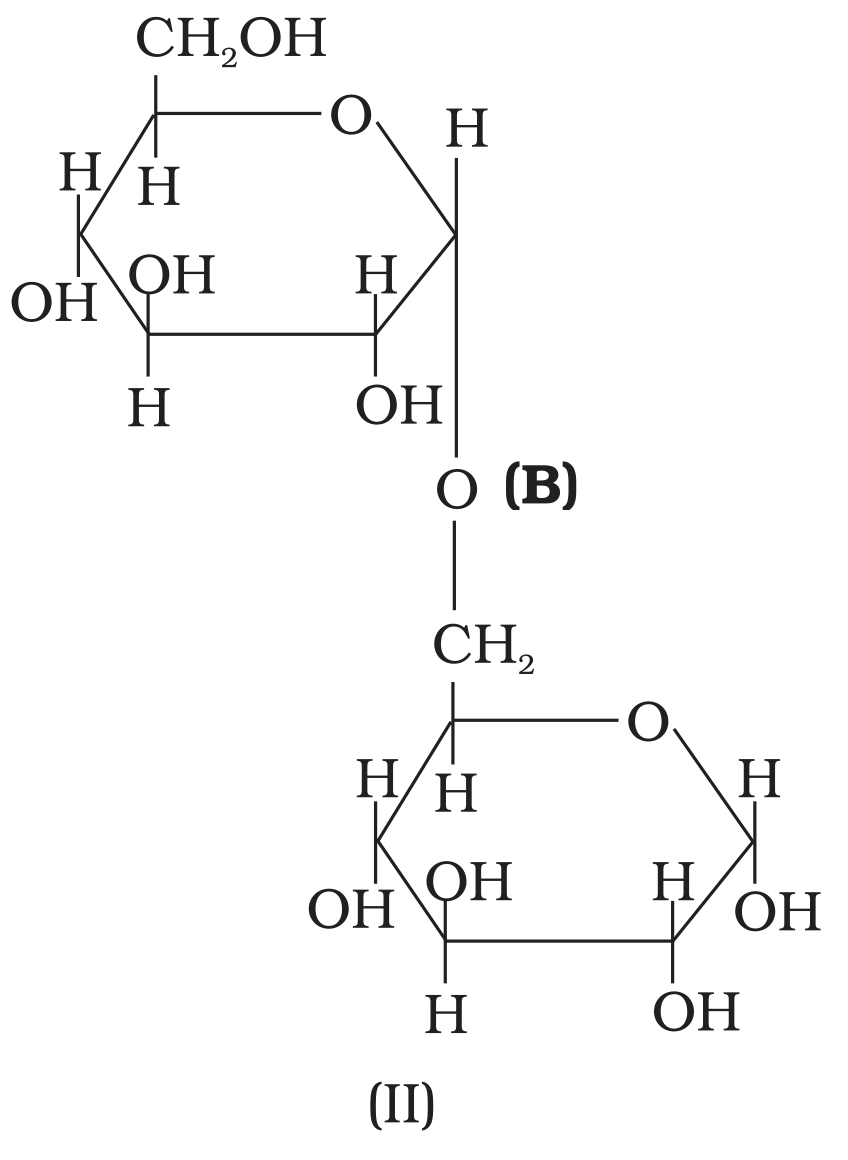
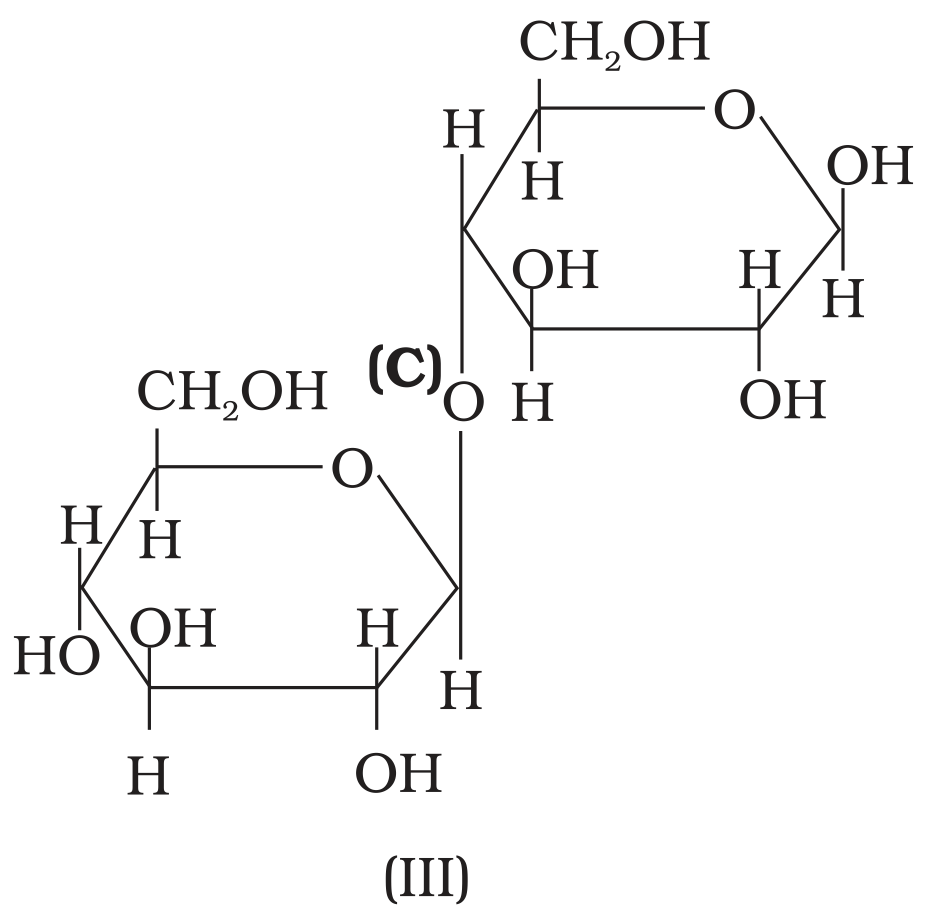

gly $=$ glycinato; bpy $=2,2$ '-bipyridine
(Given : Atomic masses: $C$ : $12.0\, u$, $H : 1.0\, u , N : 14.0\, u , Br : 80.0\, u ]$
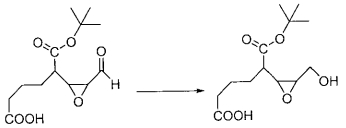
($A$) $\mathrm{LiAlH}_4$ in $\left(\mathrm{C}_2 \mathrm{H}_5\right)_2 \mathrm{O}$
($B$) $\mathrm{BH}_3$ in $THF$
($C$) $\mathrm{NaBH}_4$ in $\mathrm{C}_2 \mathrm{H}_5 \mathrm{OH}$
($D$) Raney $\mathrm{Ni} / \mathrm{H}_2$ in $\mathrm{THF}$