Which of the following is capable of forming a zwitter ion
Medium


Download our appand get started for free
Experience the future of education. Simply download our apps or reach out to us for more information. Let's shape the future of learning together!No signup needed.*
Similar Questions
- 1The decreasing order of reactivity of $m-$ nitrobromobenzene $(I), 2, 4, 6-$ trinitrobromo-benzene $(II), p-$ nitrobromobenzene $(III)$, and $2,4-$ dinitrobromobenzene $(IV),$ towards $OH^-$ ions isView Solution
- 2View SolutionThe decreasing order of basicity of the following amines is

- 3Which of the following reactions give $RCON{H_2}$View Solution
- 4The main product of following reaction will beView Solution
(image) $\to $ Product
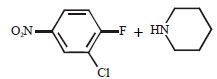
- 5Acetanilide $\xrightarrow[{C{H_3}COOH}]{{B{r_2}}}$ major product will beView Solution
- 6View SolutionNitrobenzene at room temperature is
- 7View SolutionUrea upon hydrolysis yields
- 8Most basic $'N'$ in following molecule isView Solution
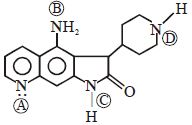
- 9Which of the following will not exist in zwitter ionic form at $pH = 7$ ?View Solution
- 10View SolutionSulphonation is most favourable at the carbon number ...
