Question
Which of the following is coldest planet

Answer

(b)Because pluto is farthest from Sun.

Need a full question paper?

Generate a complete, print-ready paper with questions like this in minutes — across 16+ boards, with answer keys.
Start Generating Free

Similar questions

At some point the gravitational potential and also the gravitational field due to earth is zero. The point is
Radioactive material $'A'$ has decay constant $8 \lambda$ and material $'B'$ has decay constant $ ' \lambda '$. Initially they have same number of nuclei . After what time, the ratio of number of nuclei of material $'B'$ to that $'A'$ will be $\frac{1}{e}$ ?
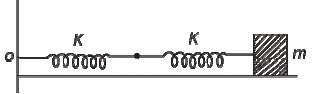
The frequency of oscillations of a mass $m$ connected horizontally by a spring of spring constant $k$ is $4 Hz$. When the spring is replaced by two identical spring as shown in figure. Then the effective frequency is,
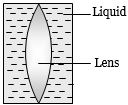
Shown in the figure here is a convergent lens placed inside a cell filled with a liquid. The lens has focal length $+ 20\, cm$ when in air and its material has refractive index $1.50$. If the liquid has refractive index $1.60$, the focal length of the system is......$cm$
Assume there are two identical simple pendulum Clocks$-1$ is placed on the earth and Clock$-2$ is placed on a space station located at a height $h$ above the earth surface. Clock$-1$ and Clock$-2$ operate at time periods $4\,s$ and $6\,s$ respectively. Then the value of $h$ is $....km$ (consider radius of earth $R _{ E }=6400\,km$ and $g$ on earth $10\,m / s ^{2}$ )
Currents of a $10\, ampere$ and $2\, ampere$ are passed through two parallel thin wires $A$ and $B$ respectively in opposite directions. Wire $A$ is infinitely long and the length of the wire $B$ is $2\, m$. The force acting on the conductor $B$, which is situated at $10\, cm$ distance from $A$ will be
A neutral water molecule $(H_2O)$ in it's vapor state has an electric dipole moment of magnitude $6.4 \times10^{-30} C-m$. How far apart are the molecules centres of positive and negative charge
The focal length of the field lens (which is an achromatic combination of two lenses) of telescope is $90 cm$. The dispersive powers of the two lenses in the combination are $0.024$ and $0.036.$ The focal lengths of two lenses are
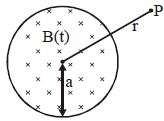
A uniform but time-varying magnetic field $B(t)$ exists in a circular region of radius $a$ and is directed into the plane of the paper, as shown. The magnitude of the induced electric field at point $P$ at a distance $r$ from the centre of the circular region
A car is moving at a speed of $40\,m/s$ on a circular track of radius $400\,m.$ This speed is increasing at the rate of $3\,m/s^2.$ The acceleration of car is  ........ $m/s^2$