MCQ
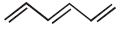
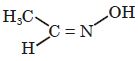
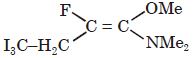
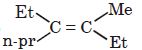
Which of the following is $E$ isomer :

  • B

  • C

  • D

Answer

Correct option: A.

a

Need a full question paper?

Generate a complete, print-ready paper with questions like this in minutes — across 16+ boards, with answer keys.

Start Generating Free

Similar questions

The compound which could not act both as oxidising as well as reducing agent is
The quantum numbers $+1/2$ and $-1/2$ for the electron spin represent
The rate of a reaction decreased by $3.555$ times when the temperature was changed from $40^{\circ} C$ to $30^{\circ} C$. The activation energy of the reaction is.........$kJ\, mol ^{-1}$

[Take; $R =8.314 \,J\, mol ^{-1}\, K ^{-1}$ In $3.555=1.268$]
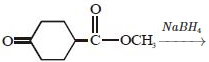
The product formed in the reaction is 
An electric current is passed through an aqueous solution of the following. Which one shall decompose
Given below are two statements .

Statement $I :$ In $CuSO _{4} .5 H _{2} O , Cu - O$ bonds are present.

Statement $II :$ In $CuSO _{4} .5 H _{2} O$, ligands coordinating with $Cu$ $(II)$ ion are $O$-and $S$-based ligands.

In the light of the above statements, choose the correct answer from the options given below

Which one of the following elements has the highest ionisation energy
Rate constant of a reaction is given as 

${\log _{10}}K =  - \frac{{2000}}{T} + 6.0$ Activation energy is ....... $kcal$

We have taken a saturated solution of $\mathrm{AgBr} . \mathrm{K}_{\text {sp }}$ of $\mathrm{AgBr}$ is $12 \times 10^{-14}$. If $10^{-7} \mathrm{~mole}$ of $\mathrm{AgNO}_3$ are added to $1$ litre of this solution find conductivity (specific conductance) of this solution in terms of $10^{-7} \mathrm{~S} \mathrm{~m}^{-1}$ units.

Given, $\lambda_{\left(\mathrm{Ag}^{+}\right)}^{\circ}=6 \times 10^{-3} \mathrm{Sm}^2 \mathrm{~mol}^{-1}, \lambda_{\left(\mathrm{Br}^{-}\right)}^{\circ}=8 \times 10^{-3} \mathrm{Sm}^2 \mathrm{~mol}^{-1}, \lambda_{\left(\mathrm{NO}_{\mathrm{j}}\right)}^{\circ}=7 \times 10^{-3} \mathrm{Sm}^2 \mathrm{~mol}^{-1}$.

Substance $A_2B(g)$ can undergoes decomposition to form two set of products If the molar ratio of $A_2(g)$ to $A(g)$ is $5 : 3$ in a set of product gases, then the energy involved in the decomposition of $1\, mole$ of $A_2B(g)$ is

${A_2}B(g) \to {A_2}(g) + B(g);\,\,\,\Delta {H^o} = 40\,kJ/mol$

${A_2}B(g) \to A(g) + AB(g);\,\,\,\Delta {H^o} = 50\,kJ/mol$

.....$ kJ/mol$