MCQ
Which of the following is not an assumption of $\text{KTG}\ ?$
  • A
    Time spent during collision is negligibly small.
  • B
    All gases are made up of molecules moving randomly in all directions.
  • Molecules do not collide with each other.
  • D
    Molecules collide elastically with the wall.
Answer

Correct option: C.
Molecules do not collide with each other.
According to $\text{KTG,}$ molecules collide elastically with each other and with the walls of the container. The other given assumptions are true. These assumptions help to develop a model of molecular behavior of an ideal gas.

Need a full question paper?

Generate a complete, print-ready paper with questions like this in minutes — across 16+ boards, with answer keys.

Start Generating Free

Similar questions

Two balls $A$ and $B$ having masses $1\, kg$ and $2\, kg$, moving with speeds $21\, m/s$ and $4\, m/s$ respectively in opposite direction, collide head on. After collision Amoves with a speed of $1\,m/s$ in the same direction, then correct statements is :
No work is done by a force on an object if:
$A$ and $B$ start walking towards each other from the opposite ends of a $15\ km$ long straight road, at a speed of $5\ km/ hr$ and $7\ km/ hr$ respectively. How far apart will they be after one hour?
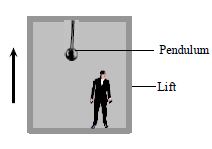
A man measures the period of a simple pendulum inside a stationary lift and finds it to be $T$ $s$. If the life accelerates upwards with an acceleration $g/4$, then the period of the pendulum will be
A boy playing on the roof of a $10\, m$ high building throws a ball with a speed of $10\,m/s$ at an angle of $30^o$ with the horizontal. How far from the throwing point will the ball be at the height of $10\, m$ from the ground ?  $\left[ {g = 10\,m/{s^2},\sin \,{{30}^o} = \frac{1}{2},\cos \,{{30}^o} = \frac{{\sqrt 3 }}{2}} \right]$
A block of mass $2.5\,\, kg$ is heated to temperature of $500^o C$ and placed on a large ice block. ......... $kg$ is the maximum amount of ice that can melt (approx.). Specific heat for the body $= 0.1 Cal/gm^o C$.
Planet $A$ has mass $\mathrm{M}$ and radius $\mathrm{R}$. Planet $\mathrm{B}$ has half the mass and half the radius of Planet $A$. If the escape velocities from the Planets $A$ and $\mathrm{B}$ are $v_{\mathrm{A}}$ and $v_{\mathrm{B}},$ respectively, then $\frac{v_{\mathrm{A}}}{v_{\mathrm{B}}}=\frac{\mathrm{n}}{4}$ The value of $\mathrm{n}$ is
Which physical quantities have the same dimension
What is the $SI$ unit of permeability
A bullet is fired from a rifle. If the rifle recoils freely, then the kinetic energy of the rifle is