MCQ
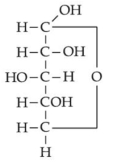
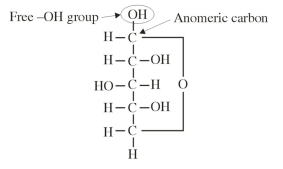
Which of the following is reducing sugar?
- ✓
- B
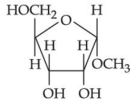
- C
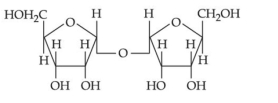
- D
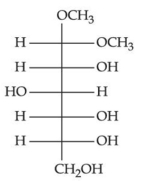
Generate a complete, print-ready paper with questions like this in minutes — across 16+ boards, with answer keys.
$\mathop {(A)}\limits_{ gives\,\,positive ~\\ iodoform\,Test } \xrightarrow[\begin{subarray}{l} (ii)\,{H^ + },{H_2}O + ~\\ (iii)\,conc.\,{H_2}S{O_4}/\Delta \end{subarray} ]{{{\text{(i) C}}{{\text{H}}_{\text{3}}}{\text{MgBr}}}}(B)\xrightarrow{{{O_3}/Zn,{H_2}O}}$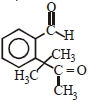
$\begin{matrix}
O\,\,\,\,\,\,\,\,\,\,\,\,\,\,\,\,\,\,\,\,\,\,\,\,\,\,\,\,\,\,\,\,\,\,\,\,\,\, \\
||\,\,\,\,\,\,\,\,\,\,\,\,\,\,\,\,\,\,\,\,\,\,\,\,\,\,\,\,\,\,\,\,\,\,\,\,\,\,\,\, \\
C{{F}_{3}}\,C\,OH+C{{H}_{3}}\,CH\,C{{H}_{3}} \\
\,\,\,\,\,\,\,\,\,\,\,\,\,\,\,\,\,\,\,\,\,\,\,\,\,\,\,\,\,\,| \\
\,\,\,\,\,\,\,\,\,\,\,\,\,\,\,\,\,\,\,\,\,\,\,\,\,\,\,\,\,\,\,\,\,OH \\
\end{matrix}\xrightarrow{{{H}_{2}}S{{O}_{4}}}\begin{matrix}
O\,\,\,\,\,\,\,\,\,\,\,\,\,\,\,\,\,\,\,\,\,\,\,\,\,\,\,\,\,\,\, \\
||\,\,\,\,\,\,\,\,\,\,\,\,\,\,\,\,\,\,\,\,\,\,\,\,\,\,\,\,\,\,\,\,\, \\
C{{F}_{3}}\,C\,OCH\,C{{H}_{3}}+{{H}_{2}}O \\
|\,\,\,\,\,\,\,\,\,\,\,\, \,\,\,\, \\
C{{H}_{3}}\,\,\,\,\,\,\,\,\,\,\, \\
\end{matrix}$
Given :( $\frac{{2.303RT}}{F} = 0.06)$
$s{n^{ + 2}}\left( {1M} \right) + 2C{l^ - }\left( {2M} \right) \rightleftharpoons s{n_{\left( s \right)}} + C{l_2}\left( {1\,atm} \right)$
Given : ${E^o}_{s{n^{ + 2}}/sn} = - 0.14$ ${E^o}_{C{l_2}/C{l^- }} = 1.4\,V$
$A + O_2 \to B$
$B + O_2+ H_2O \to C$
$A,\, B$ and $C$ are