MCQ
Which of the following statements is correct about heat of combustion
  • A
    It may be exothermic in some cases and endothermic in other cases
  • B
    It is applicable to gaseous substances only
  • It is always an exothermic reaction
  • D
    Its value does not change with temperature
Answer

Correct option: C.
It is always an exothermic reaction
(c)$\Delta {H_{{\rm{combusion}}}}$ $= -ve, $ so exothermic process.

Need a full question paper?

Generate a complete, print-ready paper with questions like this in minutes — across 16+ boards, with answer keys.

Start Generating Free

Similar questions

The $IUPAC$ name of $\begin{matrix}
   HO-CH-COOH  \\
   |\,\,\,\,\,\,\,\,\,\,\,\,  \\
   HO-CH-COOH  \\
\end{matrix}$ is
Consider the following reaction sequence

$\begin{array}{*{20}{c}}
  {\,\,C{H_3}\,\,\,\,\,\,\,\,\,\,\,} \\ 
  {|\,\,\,\,\,\,\,\,\,\,\,\,\,\,\,\,} \\ 
  {C{H_3} - C - CH = C{H_2}} \\ 
  {|\,\,\,\,\,\,\,\,\,\,\,\,\,\,\,\,} \\ 
  {\,\,C{H_3}\,\,\,\,\,\,\,\,\,\,\,} 
\end{array}\xrightarrow[{2.\,KOH - EtOH,\,heat}]{{1.\,HBr}}$

The major end product formed is :-

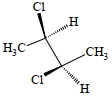
The correct statement $(s)$ about the compound given below is $(are)$ $Image$

$(A)$ The compound is optically active

$(B)$ The compound possesses centre of symmetry

$(C)$ The compound possesses plane of symmetry

$(D)$ The compound possesses axis of symmetry

Isomerism shown by

$C{H_3} - {(C{H_2})_3} - O - C{H_3}$

$C{H_3} - C{H_2} - O - C{H_2} - C{H_2} - C{H_3}$

$C{H_3} - \mathop {CH}\limits_{\mathop {|\,\,\,\,}\limits_{C{H_3}} } - O - C{H_2} - C{H_3}$   is

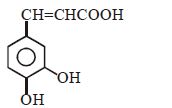
Caffeic acid, found in coffee beans, $IUPAC$ name is?
A compound contains three elements $A, B$ and $C,$ if the oxidation of $A = + 2, B = + 5$ and $C = - 2$, the possible formula of the compound is 
If the total energy of an electron in a hydrogen atom in excited state is $-3.4\, eV$, then the de-Broglie wavelength of the electron is
The number of oxygen atoms in $4.4\ gm$ of $CO_2$ is approx.
Total number of species from the following with central atom utilising $2 \mathrm{p}^2$ hybrid orbitals for bonding is.. . . . . . . .$\mathrm{NH}_3, \mathrm{SO}_2, \mathrm{SiO}_2, \mathrm{BeCl}_2, \mathrm{C}_2 \mathrm{H}_2, \mathrm{C}_2 \mathrm{H}_4, \mathrm{BCl}_3, \mathrm{HCHO}$, $\mathrm{C}_6 \mathrm{H}_6, \mathrm{BF}_3, \mathrm{C}_2 \mathrm{H}_4 \mathrm{Cl}_2$
Which of the following species is not a psuedohalide?